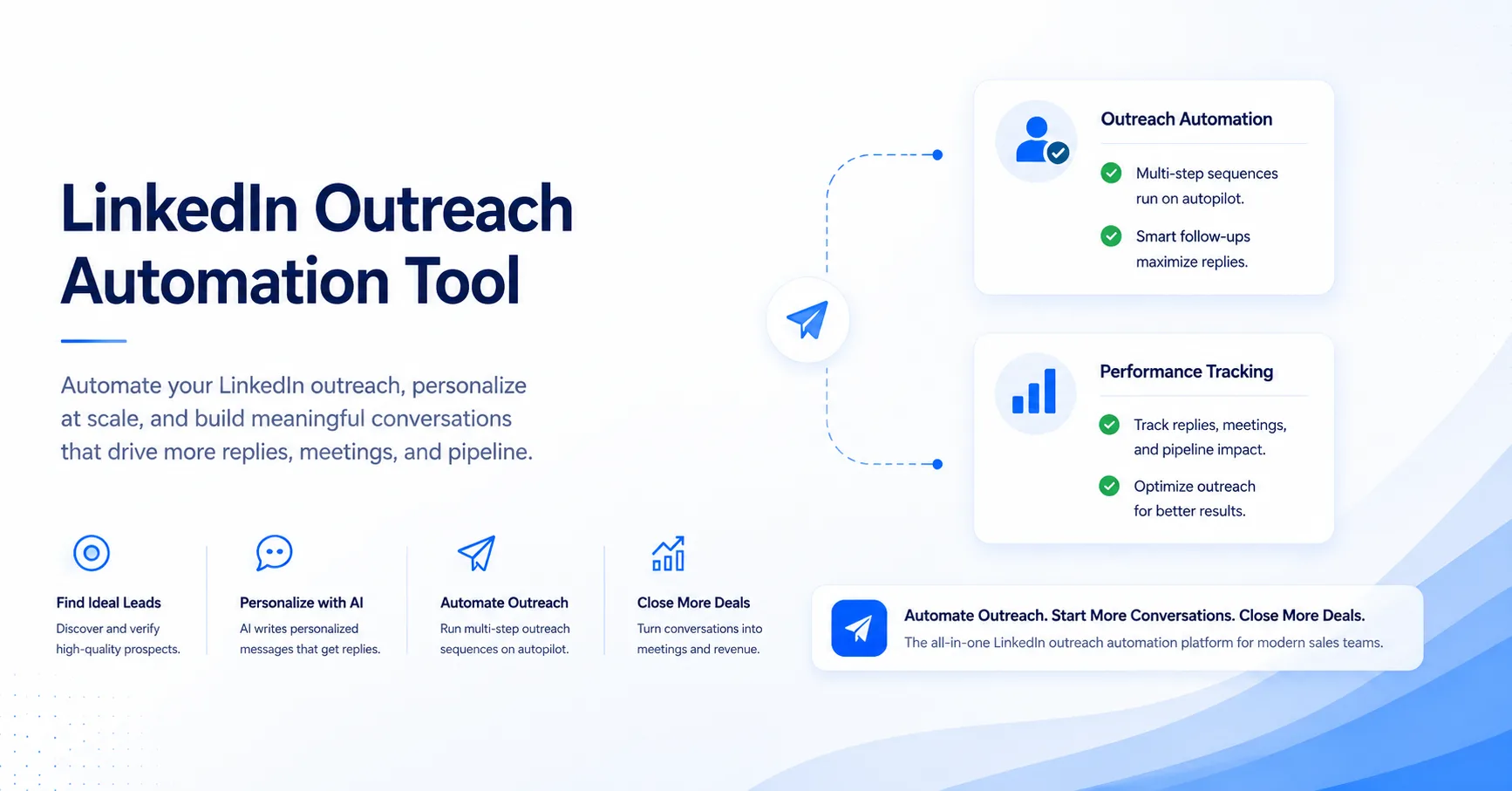
Many sales teams mistake outbound prospecting for a pure numbers game. They assume that if their reply rates are low, the solution is simply to pump more volume into the pipeline. On LinkedIn, this approach fails immediately. The platform enforces strict daily activity limits, meaning that trying to scale through raw volume will quickly land your account in suspension.
To maximize your inbound response metrics, your strategy must pivot toward precision, hyper-personalization, and multi-channel timing. The best tool for the job isn't one that just sends messages faster; it is one that coordinates your social touchpoints alongside your email workflows to reach buyers when they are most active. Centralizing this outbound infrastructure inside a unified platform like SalesTarget.ai allows sales development teams to save hours of manual admin work while driving up to 2.4X more meetings from their target accounts.
Why Generic Social Automation Tanks Response Metrics
The primary reason prospects ignore cold outreach is text fatigue. Executive decision-makers are constantly targeted with long, generic templates that offer zero immediate value. When your outreach software relies on basic text fields like first name and company tags, your messages read like automated spam.
Isolated browser plugins and low-quality bots aggravate this issue. Because these tools operate on rigid, mechanical schedules, they fail to react to dynamic prospect behaviors. If a prospect engages with an asset your marketing team published or opens an email from your sales rep, a standalone bot has no way of knowing. It will simply continue dropping generic follow-up messages into their inbox, destroying any chance of building professional trust.
To drive high reply rates, your software must leverage contextual intelligence. This means analyzing deep profile data, tracking real-time industry buying signals, and utilizing conditional branching logic so your messages automatically adapt based on how a prospect interacts with your brand.
Technical Features That Drive Higher Engagement
Achieving double-digit response rates requires an automation framework that balances account safety with advanced data enrichment. High-performing systems operate behind the scenes to optimize every touchpoint for maximum delivery.
- Behavior-Driven Sequence Forks: Workflows automatically adjust their path, change messaging angles, or switch channels entirely depending on prospect actions.
- Contextual Personalization Engines: Advanced platforms utilize AI to scan a prospect's full profile text, recent activity, and historical role data to craft natural, tailored opening hooks.
- Smart Multi-Channel Alignment: Social actions run in perfect coordination with cold emails, preventing your brand from overlapping communication channels or double-messaging targets.
The Power of Unified Inboxes and Fast Responses
A major bottleneck in outbound prospecting is response latency. If a decision-maker replies to your automated campaign and your rep takes hours to see it, the lead goes cold. High-converting platforms solve this by pulling every active chat, email response, and social interaction into a single, unified dashboard. This complete visibility allows your team to manage conversations in real time, keeping prospective buyers engaged when their intent is highest.
Response Speed Rules:
Outbound tools are designed to initiate conversations, but humans must close them. Pausing your automation the exact second a lead replies ensures your team delivers a fast, personalized, human response that moves the deal forward.
Maximize Your Outbound Conversion Metrics
Stop losing warm pipeline opportunities to clunky, disconnected tracking sheets. Centralize your data enrichment, social sequencing, and CRM pipelines inside a single dashboard.
Optimize your outreach sequences with SalesTarget.ai and systematically scale your business development without triggering safety flags.
How to Construct a High-Response Messaging Cadence
Building a predictable automated sequence that encourages buyers to respond requires shifting away from aggressive sales pitches toward a low-friction value approach.
Step 1: Surface High-Intent Accounts via Market Signals
Do not waste your daily messaging capacity on completely cold profiles. Configure your platform to build target lists based on active organizational shifts, such as recent technology stack updates, department expansion, or hiring surges. Reaching out to companies facing immediate growth friction drastically increases your relevance.
Step 2: Establish Familiarity with Soft Profile Touches
Before dropping a direct message or sending an invitation, have your software view the prospect's profile or follow their company page. This simple action drops your name into their notifications naturally, building mild brand awareness before any formal introduction.
Step 3: Deliver Value Before Making an Ask
When sending your initial connection request and follow-up sequence, avoid requesting a calendar booking right away. Focus your initial touches on sharing helpful industry benchmarks, a quick case study summary, or a relevant resource that addresses a specific challenge common to their role.
Step 4: Use Low-Friction, Open-Ended Questions
When it is time to transition to a direct conversation, keep your call to action short and conversational. Instead of asking for a 30-minute introductory phone call, ask a simple, open-ended question about how they currently handle a specific daily problem. Low-pressure questions lower the barrier to reply, turning cold lists into active discussions.
Business Advantages of an Integrated Outbound Platform
Moving your prospecting away from single-purpose apps into a centralized outbound system delivers measurable performance lifts across your entire sales development team.
Shorter B2B Sales Cycles
Targeting accounts that show active intent data and reaching them with highly tailored messages eliminates unqualified leads from your pipeline early. This hyper-focused approach ensures your account executives spend their time running discovery calls with warm opportunities, cutting standard sales cycles by up to 3.2X.
Complete Administrative Efficiency
SDRs lose hours every day bouncing between data enrichment providers, verification apps, and manual social platforms. A native, unified system logs every profile view, email delivery, and incoming response to a centralized timeline automatically. This automation saves your reps hours of admin work each week, allowing them to focus entirely on talking to prospects.
Increased Pipeline Security
Cloud-based platforms execute daily outreach workflows safely using dedicated, randomized delay systems that replicate natural human browsing patterns. This advanced infrastructure protects your corporate profiles from platform restrictions, ensuring your automated lead generation engine runs smoothly without interruptions.
Common Messaging Blunders That Kill Response Rates
Even the most advanced sales tools require a smart conversational strategy. Avoid these common outreach mistakes to keep your response rates healthy.
Pitch-Slapping Immediately Upon Connection Acceptance
Sending a massive, paragraph-heavy sales pitch the second a prospect accepts your invitation is a surefire way to get ignored or blocked. Treat the interaction like a real professional networking event. Focus on starting a lightweight conversation rather than forcing an immediate product pitch.
Relying on Loose, Broad Target Demographics
Building lists that bundle entirely different industries, regions, and job functions together dilutes your messaging. Keep your target lists small and deeply categorized. This allows your automated templates to reference highly specific pain points that feel incredibly relevant to the recipient.
Ignoring Campaign Responses and System Tracking
Automation is built to open doors, not run deep discovery calls. Leaving an interested prospect stuck inside an automated follow-up loop after they have already replied ruins the buyer experience and breaks the deal. Your reps must monitor their unified dashboard closely to step in manually the moment a reply lands.
Frequently Asked Questions
Why do blank connection requests sometimes get higher reply rates?
A blank invitation feels more personal and less like a commercial sales pitch. It allows the prospect to accept based purely on your optimized profile branding, paving the way for a more natural, value-focused follow-up message.
How does multi-channel sequencing help improve overall reply rates?
Buyers have different platform preferences. Some actively monitor their social inboxes, while others live inside their corporate email. Combining both channels ensures your message gets seen without oversaturating a single inbox.
What is the best way to handle negative or neutral replies?
Treat every response as an opportunity to learn about your market. If a prospect states it isn't the right time, thank them politely and ask if you can check back in during a future quarter, keeping the relationship intact for later pipeline growth.
Final Thoughts
Relying on manual data collection leaves your sales pipeline unpredictable and caps your business growth. At the same time, using fragmented, standalone bots creates messy data silos and risks your account safety. True outbound efficiency requires a unified system where your data finder, email sequencer, and social automation work together seamlessly.
SalesTarget.ai eliminates tool friction by combining every critical outbound layer into a single workspace. With access to a massive database of 840M+ verified professional profiles, real-time intent filters, multi-channel sequencing, and a native CRM, your sales team can stop managing separate apps. This unified approach cuts out hours of admin work, shortens your deal cycles by 3.2X, and delivers more qualified meetings from your target list.
Ready to upgrade your prospecting engine and fill your pipeline with high-fit buyers? Switch to a workspace built for modern sales teams. Find better prospects using SalesTarget.ai's automated LinkedIn system right now.