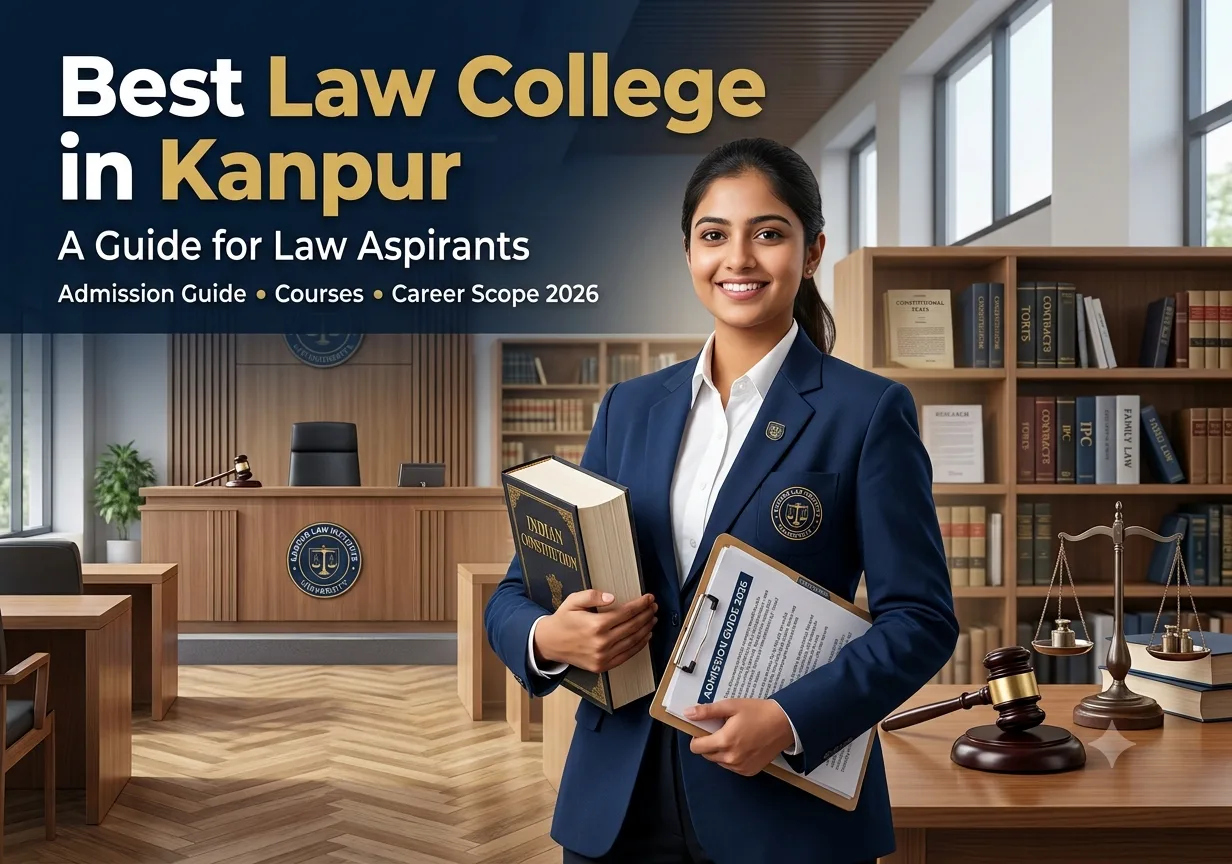
The legal profession has always been one of the most respected and rewarding career paths in India. With growing awareness of legal rights, increasing corporate regulations, and expanding opportunities in judiciary, corporate law, and legal consulting, pursuing a law degree has become a popular choice among students after Class 12 and graduation.
If you're planning to build a career in law, selecting the best law college in Kanpur is one of the most important decisions you'll make. The right institution not only provides quality legal education but also helps develop practical skills, critical thinking, advocacy, and professional ethics.
This guide explains everything aspiring law students should know before choosing a law college in Kanpur.

Why Choose Law as a Career?
Law is no longer limited to courtroom practice. Today, legal professionals work across multiple industries, including:
- Corporate organizations
- Judiciary
- Litigation
- Legal consultancy
- Intellectual Property Rights (IPR)
- Cyber Law
- Banking & Finance
- Government departments
- NGOs and international organizations
- Legal Process Outsourcing (LPO)
With India's rapidly evolving legal framework and digital economy, the demand for qualified legal professionals continues to grow.
What Makes a Good Law College?
Before taking admission, students should evaluate a law college on several important parameters.
1. Bar Council Recognition
The first thing to verify is whether the law program is approved by the Bar Council of India (BCI), as this is essential for students who wish to practice as advocates in India. (
2. Experienced Faculty
A strong law faculty with academic expertise and practical legal experience helps students understand both legal theory and real-world applications.
3. Practical Learning
Legal education goes beyond classroom lectures. Look for institutions that offer:
- Moot Court sessions
- Legal Aid Clinics
- Court visits
- Case study discussions
- Internship opportunities
- Research projects
These activities help students develop advocacy, drafting, and analytical skills.
4. Modern Infrastructure
A good law college should provide:
- Well-equipped library
- Digital learning resources
- Smart classrooms
- Computer labs
- Seminar halls
- Moot court facilities
Access to legal databases and updated reference materials is equally important.
5. Internship Support
Internships provide valuable exposure to:
- District Courts
- High Courts
- Law firms
- Corporate legal departments
- NGOs
- Government organizations
Practical experience helps students understand legal procedures and workplace expectations.
Popular Law Courses Available
Students can choose a law program based on their educational background.
BA LLB (5 Years)
Suitable for students after Class 12.
The course combines arts subjects with legal education, covering areas such as:
- Constitutional Law
- Criminal Law
- Contract Law
- Family Law
- Political Science
- Sociology
- Legal Research
BBA LLB (5 Years)
Ideal for students interested in corporate law.
It integrates business management with legal studies, preparing graduates for corporate legal roles.
LLB (3 Years)
Designed for graduates from any recognized discipline who wish to pursue law as a second degree.
Skills Every Law Student Should Develop
Success in the legal profession requires much more than academic knowledge.
Important skills include:
- Legal research
- Critical thinking
- Communication
- Public speaking
- Drafting legal documents
- Negotiation
- Analytical reasoning
- Problem-solving
- Time management
- Professional ethics
Developing these skills during college significantly improves career prospects.
Career Opportunities After Law
A law degree opens doors to diverse career paths.
Some of the most popular options include:
- Advocate
- Legal Advisor
- Corporate Lawyer
- Judicial Services
- Public Prosecutor
- Legal Consultant
- Compliance Officer
- Intellectual Property Lawyer
- Cyber Law Specialist
- Legal Researcher
- Civil Services
- Academia
Many graduates also pursue higher studies such as LLM or specialize in fields like arbitration, taxation, international law, or intellectual property.
Why Students Consider Rama University for Law Education
Among the institutions offering legal education in Kanpur, Rama University is one of the universities that provides integrated and undergraduate law programmes, including BA LLB, BBA LLB, and LLB through its Faculty of Juridical Sciences. These programmes are approved by the Bar Council of India and emphasize classroom learning along with practical legal exposure.
Students also benefit from facilities such as:
- Moot Court training
- Experienced faculty
- Library resources
- Seminars and workshops
- Internship opportunities
- Student-focused academic environment
When selecting any law college, students should compare curriculum, faculty, infrastructure, practical training, and placement support before making a final decision.
Admission Tips for Law Aspirants
Before applying to any law college:
- Verify BCI approval.
- Check eligibility requirements.
- Compare curriculum and specializations.
- Visit the campus if possible.
- Review internship and placement opportunities.
- Explore scholarship options.
- Speak with current students or alumni.
- Understand the fee structure before admission.
Making an informed decision can positively impact your legal career.
Final Thoughts
Choosing the best law college in Kanpur is about more than rankings—it's about finding an institution that supports your academic growth, practical training, and long-term career goals.
Whether you aim to become an advocate, corporate lawyer, legal consultant, or judicial officer, a strong legal education lays the foundation for success. Evaluate colleges based on recognition, faculty, infrastructure, practical exposure, and career support to make the right choice.
With careful planning and the right institution, your journey toward a successful legal career can begin with confidence.
FAQs
1. Which is the best law college in Kanpur?
The best law college depends on factors such as BCI approval, faculty, infrastructure, practical training, internships, and placement support. Students should compare these aspects before choosing.
2. Which law course is best after Class 12?
Students can choose BA LLB or BBA LLB, both of which are five-year integrated programmes designed for students after Class 12.
3. Is BCI approval important for law education?
Yes. If you want to practice as an advocate in India, your law programme should be approved by the Bar Council of India.
4. What are the career opportunities after completing LLB?
Graduates can work as advocates, corporate lawyers, legal consultants, judicial officers, compliance professionals, legal researchers, or pursue higher studies such as LLM.
5. Does Rama University offer law programmes?
Yes. Rama University offers BA LLB, BBA LLB, and LLB programmes through its Faculty of Juridical Sciences.