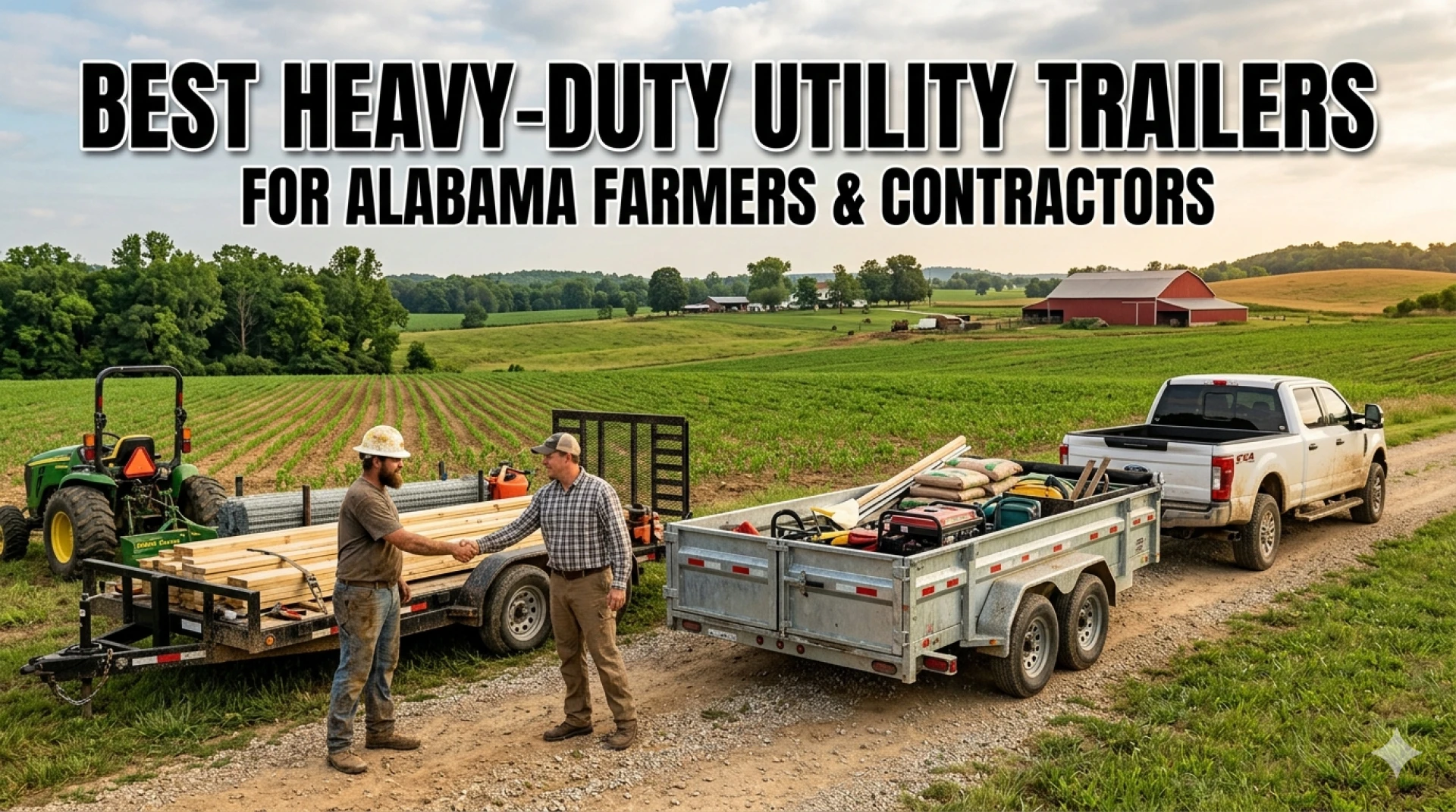
You ever notice how a good trailer quietly becomes the hardest-working thing you own? Not flashy. Not exciting. But once it’s there… you wonder how you managed without it.
Out in Alabama, where land stretches wide and work doesn’t exactly follow a neat schedule, trailers take a beating. Mud, gravel, heat, the occasional overloaded trip (yeah, we’ve all done it). That’s why picking the right one matters more than people think. Especially if you’re browsing utility trailers Alabama listings and feeling a bit stuck on what actually holds up.
Let’s talk about the kind that don’t complain. Or at least… don’t break down halfway through a job.
What “Heavy-Duty” Really Feels Like (Not Just Specs on Paper)
Numbers are fine. GVWR, axle ratings, steel gauge… all useful. But real life? It’s different.
A heavy-duty trailer is the one that doesn’t twist when you load unevenly because you were in a hurry. It’s the one that doesn’t rattle like loose change on backroads. It just… holds.
Farmers hauling hay or feed usually need something forgiving. Contractors? Slightly different story. They’re tossing in equipment, scrap, tools, sometimes all at once without thinking twice.
So yeah, heavy-duty isn’t just about “capacity.” It’s about how it behaves when things aren’t perfect.
Types That Actually Make Sense for Alabama Work
Not every trailer fits every job. Sounds obvious, but people still try to make one trailer do everything. That’s where trouble starts.
1. Tandem Axle Utility Trailers
If you’re hauling anything remotely serious, this is usually where people land.
Two axles = better weight distribution. Also feels more stable when you hit those uneven rural roads. You’ll see these a lot with farmers moving equipment or contractors hauling compact loaders.
A small downside? Slightly harder to maneuver in tight spaces. You get used to it though.
2. Equipment Trailers
These are… well, a bit more serious.
Low deck height, stronger frames, built for machines that aren’t exactly lightweight. Think skid steers, mini excavators, that kind of stuff.
Contractors tend to lean this way more than farmers. Though, honestly, I’ve seen farmers use them for tractors too when they don’t want to risk lighter trailers.
3. Utility Trailers with High Sides
These are underrated.
Especially for farm use. Hauling loose stuff—mulch, feed bags, tools that don’t stack neatly—becomes less annoying. Nothing falling out every five minutes.
Also decent for landscaping jobs. Not glamorous, but practical.
4. Dump Trailers (if budget allows)
Okay, these are a game-changer… but not cheap.
If you’re regularly hauling dirt, gravel, or debris, the ability to just dump everything without manual unloading? Huge relief. Saves time. Saves your back too, honestly.
Still, not everyone needs one. If your work isn’t material-heavy, might be overkill.
Features You’ll Actually Appreciate Later
Funny thing—people often skip small features to save money. Then regret it later.
A few that genuinely matter:
- Pressure-treated wood flooring – holds up better in Alabama humidity
- LED lights – less headache with wiring issues
- Brake systems on both axles – especially important for heavier loads
- Reinforced ramp gates – because ramps take a lot of abuse
And one more thing… tie-down points. You’ll always wish you had more of them.
Real-World Scenario (Because Specs Can Only Say So Much)
A contractor I know—he does small construction jobs—started with a single axle trailer. Said it was “good enough.”
For a while, it was.
Then came heavier loads. Concrete bags, tools, a small skid steer rental once in a while. The trailer didn’t fail instantly, but you could tell it was struggling. Tires wore unevenly. Frame started flexing a bit.
He switched to a tandem axle equipment trailer. Cost more, sure. But he stopped worrying. That’s the thing—you don’t really measure value until the stress disappears.
Farmers go through something similar, just with different loads. Feed, fencing supplies, sometimes livestock panels. It adds up fast.
Choosing Based on Your Actual Work (Not Aspirations)
Easy mistake: buying for what you might do someday.
Better approach? Buy for what you do every week.
- Moving light tools and supplies → single or light tandem axle
- Hauling tractors or heavy equipment → equipment trailer
- Frequent loose material hauling → high-side or dump trailer
Simple, but people overthink it. Or underthink it. Both happen.
Weather and Terrain… Yeah, They Matter More Than You Think
Alabama weather isn’t exactly predictable.
Rain one day, heat the next. Trailers sit outside a lot too. So corrosion resistance matters. Painted steel is fine, but powder-coated or treated frames last longer.
Then there’s terrain. Not every road is smooth. Gravel, slopes, uneven ground… a trailer that feels stable on highways might feel totally different on a farm road.
That’s where axle quality and suspension quietly matter.
Price vs Regret (a weird way to look at it, but stay with me)
People often ask, “What’s a good budget?”
Honestly… it depends on how much regret you can tolerate later.
Cheaper trailers exist. And sometimes they’re fine. But if you’re pushing limits regularly, cheaper turns into expensive over time—repairs, replacements, downtime.
Spending a bit more upfront usually hurts less than dealing with breakdowns mid-job. Especially when you’re already tired and just want to get home.
Maintenance… Not Fun, But Worth It
Nobody enjoys maintaining trailers. It’s one of those things you remember… a little late sometimes.
Still, basic stuff helps a lot:
- Check tire pressure before longer hauls
- Grease axle bearings occasionally
- Inspect wiring (especially after rain-heavy weeks)
- Tighten loose bolts—you’d be surprised how often they loosen
Skip these, and even a solid trailer starts acting up.
So… Which One Should You Actually Pick?
Depends on your day-to-day.
If I had to nudge you in a direction—just slightly—I’d say most farmers and contractors in Alabama end up happiest with a tandem axle utility trailer or a dedicated equipment trailer.
Not because they’re fancy. Just because they handle real work without constant second-guessing.
And that feeling? Worth a lot more than saving a few bucks upfront.
You’ll probably still debate it a bit before buying. Everyone does. Stand there, look at a few trailers, maybe tap the frame like that tells you something (we’ve all done that too).
Then pick the one that feels like it won’t let you down halfway through a long day.
That’s usually the right one.