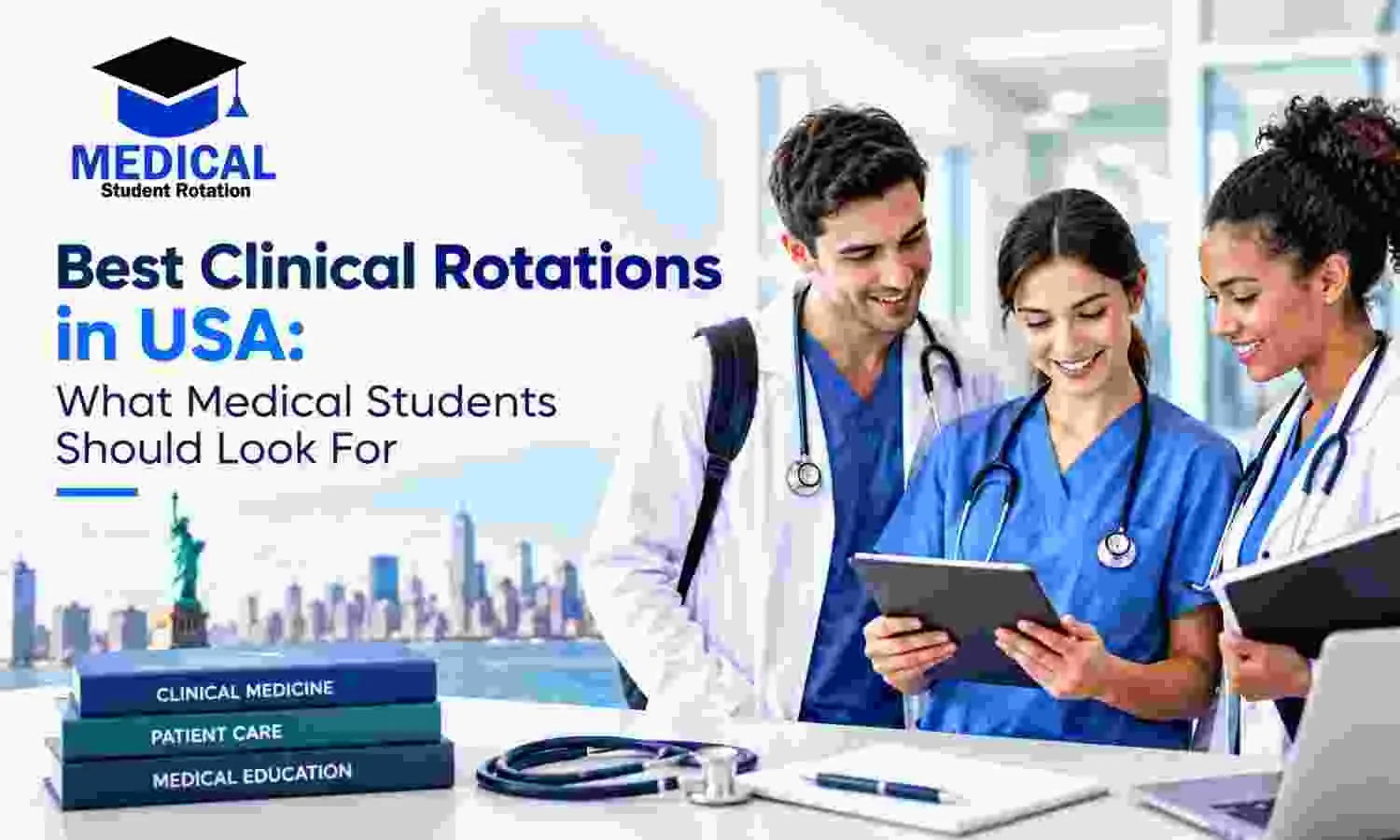
Choosing the right clinical rotation in the United States can be an important part of a medical student's journey, particularly for international medical graduates (IMGs) preparing for residency. A well-planned rotation can provide exposure to the U.S. healthcare system, strengthen clinical skills, and help students understand how physicians, residents, nurses, and other healthcare professionals work together.
However, finding the Best Clinical Rotations in USA is not simply about choosing a well-known hospital. Students should look at the specialty, location, type of clinical experience, eligibility requirements, supervision, schedule, and opportunities for meaningful patient interaction.
What Makes a Clinical Rotation Valuable?
Clinical rotations are designed to take medical knowledge from the classroom into real patient-care environments. According to the American Medical Association, core clerkships commonly include internal medicine, surgery, pediatrics, obstetrics and gynecology, family medicine, and psychiatry. Elective rotations allow students to explore specific specialties and areas of interest.
For students looking at rotations in the United States, several factors can make an experience more useful:
- Hospital-based clinical exposure
- Opportunities to observe or participate in patient care within the permitted scope
- Interaction with physicians and healthcare teams
- Exposure to electronic medical records and clinical workflows
- Specialty-specific experience
- Clear rotation dates and requirements
- Appropriate supervision and evaluation
- Support with practical arrangements when available
The right combination depends on the student's academic background and future residency plans.
Hospital-Based vs. Outpatient Rotations
One of the first things students should understand is the difference between hospital-based and outpatient experiences.
Hospital-based rotations can expose students to inpatient rounds, consultations, admissions, patient presentations, and multidisciplinary care. Outpatient rotations, meanwhile, generally focus more on clinic visits, follow-ups, preventive care, and longitudinal patient interactions.
Neither setting is automatically appropriate for every student. The better choice depends on the specialty and the student's learning objectives.
For example, a student interested in internal medicine may want exposure to inpatient medicine, while someone interested in primary care may benefit from substantial outpatient experience as well.
Consider the Specialty Before Choosing a Rotation
Students should ideally select rotations with a clear educational purpose rather than choosing based only on location.
If you are interested in internal medicine, look for opportunities that provide exposure to common inpatient conditions and physician-led rounds. Students interested in surgery may want to investigate rotations offering exposure to surgical teams and operating-room environments, subject to the host institution's rules.
Electives can also help students explore specialties they have not experienced at their home institution. The AAMC's Visiting Student Learning Opportunities (VSLO) program allows eligible students to search for opportunities by specialty, host institution, and geographic location.
Location Matters, But It Should Not Be the Only Factor
The United States offers clinical opportunities in large metropolitan areas as well as community and rural settings. AAMC notes that participating institutions can offer opportunities in teaching hospitals, community clinics, and urban or rural locations.
For an international student, location can also affect housing, transportation, daily expenses, and access to support services.
Medical Student Rotation offers hospital-based clinical rotation programs in several U.S. locations, including Chicago, Houston, Indiana, and New York. Its website currently lists one-month rotation options across multiple specialties and locations.
Check Eligibility and Application Requirements Early
Clinical rotation requirements vary by institution and program. Students should check eligibility criteria before making travel or scheduling arrangements.
For VSLO opportunities, students generally need to be connected with a participating Home institution before accessing the application service. The AAMC also advises students to review host institution information, application dates, and fees before applying.
Documents may include academic information, identification, immunization records, health documentation, malpractice coverage, or other materials depending on the program.
Medical Student Rotation currently asks applicants to submit documents including a CV, MMR, PPD, and COVID vaccination records as part of its application process.
Look Beyond the Rotation Title
Two rotations can have similar names but provide very different experiences. Before applying, students should ask practical questions:
How much time is spent in the hospital?
Knowing whether the experience is primarily inpatient, outpatient, observational, or mixed can prevent misunderstandings.
Who supervises students?
Students should understand which physicians or clinical teams they will work with.
What will the daily schedule look like?
Ask about rounds, clinic hours, teaching sessions, presentations, and other educational activities.
Will there be an evaluation?
A formal evaluation can provide useful feedback about clinical performance and participation.
What support is available?
For international students, assistance with housing, visa-related documentation, transportation information, or general logistics may be particularly useful.
Preparing for Your U.S. Clinical Rotation
Preparation should begin before the first day. Review common presentations related to your specialty, refresh your history-taking and physical-examination skills, and become familiar with commonly used medical terminology.
The AMA also recommends preparing for clinical rotations by reviewing common clinical presentations and refreshing core skills such as history-taking and physical examinations.
For international medical graduates, it can also help to become familiar with professional communication in U.S. clinical settings. Understanding how physicians present patients, communicate with teams, document information, and interact with patients can make the transition smoother.
How Medical Student Rotation Supports IMGs
For students looking for structured clinical opportunities in the United States, Medical Student Rotation provides hospital-based programs designed with international medical graduates in mind. The organization states that its programs include clinical rotations across multiple U.S. locations and specialties, along with support services such as housing and visa assistance.
Its current rotation process involves selecting a rotation, confirming the placement, submitting required documents, and beginning the clinical experience.
For students comparing different opportunities, reviewing the rotation setting, specialty, location, schedule, requirements, and available support can make the selection process much clearer.
Frequently Asked Questions
What are the best clinical rotations in USA for medical students?
The right rotation depends on your specialty, career plans, eligibility, and desired clinical environment. Students should compare hospital setting, specialty exposure, supervision, duration, location, and application requirements before choosing.
Can international medical graduates do clinical rotations in the USA?
Yes, some U.S. institutions and rotation providers offer opportunities for international medical graduates, although eligibility and documentation requirements vary by program.
How long are U.S. clinical rotations?
The duration varies by institution and program. Core clerkships can commonly last four to eight weeks, while elective and away rotation structures differ by school and specialty.
Are hospital-based rotations useful for residency preparation?
Hospital-based experiences can expose students to U.S. clinical workflows, patient-care teams, and specialty-specific environments. Their usefulness depends on the student's goals and the structure of the individual rotation.
How can Medical Student Rotation help?
Medical Student Rotation offers hospital-based clinical rotations in multiple U.S. locations and specialties, with services that include rotation coordination and support for international students.
Start Planning Your U.S. Clinical Experience
Finding the Best Clinical Rotations in USA starts with understanding what you actually need from the experience. Instead of choosing based only on location or reputation, compare the specialty, clinical setting, supervision, duration, eligibility requirements, and student support.
For IMGs seeking a structured clinical experience in the United States, Medical Student Rotation provides rotation options across several locations and specialties, helping students explore available opportunities based on their individual goals.