
Introduction
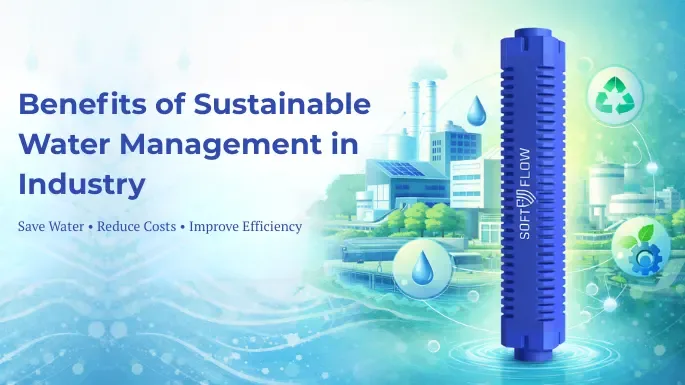
Sustainable water management in industry offers benefits like significant cost savings, enhanced operational resilience against shortages, improved environmental protection by reducing pollution and conserving resources, better regulatory compliance, and a stronger brand reputation, all while securing a stable water supply for future operations and communities.
Economic Benefits
- Cost Reduction: Lower expenses from reduced water purchases, treatment, and energy for pumping/heating.
- Increased Efficiency: Optimized water use leads to less waste and higher productivity.
- Supply Security: Reduces vulnerability to water scarcity, preventing costly shutdowns.
Environmental Benefits
- Resource Conservation: Minimizes freshwater depletion by reusing and recycling water.
- Pollution Control: Less wastewater discharged protects local ecosystems and water bodies.
- Ecosystem Health: Preserves aquatic habitats and groundwater levels.
Operational & Regulatory Benefits
- Compliance: Proactive management meets increasingly strict environmental laws, avoiding fines.
- Resilience: Better prepared for climate change impacts and water disruptions.
- Innovation: Drives adoption of advanced treatment and monitoring technologies.
Social & Reputational Benefits
- Enhanced Reputation: Demonstrates corporate social responsibility (CSR) and attracts eco-conscious consumers.
- Community Support: Contributes to local water security and public health.
Key Strategies for Industry
- Water Recycling & Reuse: Treating and reusing water within the facility for processes.
- Leak Detection & Fixing: Minimizing losses from infrastructure.
- Water-Efficient Technologies: Installing efficient fixtures and advanced filtration.
- Smart Monitoring: Using IoT and data analytics for real-time insights.
Conclusion:
Ultimately, the transition to sustainable water use represents a fundamental shift in industrial design. Implementing closed-loop systems ensures that every drop is accounted for, treated as a precious resource, and kept within the production cycle for as long as possible.
Success in this area requires a blend of innovative engineering, real-time data monitoring, and a culture of conservation. For industries willing to invest today, the reward is a secure, profitable, and environmentally harmonious future.
Frequently Asked Questions (FAQs)
Qus: Does sustainable water management really save money?
Ans: Yes. Beyond lower utility bills, it reduces energy use for pumping/heating and minimizes wastewater discharge fees, leading to a significant long-term ROI.
Qus: Is this only for large-scale factories?
Ans: No. While large plants use complex systems, small businesses benefit from simpler steps like leak detection, rainwater harvesting, and upgrading to high-efficiency fixtures.
Qus: How does it protect a business from climate change?
Ans: By implementing recycling and onsite storage, companies become less dependent on municipal supplies, protecting operations from drought-related shut-downs or price hikes.
Qus: Will recycled water damage industrial equipment?
Ans: Actually, the opposite is often true. Advanced filtration like Reverse Osmosis allows companies to “tune” water quality, often making it cleaner and less corrosive than standard tap water.
Qus: What is the first step toward water sustainability?
Ans: A water audit. You can’t manage what you don’t measure; identifying exactly where water enters and leaves your facility is the foundation of any strategy.