If you are passionate about fashion and planning to build a career in this creative industry, choosing the right degree is one of the most important decisions you will make. Two popular options that often confuse students are B Des Fashion Designing and BSc Fashion Designing. While both programs lead you into the fashion world, they are quite different in terms of curriculum, focus, career outcomes, and the kind of professional they shape you into.
Let's break it down in simple terms so you can make an informed choice.
What Is B Des Fashion Designing?
B Des stands for Bachelor of Design. The b des fashion designing program is a four-year undergraduate degree that focuses heavily on creativity, design thinking, aesthetics, and the art of fashion. It is structured to build your visual intelligence, creative expression, and design problem-solving skills from the ground up.
The B.Des. (Honors) (Fashion Design) program dives deep into the world of style, creativity, and functional design. Students gain hands-on experience across every stage of the fashion ecosystem. The curriculum includes subjects like garment construction, textile studies, fashion illustration, design history, collection development, branding, and portfolio building.
This program is best suited for students who want to become fashion designers, creative directors, stylists, or start their own label someday.
What Is BSc Fashion Designing?
BSc stands for Bachelor of Science. A BSc in Fashion Designing is typically a three-year program that leans more toward the technical and scientific side of fashion. It covers topics like fabric technology, production management, quality control, pattern making, and fashion merchandising.
While creativity is still a part of the course, the emphasis here is more on understanding how fashion works from a manufacturing and production standpoint rather than purely a design perspective.
Key Differences Between B Des and BSc Fashion Designing
1. Duration of the Program
One of the first differences you will notice is the course duration. A B Des Fashion Designing program is typically four years long, often with an honors structure that allows deeper specialization. A BSc fashion designing program, on the other hand, is usually completed in three years.
The extra year in B Des is dedicated to advanced studio projects, internships, thesis work, and real-world design exposure all of which are incredibly valuable when you enter the job market.
2. Focus and Approach
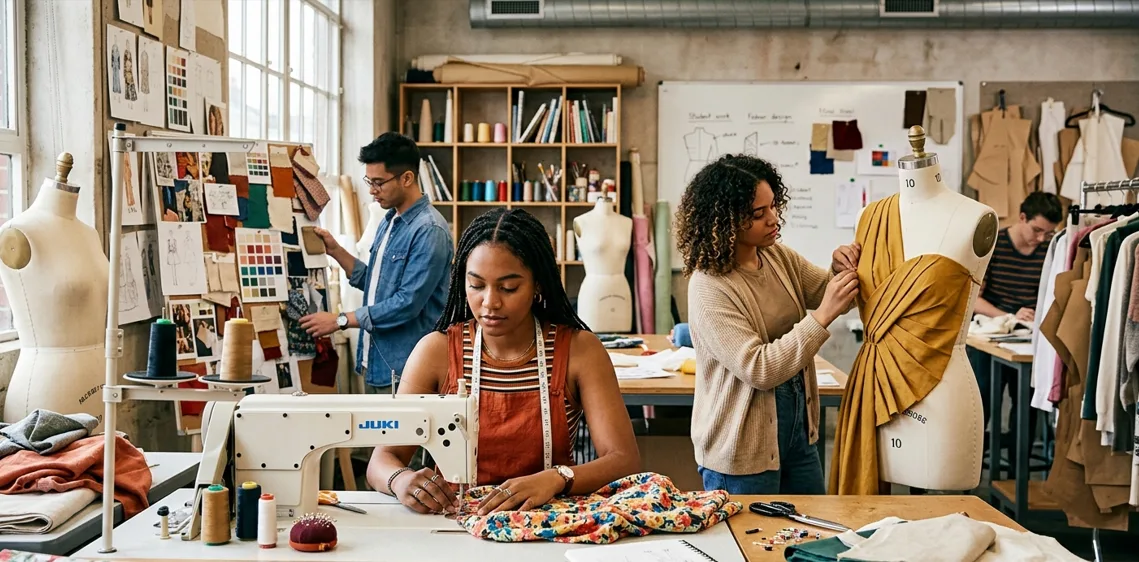
The B Des program is designed. It encourages students to think like designers to observe, question, experiment, and create. You spend a lot of time in studios developing collections, working with fabrics, sketching ideas, and building your personal design language.
The BSc program is more science-led. It trains you to understand the technical backbone of the fashion industry how garments are made at scale, how quality is maintained, and how supply chains function. It is more structured and systematic in its teaching approach.
3. Curriculum and Subjects
In a B Des Fashion Designing program, you can expect subjects like:
- Fashion Illustration and Design Theory
- Textile and Fabric Studies
- Garment Construction and Pattern Making
- Fashion History and Cultural Studies
- Collection Development and Presentation
- Branding, Styling, and Visual Merchandising
- Portfolio Development and Capstone Projects
In a BSc Fashion Designing program, subjects often include:
- Fabric Science and Textile Technology
- Apparel Production and Manufacturing
- Fashion Merchandising and Retail Management
- Quality Control and Testing
- Computer-Aided Design (CAD)
- Supply Chain and Logistics in Fashion
Both have their own merit depending on where you see yourself five years from now.
4. Career Paths
This is where the difference becomes most clear.
Graduates of b des fashion designing programs typically go on to become:
- Fashion Designers
- Textile and Print Designers
- Creative Directors
- Fashion Stylists
- Costume Designers
- Entrepreneurs and Brand Founders
BSc Fashion Designing graduates often find strong career opportunities in:
- Apparel Manufacturing and Production
- Quality Assurance and Control
- Fashion Buying and Merchandising
- Retail Management
- Supply Chain Coordination
- Textile Export and Trade
If you dream of creating your own collections or working in a design studio, B Des is the more natural fit. If you are interested in the business and production side of fashion, BSc gives you a strong technical foundation.
5. Admission Requirements
B Des programs are usually more competitive. Most top design schools require students to clear an entrance exam that tests creativity, spatial reasoning, and design aptitude — such as NID DAT, NIFT entrance exam, or UCEED. A strong portfolio can also play a role in selection.
BSc programs generally require a science background at the 10+2 level, and admissions may be based on merit or a written test depending on the institution.
6. Industry Recognition and Global Scope
B Des degrees from reputed design institutes are well recognized globally. If you plan to pursue higher education abroad or work with international fashion brands, a B Des gives you a stronger design credential.
BSc degrees are well respected within the production and merchandising sectors and are valued by Indian and export-oriented fashion companies.
Which One Should You Choose?
Ask yourself one honest question do you want to create fashion or manage fashion?
If your answer is to create to sketch, design, and bring original ideas to life choose B Des Fashion Designing. It will shape you into a true design thinker.
If your answer is to manage to oversee how fashion is produced, distributed, and sold BSc Fashion Designing is a smart and practical choice.
Both are rewarding paths. The fashion industry needs talented designers just as much as it needs skilled production and business professionals. What matters most is that your degree aligns with your passion and your long-term career vision.
Final Thoughts
Choosing between B Des and BSc Fashion Designing is not about which is better it is about which is better for you. Take time to research colleges, visit campuses, if possible, speak to alumni, and understand the kind of work each program prepares you for. Your investment in the right education today will define the kind of fashion professional you become tomorrow.