
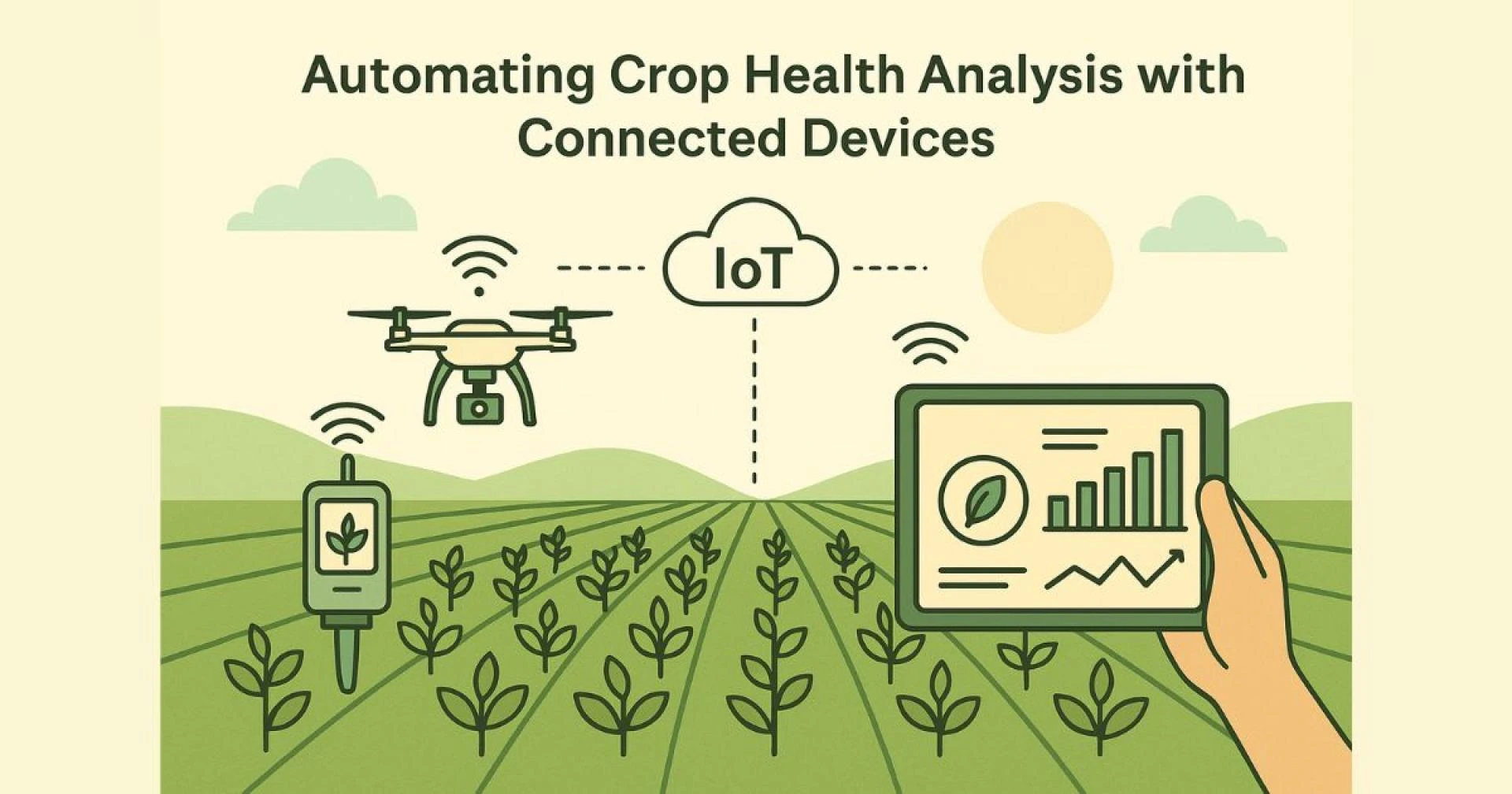
In recent years, precision agriculture has emerged as a game-changer for farmers looking to improve yields, reduce costs, and promote sustainability. Central to this transformation is the integration of connected devices that facilitate real-time data collection and analysis. With the growing adoption of Crop Monitoring System Using IoT, the ability to automate crop health analysis is becoming a practical reality rather than a futuristic concept.
The Shift Toward Smart Farming
Traditional farming relied heavily on experience, observation, and manual labor. While effective to a degree, these methods lack the precision required to meet modern agricultural challenges such as climate variability, pest outbreaks, and soil degradation. The evolution toward smart farming introduces automation, artificial intelligence (AI), and Internet of Things (IoT) technologies to address these pain points.
By leveraging connected devices—ranging from drones and soil sensors to weather stations and satellite imagery—farmers can now obtain accurate and timely insights into their crops' condition. These technologies form the backbone of automated crop health analysis, enabling proactive rather than reactive decision-making.
Key Components of an Automated Crop Health Analysis System
Automated crop health analysis systems typically comprise a network of connected devices, software platforms, and AI-driven analytics. Here’s a breakdown of the essential components:
1. IoT-Enabled Sensors
These sensors are embedded in the field to continuously monitor variables such as soil moisture, temperature, pH levels, and nutrient content. The real-time data collected is transmitted to cloud-based platforms for further processing. These insights help in identifying water stress, nutrient deficiencies, and early signs of disease.
2. Remote Sensing Devices
Drones and satellites equipped with multispectral and thermal imaging cameras offer a bird’s-eye view of the farmland. This aerial imagery helps in detecting changes in plant coloration, canopy temperature, and other stress indicators, which are often invisible to the naked eye.
3. Data Aggregation Platforms
The data collected from various sources is integrated into a central software platform, often cloud-based. These platforms use algorithms and machine learning models to analyze trends, detect anomalies, and generate actionable insights.
4. Decision Support Systems
Based on the analyzed data, decision support systems offer recommendations for irrigation schedules, pesticide application, and harvesting times. These systems not only enhance crop health but also optimize resource usage.
Benefits of Automating Crop Health Analysis
The advantages of deploying an automated system for crop health analysis are multifold:
● Early Detection of Crop Diseases
Connected devices enable constant monitoring, allowing for the early detection of diseases or pest infestations. Timely intervention can prevent large-scale crop losses and reduce the need for excessive pesticide use.
● Improved Yield Prediction
By tracking growth patterns, environmental factors, and plant stress indicators, automated systems can provide accurate yield forecasts. This helps farmers make better financial and logistical decisions.
● Resource Optimization
Precision monitoring ensures that water, fertilizers, and pesticides are applied only when and where needed. This not only cuts down input costs but also minimizes environmental impact.
● Labor Efficiency
Automation reduces the need for constant manual inspection, freeing up labor for other critical tasks. This is especially beneficial for large-scale farms where manual crop monitoring is time-consuming and impractical.
● Enhanced Data-Driven Decision Making
With a reliable Crop Monitoring Systems infrastructure, farmers and agronomists can base their decisions on real-time, empirical data rather than intuition alone. This leads to more consistent and reliable outcomes.
Use Cases in the Field
● Smart Greenhouses
In greenhouse environments, IoT sensors control humidity, light, and temperature conditions. These settings can be adjusted automatically to ensure optimal growing conditions, enhancing plant health and productivity.
● Open Field Farming
In traditional open-field scenarios, drones equipped with imaging technology scan vast areas quickly, identifying problem zones. Farmers receive alerts via mobile apps or dashboards and can address the issues immediately.
● Disease Forecasting
By integrating historical data, weather forecasts, and current field conditions, software platforms can predict the likelihood of disease outbreaks. Farmers can take preventive measures, reducing dependency on chemical treatments.
Challenges and Considerations
Despite the benefits, the automation of crop health analysis does come with challenges:
● Connectivity Issues
Many rural areas lack reliable internet connectivity, which is essential for the seamless functioning of IoT-based systems.
● High Initial Costs
The setup of connected systems—sensors, drones, platforms—requires a significant initial investment, which can be a barrier for small-scale farmers.
● Data Privacy and Security
With the growing use of cloud-based systems, ensuring the security and privacy of agricultural data is paramount.
● Technical Literacy
Farmers may require training to use and interpret the data generated by these systems. This necessitates collaboration with tech providers and agricultural extension services.
The Future of Crop Health Monitoring
The ongoing advancements in AI, machine learning, and edge computing are making automated crop health analysis more accessible and effective. Future systems are expected to:
- Integrate blockchain for traceability and data integrity
- Use predictive analytics to simulate crop behavior under varying conditions
- Support voice-assisted technology for ease of use among non-tech-savvy farmers
- Combine weather prediction with field data for enhanced risk management
Moreover, government initiatives and agritech startups are playing a crucial role in democratizing access to these technologies. Partnerships between public and private sectors will be vital in scaling adoption and making automated systems viable for all farm sizes.
Conclusion
Automating crop health analysis using connected devices is no longer a luxury but a necessity in modern agriculture. It empowers farmers with timely insights, enables smarter decisions, and fosters sustainable farming practices. As Crop Monitoring System Using IoT technology continues to evolve, the promise of resilient and data-driven agriculture becomes more tangible. With the right infrastructure, education, and support, the benefits of this innovation can reach even the most remote farms—ushering in a new era of productivity and sustainability in farming.