
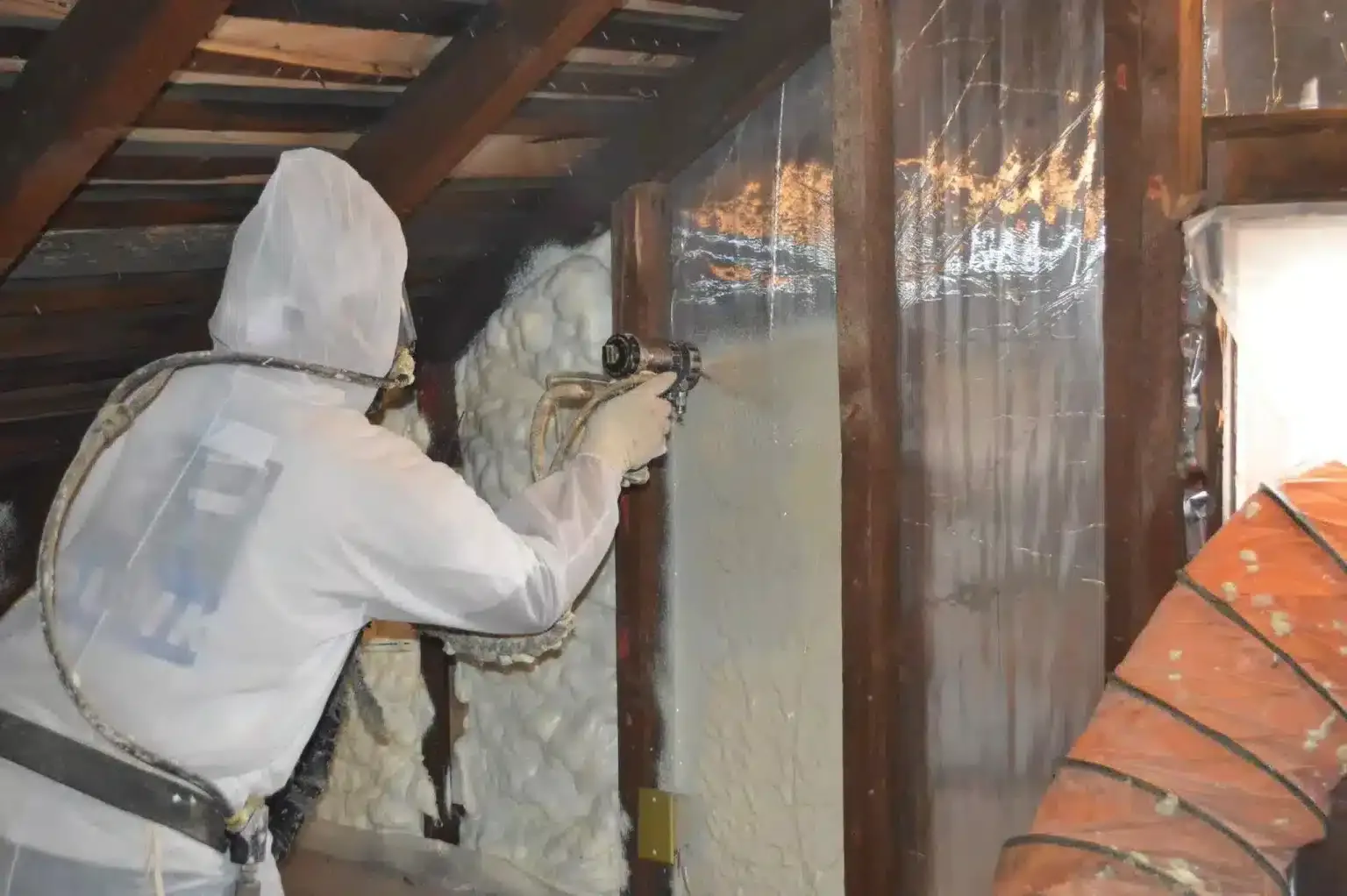
Attic spray foam insulation in Fresno, CA, can help reduce unwanted heat transfer, seal air leaks, and improve indoor comfort when the attic is properly assessed and the right foam system is installed. For homes with hot attic spaces, uneven temperatures, air leakage, or poorly insulated roof assemblies, spray foam attic insulation can address both insulation and air-sealing needs in one application.
For homeowners considering attic insulation in Fresno, CA, the key questions are not just which insulation looks best. The attic assembly, existing insulation, roof condition, ventilation, moisture, access, and California requirements all matter. This guide explains how attic spray foam works, where it can help, how it compares with other insulation, and what Fresno homeowners should consider before installation.
Why Attic Spray Foam Is Considered For Fresno Homes
Fresno experiences long, hot summers, which can place significant heat loads on attics and the cooling systems serving the home. A poorly insulated or leaky attic can allow unwanted heat transfer and air movement between the attic and living areas.
Spray foam can be useful because it can provide insulation while also helping form an air barrier when installed as part of an appropriate assembly. The U.S. Department of Energy's Building Science Education resources identify attic air sealing as an important part of improving the separation between conditioned living space and the attic.
Where Attic Spray Foam Can Help
An attic assessment may identify several areas that contribute to comfort problems:
- Roofline: Spray foam can be applied along the roofline in suitable unvented attic assemblies to move the thermal boundary closer to the roof.
- Attic Floor: In a vented attic, insulation and air sealing at the ceiling level can help separate the living space from the hot attic.
- Penetrations: Wiring, plumbing openings, duct chases, and other penetrations can create paths for unwanted air movement.
- Rim and Framing Areas: Gaps around framing connections can contribute to air leakage when they are not properly sealed.
The correct location for insulation depends on the home's design. A contractor should not assume that every attic needs foam at the roofline.
Benefits Of Spray Foam Attic Insulation
The main benefit comes from improving the building envelope rather than simply adding a layer of material. A properly planned attic system can address several common comfort and energy concerns.
Better Indoor Temperature Control
A hot attic can contribute to heat transfer into rooms below. Improving the attic's insulation and air barrier can reduce that transfer and help rooms maintain more stable temperatures.
Air Sealing Around Gaps
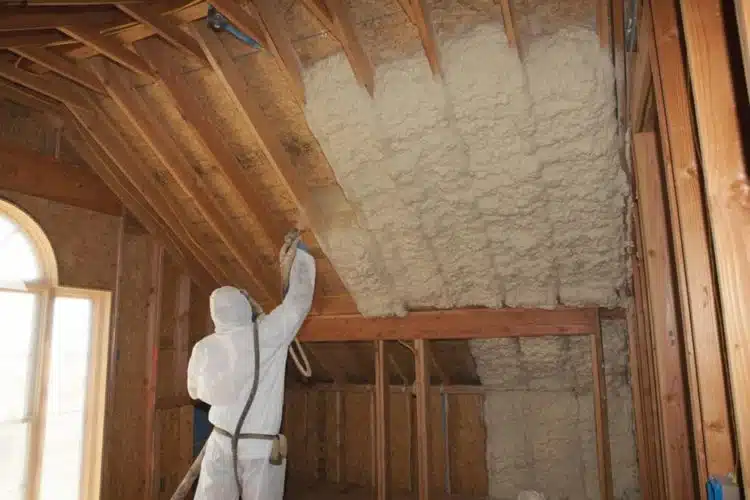
Spray foam can expand around many irregular surfaces and seal suitable gaps. This can be useful around penetrations and framing areas where simple batt insulation may not stop air movement.
Support for HVAC Performance
When unwanted heat gain and air leakage are reduced, the cooling system may have less work to do to maintain indoor conditions. Actual energy savings depend on the home's existing envelope, HVAC system, insulation level, air leakage, and other factors.
Improved Attic Comfort
For homes with HVAC equipment or ductwork located in the attic, the temperature conditions around that equipment can matter. A properly designed roofline insulation approach can change the thermal environment of the attic.
Better Building Envelope Performance
A complete insulation project considers more than R-value. Air leakage, thermal bridges, moisture, roof condition, windows, ducts, and mechanical systems can all affect the home's overall performance.
Open-Cell vs. Closed-Cell Spray Foam
Fresno homeowners may encounter both open-cell and closed-cell spray foam. The two products have different physical properties and should not be treated as interchangeable.

Product specifications, thickness, building design, and code requirements should guide the selection.
Spray Foam vs. Other Attic Insulation
Spray foam is not the only attic insulation option. Fiberglass and blown-in insulation can also work well in suitable assemblies, particularly when the primary goal is insulating a vented attic floor.
Fiberglass
Fiberglass batts or blown-in fiberglass can provide thermal insulation when installed correctly. However, insulation alone does not automatically seal every air leak around penetrations and framing.
Blown-In Cellulose
Blown-in cellulose is commonly used over attic floors and can provide substantial insulation coverage. Air sealing still needs attention before insulation is installed.
Spray Foam
Spray foam can combine insulation with air sealing in suitable locations. Its higher material and installation cost can make project planning especially important.
The best choice depends on the attic design, existing insulation, air leakage, moisture conditions, budget, and intended thermal boundary.
Pros And Cons Of Attic Spray Foam
A balanced evaluation helps homeowners avoid choosing insulation based only on marketing claims.
Advantages
- Air Sealing: Spray foam can seal suitable gaps and penetrations while providing insulation.
- Irregular Surfaces: The material can conform to many framing areas and hard-to-reach surfaces.
- High Insulation Value Per Inch: Closed-cell foam can provide a higher R-value per inch than many other insulation materials.
- Roofline Applications: In suitable designs, foam can be installed at the roofline to create an unvented attic assembly.
Limitations
- Higher Initial Cost: Spray foam generally costs more than many traditional attic insulation options.
- Installation Quality Matters: Poor mixing, incorrect application, or unsuitable thickness can affect performance.
- Existing Problems Must Be Addressed: Roof leaks, damaged sheathing, or moisture problems should not simply be covered with foam.
- Occupancy Restrictions: Spray foam application requires controlled work practices, ventilation, and manufacturer-specific re-entry guidance.
Common Fresno Attic Problems
Many attic insulation projects begin because a homeowner notices a problem inside the house.
Rooms That Stay Hot
A bedroom may become noticeably warmer during Fresno's summer afternoons even though the HVAC system is operating. The attic insulation level, air leakage, duct location, and solar heat gain may all play a role.
High Cooling Demand
An attic with weak insulation or significant air leakage can increase the cooling load. An inspection can help identify which building-envelope issues should be addressed first.
Drafts and Air Leakage
Air can move through gaps around ceiling penetrations, recessed fixtures, plumbing, wiring, attic access panels, and framing joints. Sealing these areas can be an important part of attic work.
Old or Damaged Insulation
Older insulation may have settled, become contaminated, been disturbed by work, or lost coverage in certain areas. Replacement is not always the first step. The existing material and attic conditions should be evaluated before adding or removing insulation.

How Fresno Weather Affects Attic Insulation
Fresno's hot, dry climate makes attic heat management especially relevant during the warmer part of the year. Summer attic temperatures can place additional heat load on the building envelope and HVAC system.
Application conditions also matter. Spray foam installation requires proper substrate conditions, product handling, ventilation, and temperature and humidity controls specified by the manufacturer.
For occupied homes, installation planning is also important. The U.S. EPA advises that occupants and unprotected workers should stay out of areas during SPF application and that re-entry should follow product-specific curing, ventilation, and cleanup requirements.
Understanding R-Value In Attic Insulation
R-value measures resistance to heat flow. A higher R-value generally means greater resistance to heat transfer, but R-value alone does not determine how well an attic performs.
Air leakage, installation quality, thermal bridges, moisture, ductwork, roof design, and the location of the insulation layer also affect performance.
California's current requirements should be reviewed for the specific project. The 2025 California Energy Code applies to building permit applications submitted on or after January 1, 2026, and includes requirements for residential and nonresidential building energy performance. California Energy Commission 2025 Building Energy Efficiency Standards
What A Professional Attic Spray Foam Installation Should Include
A good project starts before the foam is sprayed. The attic should be inspected so the contractor understands the existing conditions.
Inspection and Planning
The contractor should examine roof sheathing, existing insulation, penetrations, ventilation, moisture signs, electrical and mechanical components, and the intended location of the thermal boundary.
Preparation
Roof leaks and other building problems should be addressed before insulation work. Surfaces should also be prepared according to the spray foam manufacturer's requirements.
Foam Application
The foam should be installed according to the product's specifications, including appropriate thickness, lift requirements, temperature conditions, and safety procedures.
Final Review
The completed work should be checked for missed areas, gaps, inconsistent coverage, access issues, and other visible installation concerns.
Why An Attic Insulation Contractor Matters
Attic spray foam is a building-envelope project, not simply a matter of spraying foam into an attic. The location of the air barrier, roof design, ventilation strategy, insulation thickness, and moisture conditions all affect the result.
An experienced attic insulation contractor should be able to explain why a particular foam type and installation location fit the home's design. The contractor should also identify conditions that need correction before insulation is installed.
Why Consider Supreme Spray Foam-Fresno?
Supreme Spray Foam – Fresno provides spray foam insulation services for residential and commercial properties. The company can assess attic conditions, existing insulation, air leakage concerns, and the intended insulation approach before recommending a project.
Marcus Bennett, owner of Supreme Spray Foam – Fresno, has more than 10 years of experience in spray foam insulation. His work focuses on energy-efficient solutions, technical knowledge, quality workmanship, and practical service for property owners.
For homeowners comparing attic spray foam insulation in Fresno, CA, a project assessment can help determine if spray foam is appropriate or if another insulation method better fits the attic.
Is Attic Spray Foam Worth Considering?
Attic spray foam can make sense when a home has significant air leakage, inadequate insulation, difficult-to-seal penetrations, or an attic assembly where roofline insulation is appropriate.
It is not automatically the right choice for every home. The existing attic condition, roof assembly, moisture exposure, ventilation, budget, and desired thermal boundary should be reviewed first.
Get Attic Spray Foam Insulation In Fresno, CA
For homeowners considering attic spray foam insulation in Fresno, CA, they can contact Supreme Spray Foam – Fresno for an attic assessment and project discussion.
Phone: (559) 545-0800 Email: [email protected]
A professional assessment can help identify air leaks, insulation gaps, moisture concerns, and the most suitable location for the insulation before installation begins.
FAQs About Attic Spray Foam Insulation
Is Spray Foam Good For Attics?
Spray foam can be effective in suitable attic assemblies because it can provide insulation and air sealing. The appropriate installation location depends on the home's design and the desired thermal boundary.
Should Spray Foam Go On The Attic Floor Or Roof?
It depends on the attic design. Vented attics commonly keep the thermal boundary at the ceiling, while suitable unvented attic designs can place insulation at the roofline.
Does Attic Spray Foam Reduce Energy Bills?
It can reduce unwanted heat transfer and air leakage, which may reduce heating and cooling demand. Actual savings vary based on the home's condition, HVAC equipment, insulation levels, and other factors.
Is Open-Cell Or Closed-Cell Foam Better For An Attic?
Neither is automatically better for every attic. The choice depends on the assembly, required insulation level, moisture conditions, vapor control needs, available space, and product specifications.
Can Spray Foam Be Installed Over Old Attic Insulation?
The existing insulation should be evaluated first. Damaged insulation, moisture problems, roof leaks, contamination, or access issues may require corrective work before new insulation is installed.
Can Homeowners Stay Inside During Spray Foam Installation?
Occupants generally need to stay away from the application area during installation. Re-entry should follow the product manufacturer's requirements for curing, ventilation, and cleanup.
Author And Reviewer
Author: Marcus Bennett
I'm Marcus Bennett, owner of Supreme Spray Foam-Fresno, with over 10 years of experience in spray foam insulation. I'm dedicated to providing lasting, energy-efficient solutions for residential and commercial properties, combining technical expertise, quality workmanship, and a customer-first approach on every project. That dedication to lasting, energy-efficient solutions and a customer-first approach guides every project I take on, whether it's a residential home or a commercial property, because technical expertise and quality workmanship matter on every job. Delivering that same lasting, energy-efficient result remains my focus for every client I serve.
Reviewer: Emma Robinson
Emma Robinson contributed her knowledge from 8 years of working in the spray foam industry. Her review helped shape this content with ideas grounded in what contractors and homeowners actually value.