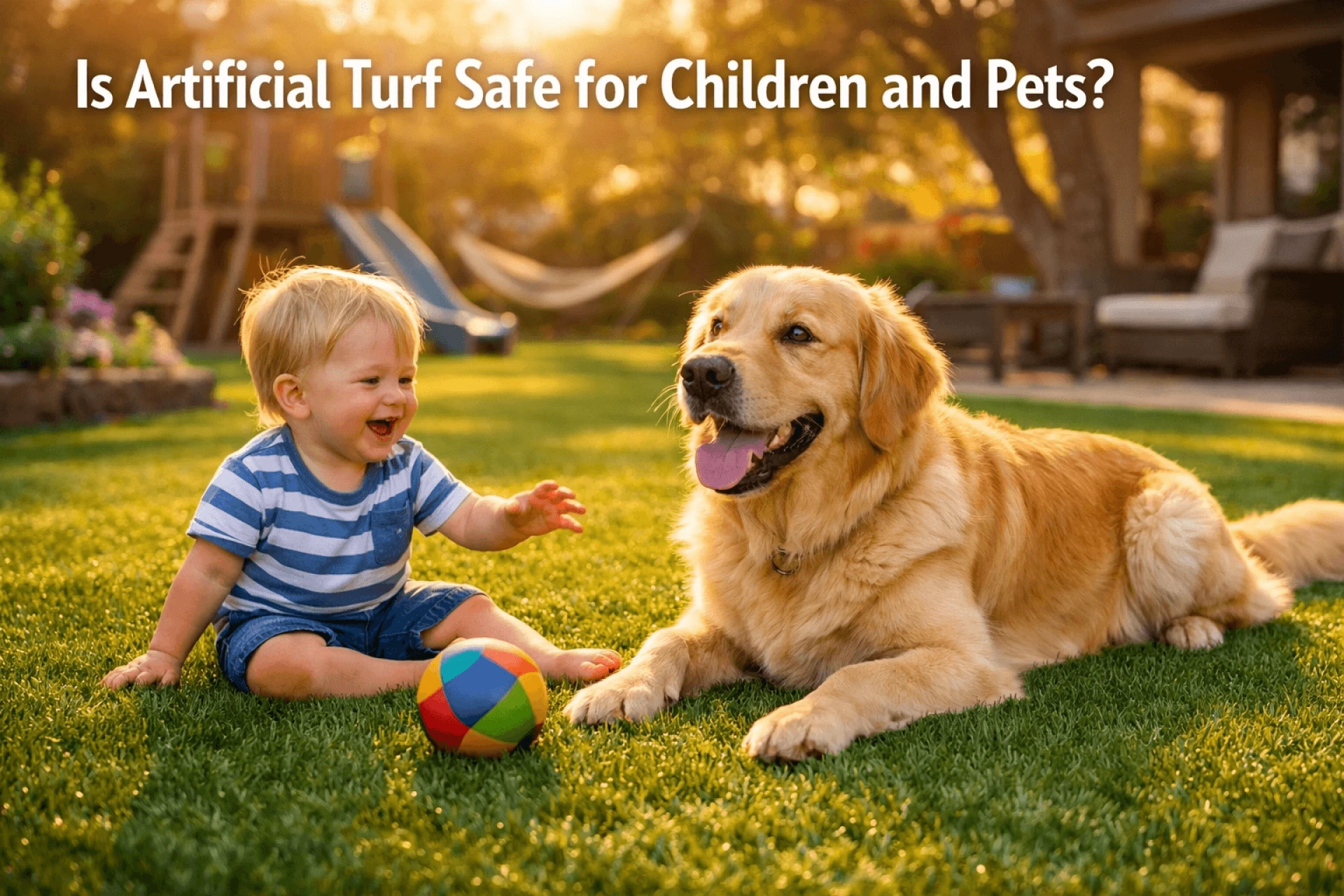
If you’re searching this, you’re probably not looking for a marketing pitch. You want a straight answer. Is artificial turf actually safe for kids rolling around barefoot and dogs digging their nose into it every afternoon? Or are there health risks nobody talks about?
I’ve worked on residential landscaping projects for over a decade — schools, daycare centers, small backyards with two Labradors that treat grass like a wrestling mat. I’ve seen both good installations and some questionable ones. The real takeaway is: artificial turf can be safe for children and pets, but only when the right materials, installation methods, and maintenance practices are used.
Not all turf is created equal. That’s where most confusion begins.
Understanding What Artificial Turf Is Made Of
At its core, artificial turf is a layered system. People think it’s just plastic grass. It’s not.
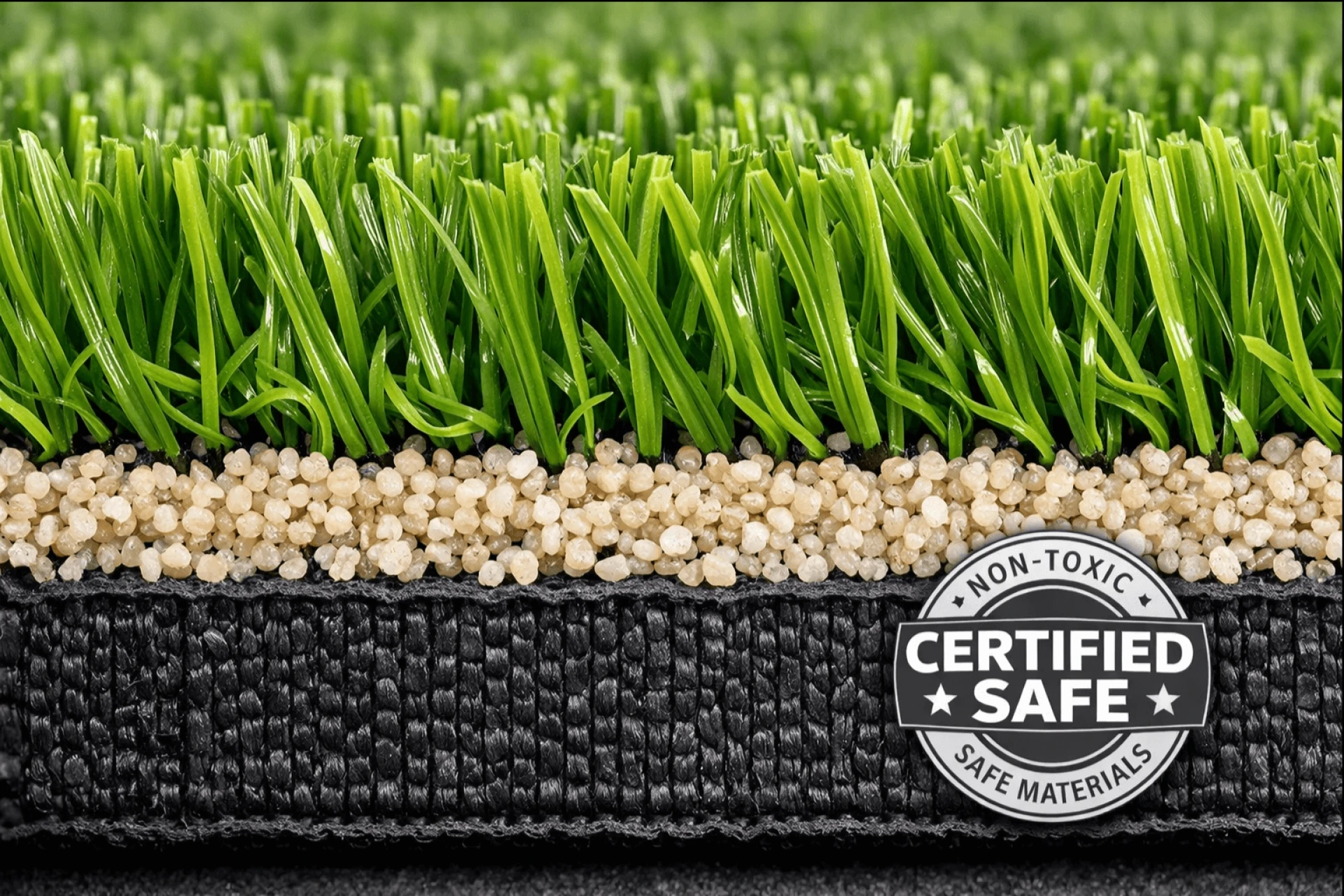
A typical installation includes:
- Synthetic polyethylene or polypropylene fibers (the “grass” blades)
- A latex or polyurethane backing
- Infill (rubber crumb, silica sand, or newer organic infills)
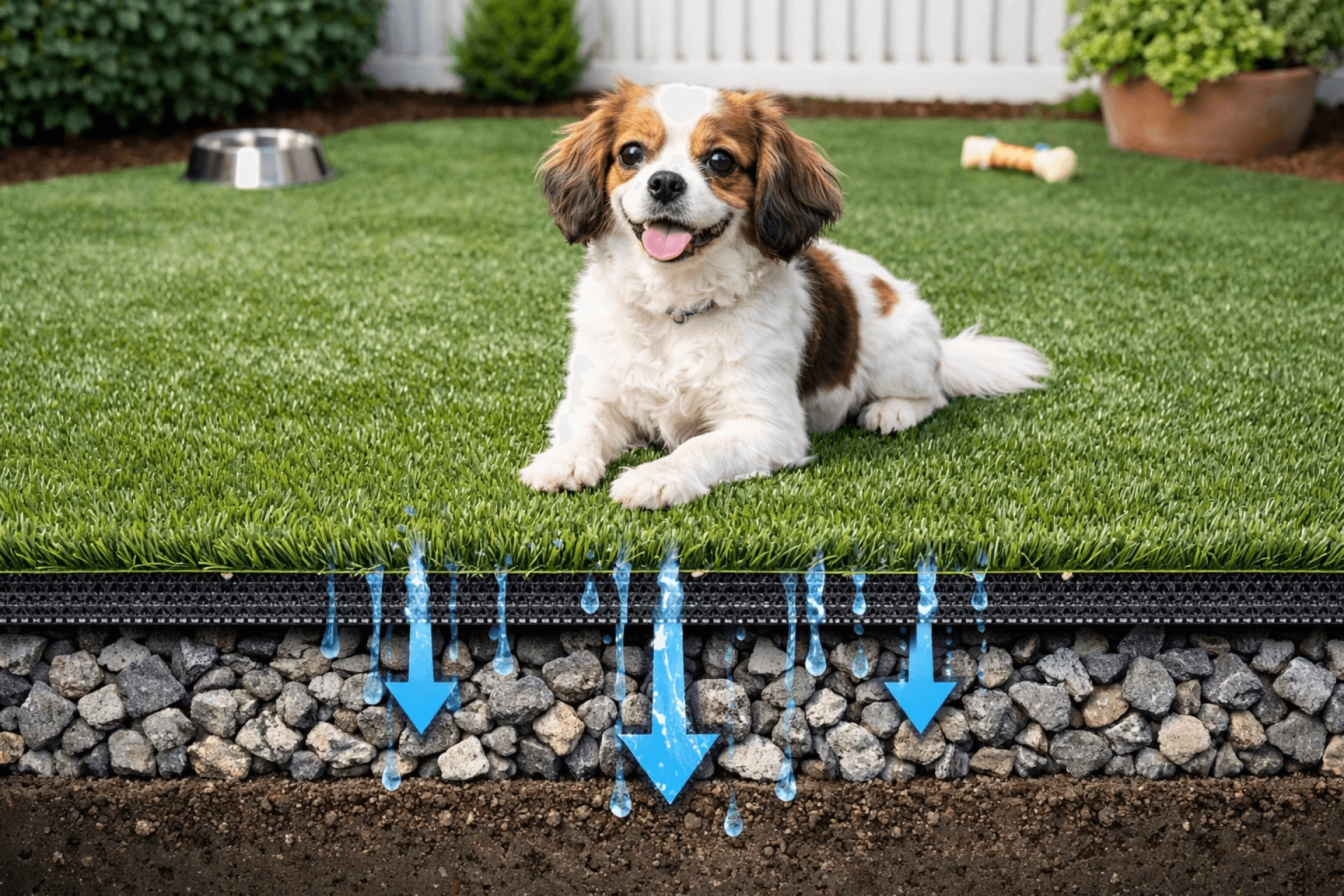
- A compacted aggregate base for drainage
The fibers themselves are usually polyethylene — the same type of plastic used in food packaging. When manufactured correctly, it’s considered inert and non-toxic. Reputable brands meet standards like those outlined by the Consumer Product Safety Commission and safety certifications from ASTM International.
Here’s where things gets interesting. Safety doesn’t just depend on the surface fibers. It depends heavily on what’s underneath.
What Parents Usually Worry About (And Rightfully So)
From my experience, clients usually ask three main questions:
- Does artificial turf contain toxic chemicals?
- Does it cause overheating?
- Is crumb rubber infill dangerous?
Let’s break each one down — practically, not theoretically.
1. Chemical Exposure: Is There Toxic Risk?
The concern mostly revolves around volatile organic compounds (VOCs), PFAS (so-called "forever chemicals"), and crumb rubber made from recycled tires.
The United States Environmental Protection Agency conducted studies on recycled tire crumb used in turf infill and did not find elevated health risks for typical exposures. However — and this is important — research is ongoing. Long term cumulative exposure data is still developing.
In most residential projects I’ve supervised in Karachi and Dubai, we’ve shifted away from crumb rubber entirely. Homeowners tend to prefer:
- Silica sand
- Cork infill
- Coconut husk blends
- Thermoplastic elastomer (TPE)
Are these perfect? No. But they eliminate the biggest perception risk and most of the controversy.
If you're installing turf where toddlers play daily, I personally recommend avoiding crumb rubber. Not because it’s proven dangerous — but because the long-term data is still evolving. As a contrctor, risk perception matters too.
2. Heat Retention: The Barefoot Test
This is real. Artificial turf gets hot. Especially darker shades.
On peak summer afternoons, I’ve measured surface temps 20–40°F higher than natural grass on similar exposure areas. Studies referenced by the PennState Center for Sports Surface Research confirm that synthetic fields can exceed 140°F under intense sun.
Kids won’t tolerate that. Neither will pets.
That said, backyard environments are different from full stadium fields. Residential turf often has:
- Landscaping shade
- Smaller surface areas
- Cooling infill options
- Light-colored blades with reflective pigments
Here’s what actually works in the real world:
- Install shade structures or trees
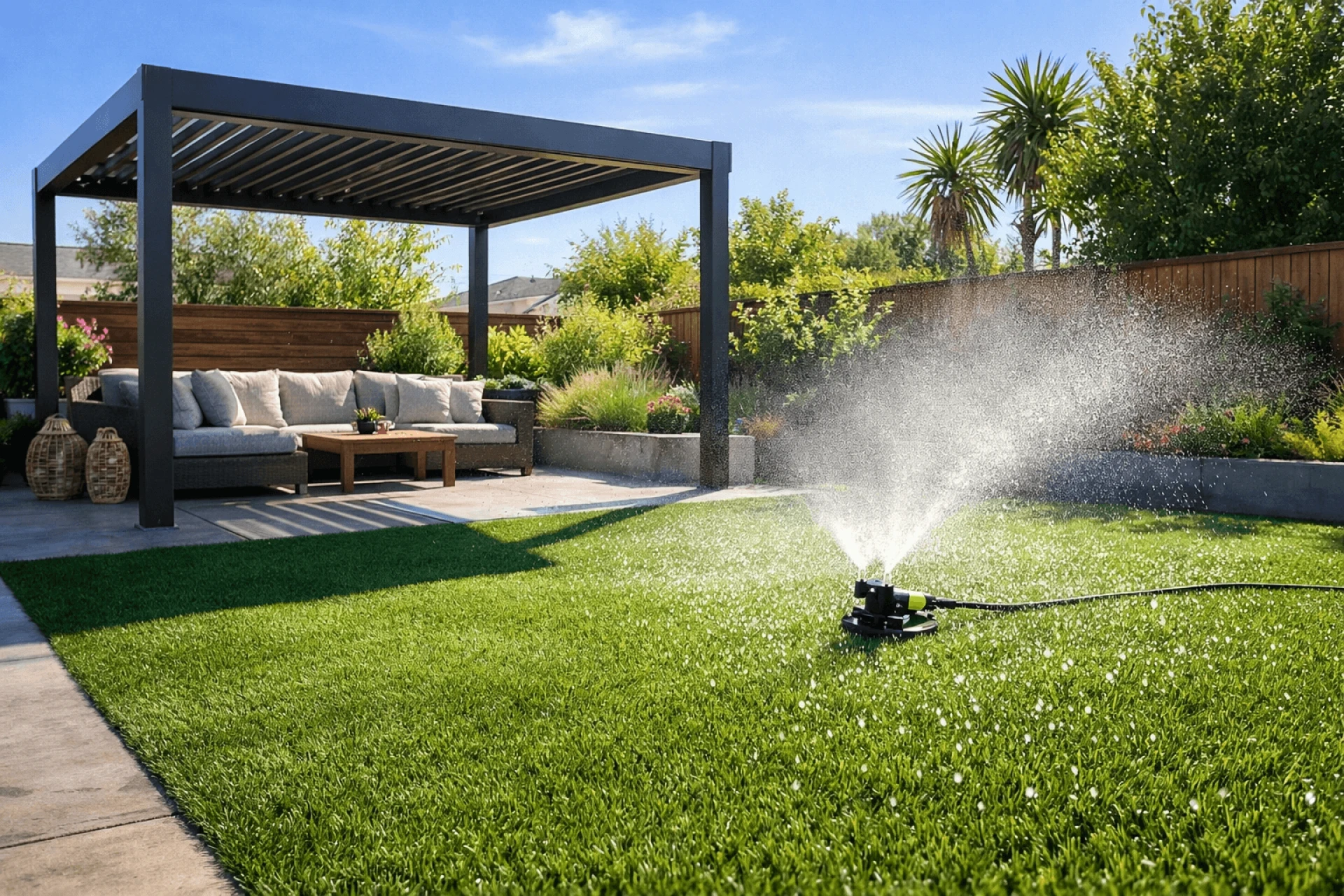
- Rinse turf with water before heavy play
- Choose modern “heat-reducing” turf models
- Avoid dark green, older-generation fibers
I’ve told clients before: if your yard has zero shade and you live in Arizona or interior Sindh, natural grass may feel cooler and more forgiving.
Short answer? Turf can get too hot, but design decisions fixes most of it.
3. Infection and Hygiene Concerns
Some critics argue synthetic lawns trap bacteria. In practice, poorly maintained natural grass often becomes more problematic — especially with pets.
Dog urine doesn’t drain from compacted soil very well. Turf systems, when properly installed with permeable base layers, actually drain efficiently.
The American Academy of Pediatrics hasn’t issued bans or warnings against household artificial turf use. Their broader stance emphasizes hygiene and maintenance rather than surface prohibition.
From projects I’ve seen, issues usually arise due to:
- Inadequate drainage base
- Lack of periodic rinsing
- Cheap turf backing that traps moisture
Maintenance isn’t complicated. It just needs consistency.
For pet owners, I recommend:
- Weekly rinse in high-use zones
- Enzyme-based turf cleaner monthly
- Brushing fibers to prevent matting
It’s not zero maintenance. But it’s predictable maintenance. Natural lawns get muddy patches and parasites too.
Dog parks and professional play areas rely on proper drainage systems — the same principle applies in residential yards.
Injury Risk: Softer Or Harder Than Grass?
This question comes up less often but it matters.
Modern artificial turf used in play areas includes padded underlays that increase shock absorption. When installed over proper compacted aggregate base with shock pad, impact attenuation can meet playground safety standards.
Falls on poorly maintained natural grass (especially dried-out soil) can actually be harder than people expect. Uneven ground adds trip hazards.
In school playgrounds I’ve worked on, we typically test the surface for G-Max ratings (impact safety standard). Turf with pad can perform quite well — though not all installations bother with testing.
The key difference: grass changes with seasons. Turf is consistent.
Consistent surfaces reduces ankle twists. But installing it wrong? That’s where problems begins.
Are There Microplastics Concerns?
Yes, synthetic fibers shed microplastics over time. Let’s not ignore that.
Rain runoff may carry small particles into drainage systems. The European Chemicals Agency has assessed microplastic impacts in sports fields and continues regulatory evaluations.
Residential scale, though, is vastly smaller than municipal soccer complexes. That doesn’t mean the issue disappears — just that context matters.
If microplastics are a top concern for your family, consider:
- Organic infill systems
- Hybrid turf (natural + synthetic stitching)
- High-quality UV-stable fibers to reduce fragmentation
Or stick with well-maintained natural grass if sustainability outweigh convenience for you.
Pet Safety: Odor, Digging, and Chemical Sensitivity
Dogs don’t just walk on lawns. They chew. They lick. They dig.
Polyethylene blades are generally non-toxic, but some dogs will attempt to chew seams. That’s a training issue more than a material toxicity one.
In installations where base preparation was done correctly — minimum 3–4 inches compacted crushed stone — digging behavior decreases significantly because there’s nothing soft underneath.
One mistake I see too often: skipping edge restraints. Without proper perimeter locking, turf edges lift and dogs starts pulling.
Odor buildup? Usually drainage problem. Not the turf itself.
Pet-safe artificial grass is less about brand marketing and more about:
- Permeable backing
- Fast drainage rate (inches per hour)
- Non-absorbent infill choice
Spend more on the base. Not just the surface. Most people do it the other way round.
What Most People Miss: Installation Quality Decides Safety
People obsess over brand name and forget about ground prep.
Safe artificial turf requires:
- Proper excavation
- Compacted sub-base
- Geotextile separation layer
- Correct infill depth
- Secure edge restraint
- Good drainage slope
Cutting corners on base compaction leads to pooling water and bacterial growth. I’ve seen cheap installs fail in two years.
A poorly installed turf surface is less safe than well-maintained grass. That’s just reality.
That’s why installation standards matter more than brand marketing.
Regulatory & Standards Snapshot
Here’s what typically governs turf safety in North America and Europe:
- ASTM International impact standards
- Consumer Product Safety Commission consumer safety guidelines
- United States Environmental Protection Agency crumb rubber evaluation
- European Chemicals Agency microplastics regulatory oversight
Compliance doesn’t guarantee perfection, but it reduces unknowns.
If your contractor can’t provide product data sheets and testing certifications, that’s red flag.
When Artificial Turf May Not Be Ideal
Let’s be honest.
Artificial turf may not be best if:
- Your region has extreme heat and zero shade
- You prefer fully organic landscape ecosystem
- You’re uncomfortable with plastic-based materials
- You don’t want any routine rinsing or cleaning
Natural grass has ecological benefits — carbon absorption soil biodiversity — that turf doesn’t replicate.
But grass also requires water, mowing equipment emissions, fertilization cycles.
It’s trade-offs. Always.
A Practical Decision Framework
If you’re deciding for your yard, ask yourself:
- Are allergies a serious issue?
- How intense is foot traffic?
- Is water availability limited?
- Do pets use same zone daily?
- Are you willing to maintain turf properly?
I usually tell homeowners: if the yard is decorative and lightly used, natural grass often makes sense. If it’s a daily wrestling arena for children and two huskies… turf may survive better long term.
There isn’t one universal answer.
So, Is Artificial Turf Safe?
Used properly, installed correctly, and maintained responsibly — yes, artificial turf can be safe for children and pets.
Is it risk-free? No surface is.
Grass has pesticides. Soil harbors bacteria. Concrete tears knees. Even playground sand can hides debris.
The real difference comes down to installation quality, material transparency, and how the space will actually be used. I’ve seen families extremely happy with synthetic lawns and others revert back to natural grass after couple seasons.
If you choose turf:
- Avoid unknown imports
- Ask for certification documentation
- Prioritize drainage and base prep
- Choose pet-safe infill
- Design for shade
Safety isn’t just about product. It’s about system.
And if you’re unsure, consult a local landscape engineer or experienced installer — someone who can actually walk your yard, feel the soil, evaluate drainage, and give advice grounded in reality, not brochure claims.