
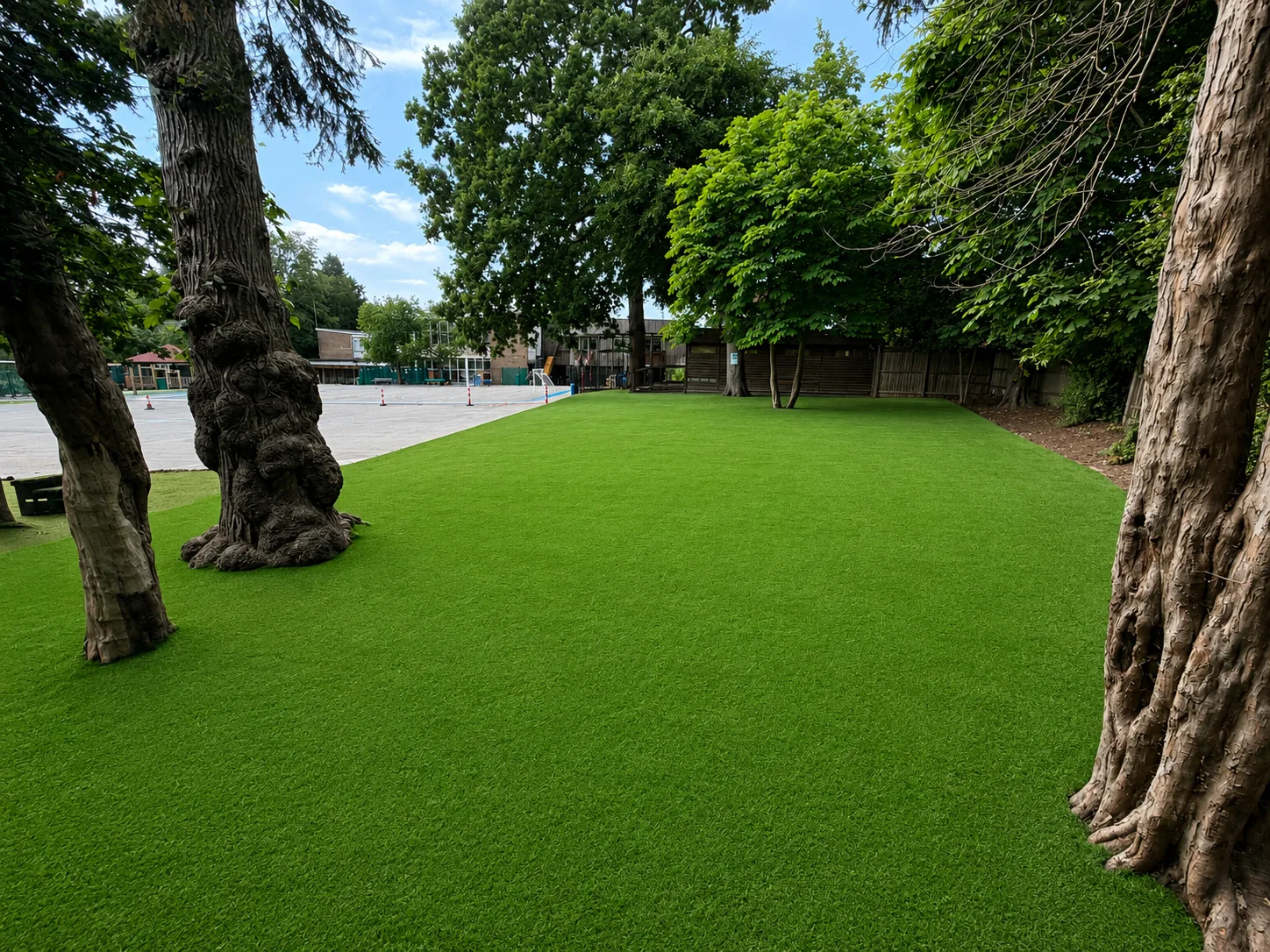
West London sits at an interesting point in the artificial grass market. Areas like Chiswick, Ealing, and Richmond have larger gardens than most of inner London, and homeowners there are prepared to spend on getting the install right. At the same time, the denser parts of West London — Hammersmith, Shepherd's Bush, Acton — have the tight terrace gardens that typify most of the city.
The conditions that make artificial grass a sensible choice are the same across both: clay-heavy soil, variable rainfall, and the general difficulty of maintaining a good natural lawn without significant ongoing effort.

The State of West London Gardens
Gardens in W postcodes vary more than almost anywhere else in London. A garden in Chiswick or Kew can easily run to 80-100m² with mature planting and established borders. A garden in Acton or Shepherd's Bush might be 20-30m², hemmed in by extension walls and getting perhaps four hours of direct sun on a summer's day.
Artificial grass works across both scales. On a large West London garden, it typically replaces a central lawn area with borders and planting left intact. On a small terrace garden, it usually covers the full plot. The installation process is the same — just scaled.
Ground Conditions in West London
Most of West London sits on London Clay, which extends across virtually all of the western suburbs. Clay is slow to drain, prone to compaction, and expands and contracts seasonally. Natural grass on clay without proper aeration becomes compacted and waterlogged within a few years of heavy use.
Artificial grass on a well-prepared sub-base sidesteps all of this. The sub-base — typically 50mm of compacted MOT Type 1 hardcore plus 25mm of granite dust — sits on top of the clay and provides both drainage and a stable, level surface. The clay beneath is irrelevant once the sub-base is in.
Areas closer to the Thames — parts of Hammersmith, Fulham, and Kew — have additional considerations around water table levels. A good installer will survey for drainage adequacy before quoting on those jobs.

What Does Artificial Grass Cost in West London?
West London pricing for a fully installed artificial lawn runs along the same lines as the London average, with a slight premium in affluent postcodes where demand is higher.
• Budget range (£40-£60/m²): Entry-level turf, standard sub-base. Fine for a low-use decorative garden.
• Mid-range (£60-£90/m²): The most common choice in West London. Better pile, better drainage, cleaner edging.
• Premium (£90-£130/m²): High-specification turf with shock pad, dual-tone, detailed edge work. Common in larger Chiswick and Kew installs.
For a 50m² West London garden at mid-range, expect to pay £3,000-£4,500 fully installed with waste removal. Larger gardens benefit from lower per-m² rates as fixed costs (site visit, delivery, waste removal) are spread across more area.
Finding Good Installers in West London
The installer pool in West London is competitive. For reputable artificial turf for West London gardens, look for companies who will conduct a full site survey before providing a quote, specify the sub-base in the written price breakdown, and reference completed installs in your area. The W postcode market has enough demand that good operators stay busy — lead times of three to five weeks are normal through spring and summer.
Get three itemised quotes. The items to compare are not just the total price but the sub-base depth and specification, the turf brand and pile height, and whether skip hire and waste removal are included. Those three variables explain most of the price difference between competing quotes.

Choosing the Right Turf for a West London Garden
For large West London gardens with significant foot traffic — children, dogs, regular use — a 30-35mm dual-tone turf with good backing is the standard recommendation. It performs reliably, looks natural, and is easy to maintain.
For smaller, more decorative gardens in W postcode areas where aesthetics are a priority, some homeowners go to a 35-40mm pile for a lusher appearance. That is a reasonable choice for a low-traffic border garden but will flatten faster under heavy use.
Drainage matters more than pile height in West London's rainfall profile. The backing specification — specifically the number of drainage holes per m² — is worth asking about directly. A minimum of 20 litres per m² per minute drainage rate keeps the lawn clean and odour-free through the wetter months.
Lead Times and Timing
Spring is the busiest period for West London installers. March through June sees the highest demand as homeowners prepare gardens for summer. Booking in February or early March gives you the best choice of installer and avoids the six-week lead times that become common by late April.
Autumn installs (September-November) are a good option for anyone who misses the spring window. Ground conditions are manageable, installers have more availability, and the lawn is bedded in before the following summer.

Final Thoughts
West London gardens are well-suited to artificial grass — whether a large established plot in Chiswick or a compact terrace in Acton. The clay soil that makes natural grass maintenance intensive is a non-issue once a proper sub-base is in. Get the specification right, choose an installer who surveys before quoting, and the result is a lawn that looks good year-round with minimal ongoing effort.