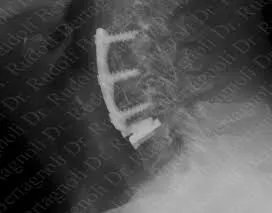
Are you researching Artificial Disc Replacement in Canada because persistent neck or back pain is affecting your daily life? If you have been diagnosed with degenerative disc disease or a damaged spinal disc, you may be exploring treatment options beyond traditional spinal fusion. Artificial disc replacement (ADR) is a motion-preserving surgical procedure designed to replace a damaged intervertebral disc while allowing movement at the treated spinal level.
Prof. Dr. Bertagnoli provides specialized spine surgery consultations for patients considering artificial disc replacement. For Canadian patients seeking information about ADR, an individualized medical evaluation can help clarify whether disc replacement may be an appropriate option based on their diagnosis, imaging results, symptoms, and overall spinal health.
What Is Artificial Disc Replacement?
Artificial disc replacement, also known as total disc replacement (TDR) or total disc arthroplasty, is a surgical procedure in which a damaged spinal disc is replaced with an artificial implant. Natural spinal discs act as cushions between the vertebrae, helping the spine absorb loads and move comfortably.
When a disc becomes damaged or degenerates, it may contribute to persistent pain, stiffness, or other symptoms. In selected cases, artificial disc replacement may be considered to address the affected disc while preserving movement at that spinal level.
Unlike spinal fusion, which joins adjacent vertebrae to limit movement between them, ADR is designed to maintain motion at the treated segment. However, both procedures have specific indications, risks, and limitations, and neither guarantees complete pain relief.
Why Are Canadian Patients Exploring Artificial Disc Replacement?
Patients researching artificial disc replacement in Canada may be looking for a clearer understanding of available surgical options, eligibility requirements, and the potential benefits and limitations of motion-preserving procedures.
Treatment recommendations can vary depending on the affected spinal region, the extent of disc degeneration, other spinal conditions, and the available treatment options. Some patients may be suitable for ADR, while others may benefit more from conservative treatment or a different surgical approach.
For patients who want to explore treatment beyond their local options, consulting a specialist with experience in spinal arthroplasty may help them understand the potential next steps.
Artificial Disc Replacement vs. Spinal Fusion
Spinal fusion and artificial disc replacement are both used in selected cases of spinal disc disease, but they work differently.
Artificial Disc Replacement
- Replaces the damaged disc with an artificial implant.
- Is designed to preserve movement at the treated spinal level.
- May be considered for appropriately selected patients with specific disc conditions.
- Requires careful evaluation of disc health, spinal stability, and surrounding joints.
Spinal Fusion
- Joins two or more vertebrae to limit movement at the affected level.
- May be recommended when stabilization is a primary treatment goal.
- Can be appropriate for certain spinal conditions that are not suitable for disc replacement.
The right procedure depends on the individual diagnosis and clinical findings. Preserving movement is one potential advantage of ADR, but it does not mean the procedure is suitable for every patient or that it is always superior to fusion.
Who May Be a Candidate for Artificial Disc Replacement?
Artificial disc replacement may be considered for certain patients with symptomatic degenerative disc disease or other specific disc conditions that have not improved adequately with appropriate non-surgical treatment.
During an evaluation, a spine specialist may consider:
- Diagnosis: Whether the damaged disc is likely to be the source of symptoms.
- Imaging results: MRI, X-rays, CT scans, or other investigations where appropriate.
- Spinal stability: Whether the vertebrae and supporting structures are suitable for an artificial disc.
- Overall spinal health: The condition of the facet joints, bone quality, and any additional spinal problems.
- Previous treatment: Whether appropriate non-surgical options have been tried and whether symptoms remain significant.
- Individual medical factors: General health, previous spinal surgery, and other factors that may affect treatment suitability.
Not every patient with a herniated or degenerated disc is a candidate for ADR. A specialist must assess the full clinical picture before recommending surgery.
Cervical and Lumbar Artificial Disc Replacement
Artificial disc replacement may be performed in different regions of the spine, depending on the diagnosis and the patient's suitability.
Cervical Artificial Disc Replacement
Cervical ADR treats a damaged disc in the neck. In selected cases, it may be considered for patients with symptoms associated with cervical disc disease, including certain forms of nerve compression. The procedure is designed to preserve movement at the treated neck level.
Lumbar Artificial Disc Replacement
Lumbar ADR treats a damaged disc in the lower back. It may be considered for selected patients with symptomatic lumbar disc degeneration when clinical findings support disc replacement and other suitability criteria are met.
Cervical and lumbar ADR have different indications and considerations. The appropriate procedure depends on the affected spinal level, the nature of the condition, and a specialist's assessment.
What Should Canadian Patients Know Before Considering ADR Abroad?
Some patients researching artificial disc replacement in Canada may also consider seeking a consultation with a specialist outside the country. Before making any travel or treatment decisions, it is important to understand the full process.
1. Arrange a specialist evaluation
A consultation can help determine whether your symptoms and diagnosis warrant further consideration of artificial disc replacement.
2. Prepare your medical records
Your specialist may request MRI scans, X-rays, CT scans, previous surgical reports, and details of treatments already attempted. The exact requirements depend on your case.
3. Understand the recommended treatment
Ask about the proposed procedure, potential benefits, risks, alternatives, expected recovery, and factors that could affect your outcome.
4. Plan travel and recovery carefully
If treatment abroad is being considered, discuss the expected length of stay, postoperative assessments, travel restrictions, rehabilitation, and arrangements for follow-up care with your treating team.
5. Confirm costs and coverage
Ask for a clear explanation of consultation fees, surgical costs, hospital charges, travel expenses, and any insurance or reimbursement requirements. Coverage varies by policy and individual circumstances.
Planning ahead can help patients make informed decisions and coordinate care between their local healthcare providers and the treating specialist.
Consult Prof. Dr. Bertagnoli About Artificial Disc Replacement
Prof. Dr. Bertagnoli has extensive experience in artificial disc replacement and other motion-preserving spinal procedures. His practice evaluates patients individually to determine which treatment approach may be appropriate for their specific condition.
For Canadian patients considering ADR, a specialist consultation can provide an opportunity to discuss symptoms, diagnostic imaging, previous treatment, and possible surgical options.
An evaluation does not automatically mean that surgery will be recommended. The objective is to understand the patient's condition and identify an appropriate treatment approach based on the available medical evidence and individual clinical needs.
Frequently Asked Questions
Is artificial disc replacement available to patients from Canada?
Canadian patients can explore consultations with spine specialists outside Canada. Whether ADR is an appropriate option depends on the patient's diagnosis, clinical findings, and the specialist's assessment. Patients should also verify local treatment availability and any applicable coverage requirements.
Is artificial disc replacement an alternative to spinal fusion?
Yes. ADR may be an alternative to spinal fusion for selected patients with specific disc conditions. ADR is designed to preserve motion at the treated level, whereas fusion limits movement between the fused vertebrae. The most appropriate option depends on the individual case.
How do I know if I qualify for artificial disc replacement?
Eligibility is determined through a medical evaluation that may include a review of symptoms, medical history, imaging, spinal stability, bone quality, and previous treatment. Only a qualified specialist can determine whether ADR is appropriate for an individual patient.
How long does recovery from artificial disc replacement take?
Recovery varies according to the spinal region treated, the surgical approach, the patient's general health, and any additional procedures performed. Your surgeon should provide individualized guidance on activity restrictions, rehabilitation, follow-up appointments, and returning to work or daily activities.
Can I have an online consultation before travelling?
An online consultation may allow a specialist to review your medical history and available imaging before you make travel arrangements. Additional records, investigations, or an in-person examination may be necessary before a final treatment recommendation can be made.
Explore Your Options for Artificial Disc Replacement
If you are researching Artificial Disc Replacement in Canada, understanding your diagnosis and available treatment options is an important first step. A specialist consultation can help you explore whether motion-preserving surgery may be suitable for your condition.
Contact Prof. Dr. Bertagnoli's team to discuss your medical history, share relevant imaging, and learn more about the next steps in your evaluation.
Request a Consultation to explore your options for artificial disc replacement and other appropriate spine treatments.
Medical disclaimer: This article is for educational purposes only and does not replace professional medical advice, diagnosis, or treatment. Surgical suitability and outcomes vary by patient. Consult a qualified healthcare professional about your individual condition.