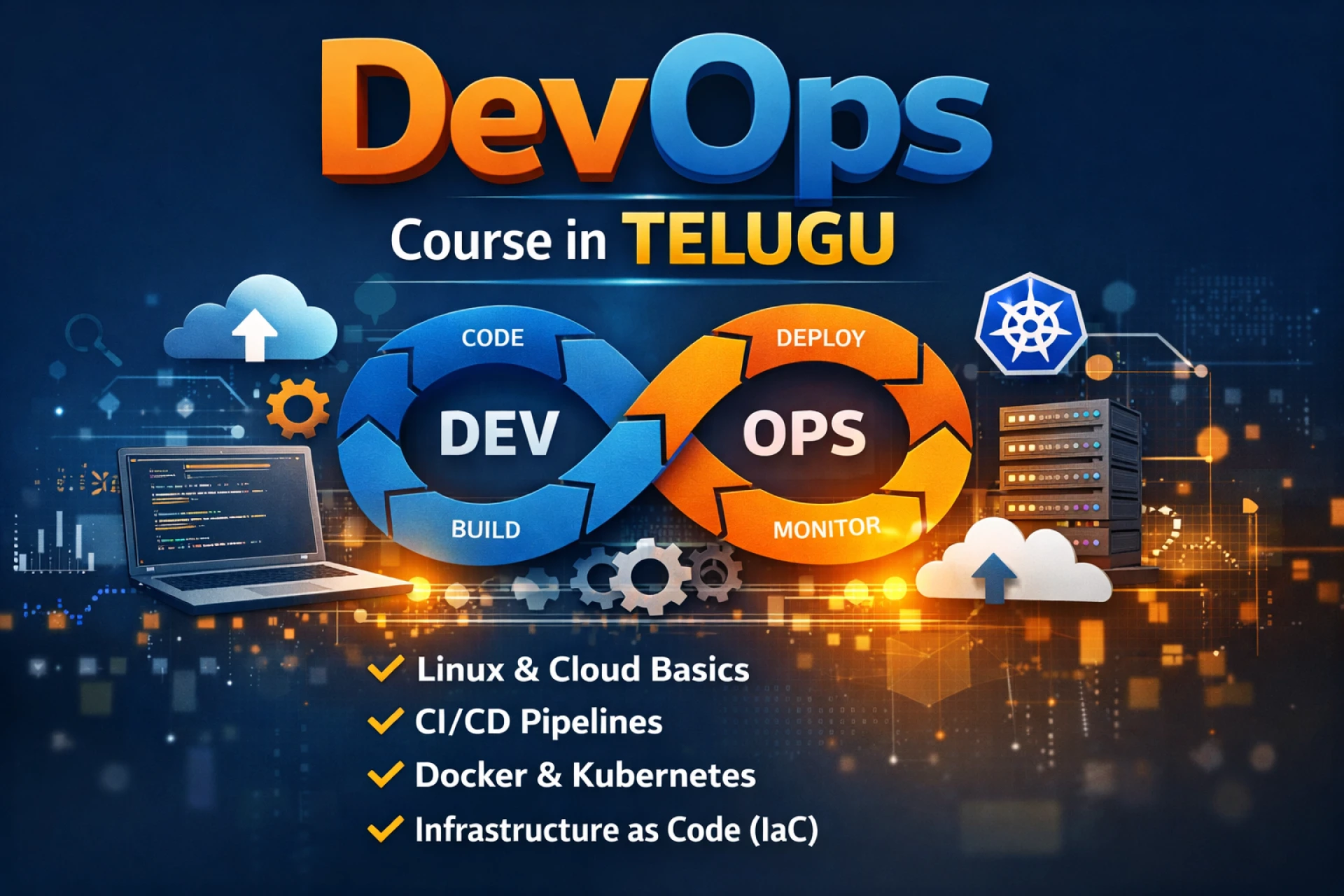
Modern DevOps is moving beyond traditional CI/CD pipelines toward event-driven automation and cloud-native workflow orchestration. As organizations adopt Kubernetes at scale, they require powerful tools that can manage complex job sequences, automate tasks based on events, and handle scalable pipeline execution. This is where Argo Workflows becomes a game-changer.
If you are a DevOps enthusiast aiming to master Kubernetes-native automation, a structured DevOps course in Telugu focused on Argo Workflows can help you build practical expertise in event-driven pipeline design and execution.
Let’s explore how Argo Workflows transforms pipeline automation and why learning it is highly valuable.
The Shift Toward Event-Driven DevOps
Traditional pipelines are usually triggered manually or through simple Git commits. However, modern cloud-native systems require more dynamic automation. Pipelines may need to run when:
- A container image is pushed
- A webhook is triggered
- A monitoring alert occurs
- A scheduled job executes
- A cloud event is detected
Event-driven automation enables pipelines to respond automatically to these triggers without manual intervention.
In Kubernetes-native environments, this level of automation requires specialized workflow orchestration.
What is Argo Workflows?
Argo Workflows is an open-source container-native workflow engine designed specifically for Kubernetes. It allows you to define multi-step workflows as Kubernetes Custom Resources.
Argo enables you to:
- Orchestrate complex job sequences
- Run parallel tasks
- Manage dependencies between steps
- Scale workflows efficiently
- Visualize workflow execution
Argo integrates seamlessly with:
- Kubernetes
- Docker
- CI/CD systems and cloud-native tools
Because it runs directly on Kubernetes, it is highly scalable and cloud-native by design.
Understanding Event-Driven Pipeline Automation
Event-driven pipelines automatically execute workflows when specific triggers occur. Instead of static automation, pipelines respond dynamically to system events.
In the Argo ecosystem, event-driven automation is often achieved using:
- Webhooks
- Message queues
- Git events
- Scheduled triggers
- Monitoring alerts
This enables powerful use cases such as:
- Auto-triggered builds on code changes
- Data processing workflows based on incoming datasets
- Automated remediation tasks when failures are detected
- Scheduled batch jobs
Event-driven architecture improves responsiveness and reduces manual operations.
Why Argo Workflows is Important for DevOps
Argo Workflows provides several advantages:
1. Kubernetes-Native Design
Workflows are defined as Kubernetes resources, aligning with cloud-native principles.
2. Scalability
Each workflow step runs in a container, enabling horizontal scaling.
3. Declarative Configuration
Workflows are defined in YAML, making them version-controlled and reproducible.
4. Advanced Orchestration
Supports DAG (Directed Acyclic Graph) workflows and step-based sequencing.
5. Visualization
Provides a web UI for monitoring workflow execution.
For teams operating large-scale Kubernetes environments, Argo offers flexible and efficient automation.
DevOps Course in Telugu – What You Will Learn
This Telugu-focused DevOps course is designed for learners who want hands-on experience in Argo Workflows and event-driven automation.
1. DevOps and Kubernetes Foundations
- CI/CD lifecycle overview
- Kubernetes architecture basics
- Containers and orchestration principles
2. Introduction to Argo Workflows
- Installing Argo on Kubernetes
- Understanding workflow components
- Exploring workflow templates
- Using the Argo UI
3. Designing Workflows
- Step-based workflows
- DAG workflows
- Parallel task execution
- Managing dependencies
4. Event-Driven Automation
- Configuring webhook triggers
- Git-based pipeline triggers
- Scheduled workflows (Cron workflows)
- Handling external event integrations
5. CI/CD Integration
- Integrating Argo with Git repositories
- Container image build automation
- Multi-environment deployments
- Managing secrets and configurations
6. Advanced Workflow Strategies
- Error handling and retries
- Conditional logic
- Resource limits and scaling
- Logging and monitoring workflows
7. Real-World Project Implementation
- Building a production-grade event-driven pipeline
- Automating deployment workflows
- Demonstrating scaling and fault tolerance
By the end of this course, learners will confidently design scalable, event-driven pipelines using Argo Workflows.
Why Learning in Telugu Makes a Difference
Event-driven pipeline concepts like DAG execution, container-based tasks, and Kubernetes CRDs can be technically complex. Learning these topics in Telugu provides:
- Clear conceptual understanding
- Easier mapping of theory to practice
- Faster troubleshooting skills
- Stronger long-term retention
When advanced Kubernetes workflow automation is explained in your native language, the learning experience becomes more effective and engaging.
Real-World Use Cases of Argo Workflows
Argo Workflows is widely used in:
- Machine learning pipelines
- Data engineering workflows
- Microservices CI/CD automation
- Batch processing systems
- Cloud-native SaaS platforms
Organizations that require scalable, container-based workflow execution prefer Argo for its flexibility and Kubernetes-native integration.
Career Opportunities After Learning Argo Workflows
As Kubernetes adoption continues to grow, expertise in workflow automation is becoming highly valuable.
Career roles include:
- DevOps Engineer
- Kubernetes Administrator
- Cloud Engineer
- Platform Engineer
- Site Reliability Engineer (SRE)
Companies seek professionals who can design event-driven systems and automate complex pipeline operations efficiently.
The Future of Pipeline Automation
The future of DevOps lies in intelligent, event-driven, cloud-native automation. Static pipelines are being replaced by dynamic workflows that respond instantly to system events.
Argo Workflows represents this evolution by combining Kubernetes-native architecture with powerful orchestration capabilities.
Mastering event-driven pipeline automation positions you at the forefront of modern DevOps practices.
Final Thoughts
Automation is no longer enough — modern DevOps requires scalable, event-driven workflow orchestration. Argo Workflows empowers teams to design dynamic pipelines that respond intelligently to triggers and execute efficiently within Kubernetes environments.