
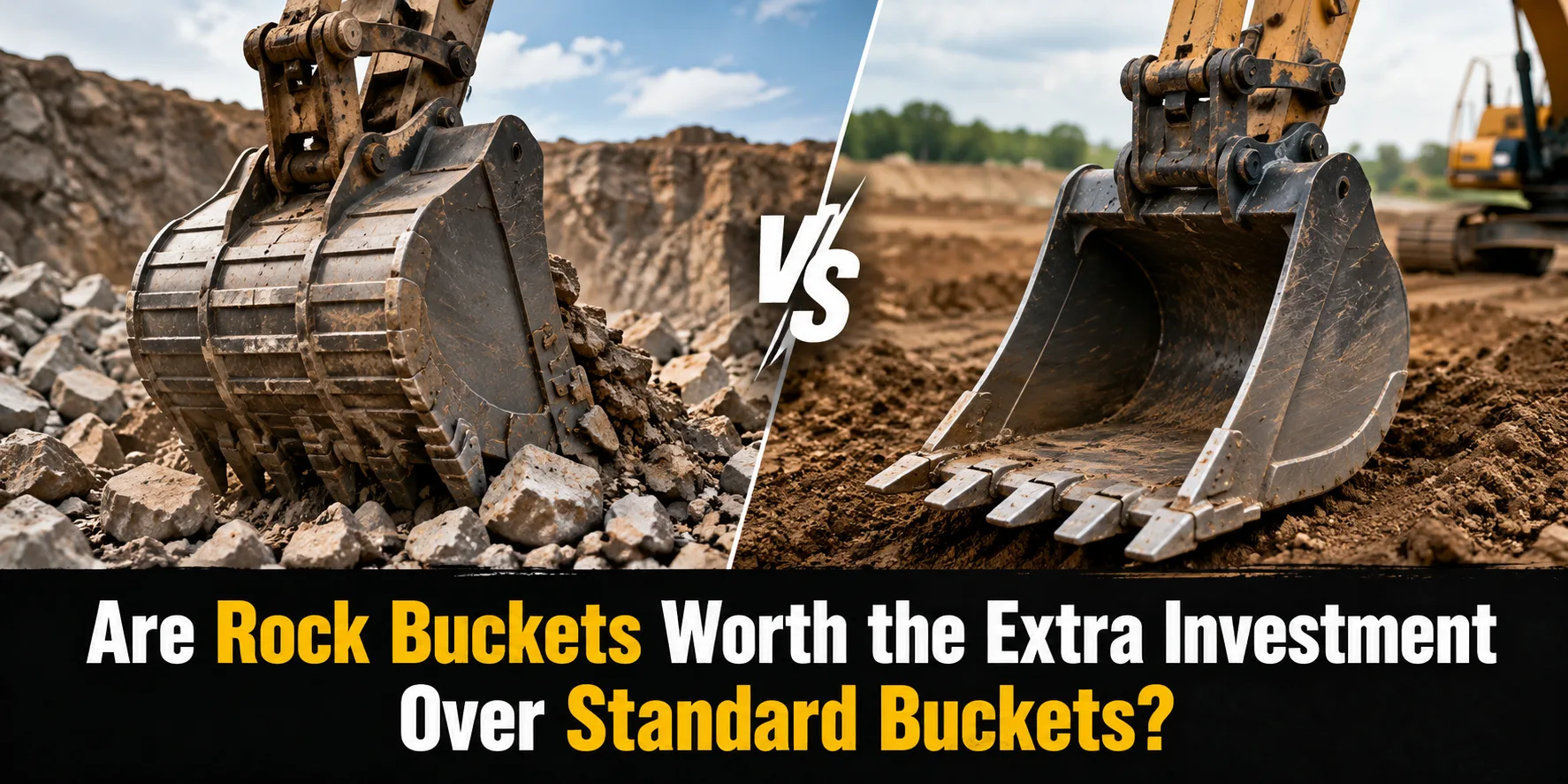
When buying an excavator bucket, the cheapest option is rarely the most economical one. The real question is not how much the bucket costs today but how much it costs to own over thousands of operating hours.
Many contractors start with a standard bucket because it handles general excavation at a lower upfront price. However, projects involving blasted rock, granite, basalt, quarry material, demolition debris, or abrasive soils quickly expose the limitations of a general-purpose bucket. Faster wear, frequent repairs, lower productivity, and unexpected downtime can easily outweigh the initial savings.
That is where a rock bucket becomes a practical investment rather than an expensive upgrade.
But does every contractor actually need one?
The answer depends on the type of work, material conditions, and the total cost of ownership—not simply the purchase price.
What Is the Difference Between a Rock Bucket and a Standard Bucket?
At first glance, a rock bucket and a standard bucket may appear similar. However, they are designed for different operating conditions. The difference lies in their construction, strength, and ability to withstand wear.
A standard bucket is built for everyday excavation where materials are relatively soft and impact loads are lower.
Applications of a Standard Bucket
A standard bucket is commonly used for:
- Soil excavation
- Sand and gravel handling
- Clay excavation
- Topsoil removal
- Light construction projects
- General trenching
Its lighter construction improves digging efficiency in normal ground conditions while keeping the attachment weight lower.
Applications of a Rock Bucket
A rock bucket is engineered for environments where the attachment is exposed to constant impact and abrasive materials. It is the preferred choice for:
- Hard rock excavation
- Quarry operations
- Mining
- Demolition work
- Abrasive materials
- Heavy-duty loading applications
These applications demand a bucket that can handle repeated stress without deforming or wearing out quickly.
Why Does the Type of Material Matter More Than the Bucket Price?
Every excavation project places different demands on an attachment. Some materials allow the bucket to dig with minimal resistance, while others continuously expose it to impact, abrasion, and extreme loading. Understanding this difference is the first step in deciding whether a rock bucket is a worthwhile investment.
Soft Ground Places Less Stress on the Bucket
Projects involving soil, clay, sand, silt, or loose gravel typically create predictable digging conditions. The bucket penetrates the material with relatively low resistance, experiences less impact during loading, and wears at a slower rate.
In these environments, a standard bucket performs exactly as intended. Its lighter construction improves digging efficiency, supports faster cycle times, and helps the excavator move more material without carrying unnecessary attachment weight.
Rock Excavation Changes the Way a Bucket Wears
The situation changes as soon as excavation involves blasted rock, granite, basalt, limestone, or reinforced demolition waste. Unlike loose soil, these materials resist penetration and create continuous friction against the bucket floor, cutting edge, side plates, and teeth.
Instead of gradual wear over several years, high-abrasion materials begin removing steel from critical areas much faster. At the same time, repeated impact loads place additional stress on welds, structural joints, and mounting points. A bucket that performs well in general excavation may suddenly require frequent repairs simply because it is operating outside the conditions it was originally designed for.
This is one of the most common reasons contractors experience rising attachment maintenance costs despite following regular service schedules.
How Does a Rock Bucket Perform Better in Hard Rock Applications?
A rock bucket is designed to withstand the conditions that cause premature wear in standard buckets. Its reinforced construction improves durability while reducing the frequency of repairs in abrasive environments.
Reinforced Structure Handles Higher Impact
Rock buckets use thicker wear-resistant steel across the bucket floor, side plates, cutting edge, and mounting areas. This reinforcement helps the bucket absorb repeated impact loads without deforming or developing structural cracks.
Wear Parts Protect the Bucket Body
Components such as side cutters, heel shrouds, wear strips, and heavy-duty bucket teeth absorb most of the abrasion. Replacing these wear parts is faster and more economical than repairing or replacing the entire bucket.
Better Penetration Maintains Productivity
Heavy-duty bucket teeth retain their profile for longer in abrasive materials. Better penetration reduces digging resistance, helping maintain consistent cycle times and reducing unnecessary load on the excavator.
When Does a Rock Bucket Become a Better Investment?
The higher purchase price is justified when the attachment operates continuously in abrasive conditions.
Lower Repair Costs
Standard buckets used in hard rock typically require more welding, cutting-edge repairs, and structural rebuilding. A rock bucket reduces these maintenance requirements through reinforced construction.
Longer Service Life
Slower wear allows the bucket to remain operational for more hours before major repairs or replacement become necessary.
Less Downtime
Unexpected bucket failures stop excavation and delay project schedules. A bucket designed for hard-duty applications improves equipment availability and reduces maintenance interruptions.
Which Applications Justify a Rock Bucket?
The return on investment depends on the material being handled rather than the machine itself.
Quarry Operations
Continuous exposure to crushed stone and blasted rock accelerates bucket wear. Reinforced construction improves attachment life.
Mining
Mining demands long operating hours with minimal downtime. A rock bucket provides the durability required for continuous production.
Demolition
Concrete, reinforced structures, and masonry generate high impact and abrasion. A rock bucket withstands these conditions more effectively than a general-purpose bucket.
Road and Infrastructure Projects
Rock cutting, hill excavation, and aggregate loading place constant stress on the attachment. A reinforced bucket reduces wear throughout the project.
When Is a Standard Bucket the Right Choice?
A standard bucket remains the better option for soil, sand, clay, topsoil, trenching, landscaping, and general earthmoving. These materials create lower impact and slower wear, allowing the bucket to operate efficiently without additional reinforcement.
Using a rock bucket in light-duty applications increases attachment weight without delivering measurable durability benefits.
Final Thoughts
A rock bucket is not designed to replace a standard bucket. It is designed for applications where abrasion and impact shorten the life of a general-purpose attachment. If your excavator regularly works in quarries, mines, demolition sites, or hard rock excavation, the additional investment is offset by longer service life, fewer repairs, and reduced downtime.
For general excavation, a standard bucket remains the more economical choice. The right investment depends on the material, operating conditions, and the long-term cost of ownership—not simply the purchase price.