Communities across North America are rethinking how they invest in outdoor recreation, and aquatic playground equipment sits at the center of that shift. From zero-depth splash pads to elevated waterslide towers, today's aquatic facilities are designed around one core idea: different age groups need different water experiences, delivered in one connected space.
What Falls Under Aquatic Playground Equipment?
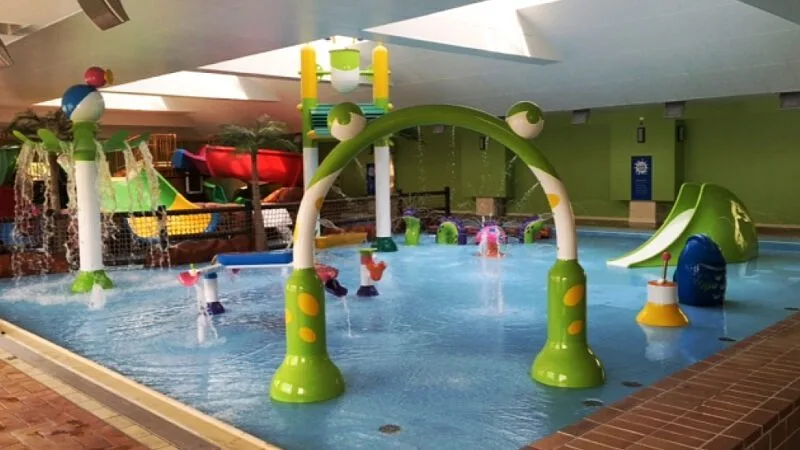
The category is broader than most people assume. It includes ground jets, tipping buckets, water arches, climb-and-slide Aquadek structures, spinning sprays, and self-powered features that react when a child pedals, cranks, or pumps a handle. It also includes taller waterslide complexes built for older riders. Each piece serves a distinct role, and mixing the wrong ones together is one of the most common planning mistakes municipalities make.
Splash Pads vs. Waterslides: Matching Equipment to Age
A frequent point of confusion is treating splash pads and waterslides as interchangeable. They aren't; they serve different demographics and are usually combined rather than substituted for one another.
Splash pads are zero-depth, no-standing-water environments designed for interactive and educational aquatic play for children up to around age 12. Within a splash pad, a preschool zone may include a small kiddie slide, typically maxing out around 8-10 feet, purely as an extension of the ground-level features.
Commercial waterslides, by contrast, are a separate category aimed at riders 13 and older. These are taller, engineered slide systems with structured dispatch and ride cycles, built for aquatic facilities, resorts, and municipal water parks looking to serve teens and adults alongside younger visitors.

Why Demand for Aquatic Recreation Keeps Rising
The data backs up why municipalities keep expanding these facilities. National survey data shows visits to swimming pools and aquatic centers climbed from 19 percent of park-goers in 2021 to 28 percent in 2023, according to the National Recreation and Park Association. (Source) Separately, NRPA's most recent engagement research found an estimated 227 million adults or household members visited a local park or recreation facility in 2025, a figure that has held steady for nearly a decade. (Source) That kind of consistent traffic is exactly what makes investment in aquatic playground equipment a durable, low-risk decision for parks departments, hotels, and resorts.
To make things clear, here's are two graphs that you can look into:

Design, Materials, and Safety Considerations
Well-engineered aquatic playground equipment is built from composite and specialty plastics with minimal metal, reducing corrosion risk and long-term maintenance costs compared to steel-heavy structures. Waterslide systems specifically must account for heavy rider loads, continuous water exposure, seasonal weather swings, and UV degradation, while meeting ASTM safety standards, structural load calculations, ADA accessibility pathways, and regional wind or seismic compliance.
Planning a Layout That Serves Every Age Group
The strongest facility layouts don't pick one attraction type; they layer them. Ground-level features handle toddlers and young children, mid-height climb-and-slide structures bridge the gap, and taller slide towers capture teens and adults. This segmentation improves crowd flow, extends visit duration, and gives a facility appeal across an entire family rather than a single age bracket. Custom theming, phased expansion, and flexible installation (often without embedded anchors or heavy foundations) make it easier to add a new zone in stages rather than redesigning the whole site at once.
Final Thoughts
Choosing the right mix of aquatic playground equipment comes down to knowing your visitor demographics first, then building the layout around them, zero-depth zones for the youngest guests, mid-tier features for growing kids, and full-scale slide towers for teens and adults.