Introduction
User-generated content has become a fundamental part of modern digital platforms. Social networking applications, creator membership communities, video-sharing services and live-streaming platforms allow users to publish content, interact with audiences and build online relationships.
However, launching these applications involves more than designing engaging features and implementing monetization systems.
Apple and Google maintain policies intended to protect users from harmful content, harassment, inappropriate material and unsafe interactions. Applications that fail to meet applicable requirements may experience submission rejection, delayed releases or removal from app marketplaces.
For entrepreneurs building creator platforms, understanding app store review guidelines for user-generated content is essential for developing a responsible and sustainable digital business.
What Is User-Generated Content?
User-generated content, commonly known as UGC, refers to material created or contributed by application users rather than exclusively by the platform operator.
Common examples include:
- User-uploaded photographs and videos.
- Comments and community discussions.
- Creator profiles and exclusive posts.
- Live-streaming broadcasts.
- Private messages and group conversations.
- Reviews and audience feedback.
Although these features create opportunities for engagement and monetization, they also introduce content safety, privacy and moderation responsibilities.
Platform operators must establish appropriate systems for managing these risks before making their applications publicly available.
Understanding Apple App Store and Google Play Requirements
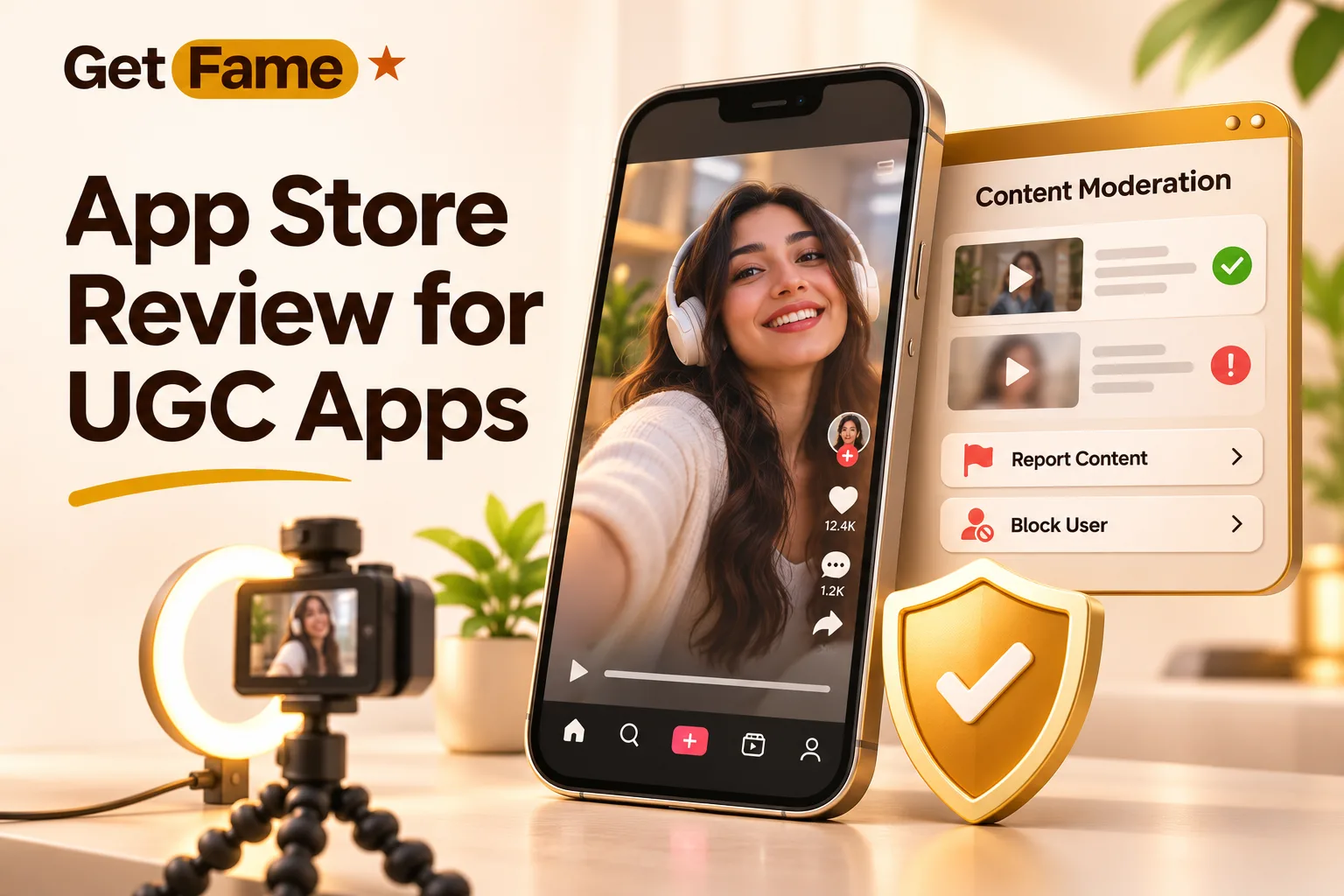
Apple's Guideline 1.2 establishes four central safeguards for applications supporting user-generated content:
- Systems for filtering objectionable material.
- Reporting mechanisms supported by timely responses.
- Options to block abusive users.
- Accessible contact information.
Google Play additionally requires users to accept applicable content policies before uploading material and expects ongoing moderation, appropriate reporting and blocking capabilities, and safeguards against monetization that encourages prohibited behavior.
Apple Developer+2
Businesses should review both marketplaces' requirements when developing cross-platform applications.
The detailed app store review guide for user-generated content apps from GetFame provides additional information about translating these requirements into practical application features.
Essential Features for User-Generated Content Compliance
1. Content Filtering and Moderation
Content moderation helps platforms identify material that violates their community standards.
Businesses can introduce automated screening to identify potentially inappropriate images, videos, text and other uploads.
Human moderation remains valuable when automated tools cannot reliably interpret context, intent or complex situations.
For example, a reported video might require manual examination before administrators determine whether it should remain available.
Moderation systems should include clear decision-making procedures, appropriate escalation routes and records of completed actions.
2. In-App Content Reporting
Users should be able to report inappropriate material without leaving the application or navigating complicated support processes.
A reporting feature can allow users to identify harassment, fraudulent activity, copyright concerns, abusive language or other prohibited behavior.
Reports should reach a designated moderation team with sufficient information to investigate the issue.
Providing a report button without an operational response process creates a gap between the application interface and actual user protection.
3. User Blocking Functionality
Blocking features give users greater control over unwanted interactions.
A creator experiencing repeated harassment should have a straightforward method for preventing further contact from the offending account.
Developers should test blocking across messaging, comments, notifications and other relevant interaction surfaces.
The functionality should remain consistent across supported devices and application sessions.
4. Accessible Customer Support
Applications should provide clear contact information and accessible support channels.
A dedicated support page or in-app assistance feature can help users communicate safety concerns, payment problems and account-related issues.
Platform operators should assign responsibility for responding to these requests and establish escalation procedures for urgent incidents.
Why Age Ratings and Content Restrictions Matter
Creator platforms may serve audiences with different age groups and content preferences.
Developers must accurately disclose application content and functionality when completing marketplace age-rating questionnaires.
Where appropriate, age-related restrictions should also be implemented within the application itself.
An age rating does not automatically authorize material prohibited by marketplace policies. Developers must evaluate both the nature of available content and the mechanisms used to restrict access.
Applications featuring creator monetization, live interactions or mature themes should pay particular attention to these requirements.
How to Manage Monetization Safely on Creator Platforms
Creator applications frequently generate revenue through subscriptions, virtual gifts, paid messages and premium content purchases.
However, monetization features should not encourage harmful behavior or reward prohibited activities.
Consider a live-streaming platform where a creator receives gifts while violating community standards. The moderation system should allow authorized administrators to restrict the broadcast and review associated transactions according to established policies.
Businesses should also maintain transparent payment rules, documented enforcement procedures and appropriate controls over creator earnings.
Digital purchases must comply with applicable marketplace payment requirements, including Apple's in-app purchase rules where required.
Pre-Submission Checklist for UGC Applications
Before submitting an application for review, development teams should conduct functional testing using newly created accounts and supported devices.
Important verification steps include:
- Confirm that community guidelines are accessible.
- Test acceptance of terms before content uploads.
- Verify that content filtering works correctly.
- Submit reports against videos, profiles and comments.
- Test user blocking and restricted interactions.
- Confirm age-based access restrictions.
- Verify applicable account deletion functionality.
- Test payment and subscription workflows.
- Provide working reviewer credentials.
- Prepare accurate app descriptions and screenshots.
Testing these features helps identify operational weaknesses before marketplace reviewers encounter them.
Common Reasons for App Store Rejection
Applications may face rejection when safety features are incomplete, inaccessible or inconsistent with published policies.
For example, a reporting feature might work on videos but remain unavailable on comments. Similarly, blocking an account might prevent private messages without restricting other unwanted interactions.
Additional problems can include inaccurate age ratings, inaccessible support channels, incomplete privacy disclosures and misleading application descriptions.
White-label applications must also establish their own recognizable brand identity rather than imitating another platform's protected branding.
What to Do if Your Application Is Rejected
An app store rejection provides an opportunity to identify and resolve specific compliance issues.
Development teams should carefully examine the guideline referenced in the rejection notice and reproduce the reported problem.
After implementing corrections, explain the changes clearly and provide instructions that help reviewers locate the updated functionality.
Avoid repeatedly submitting an unchanged application.
Where a genuine misunderstanding has occurred, businesses can use the marketplace's available appeal procedures.
Building a Review-Ready Creator Platform
Entrepreneurs launching social networking, short-video or creator membership platforms should integrate moderation requirements into their initial development strategy.
Adding safety controls immediately before submission can introduce unnecessary delays and technical complications.
GetFame provides white-label creator platform solutions that businesses can evaluate according to their content management, moderation and monetization requirements.
Nevertheless, platform operators remain responsible for establishing community policies, configuring safety features and maintaining effective moderation operations.
No software provider can guarantee marketplace approval.
Conclusion
Understanding app store review guidelines for user-generated content helps businesses develop safer and more reliable digital communities.
Content filtering, accessible reporting, effective user blocking, accurate age ratings and responsible monetization are essential considerations when preparing a creator application for distribution.
Successful compliance extends beyond implementing technical features. It requires ongoing moderation, transparent policies and consistent operational practices.
By prioritizing user safety throughout development, businesses can reduce avoidable submission problems and establish stronger foundations for sustainable platform growth.
Always consult the latest Apple App Review Guidelines and Google Play UGC Policy before submitting your application.