
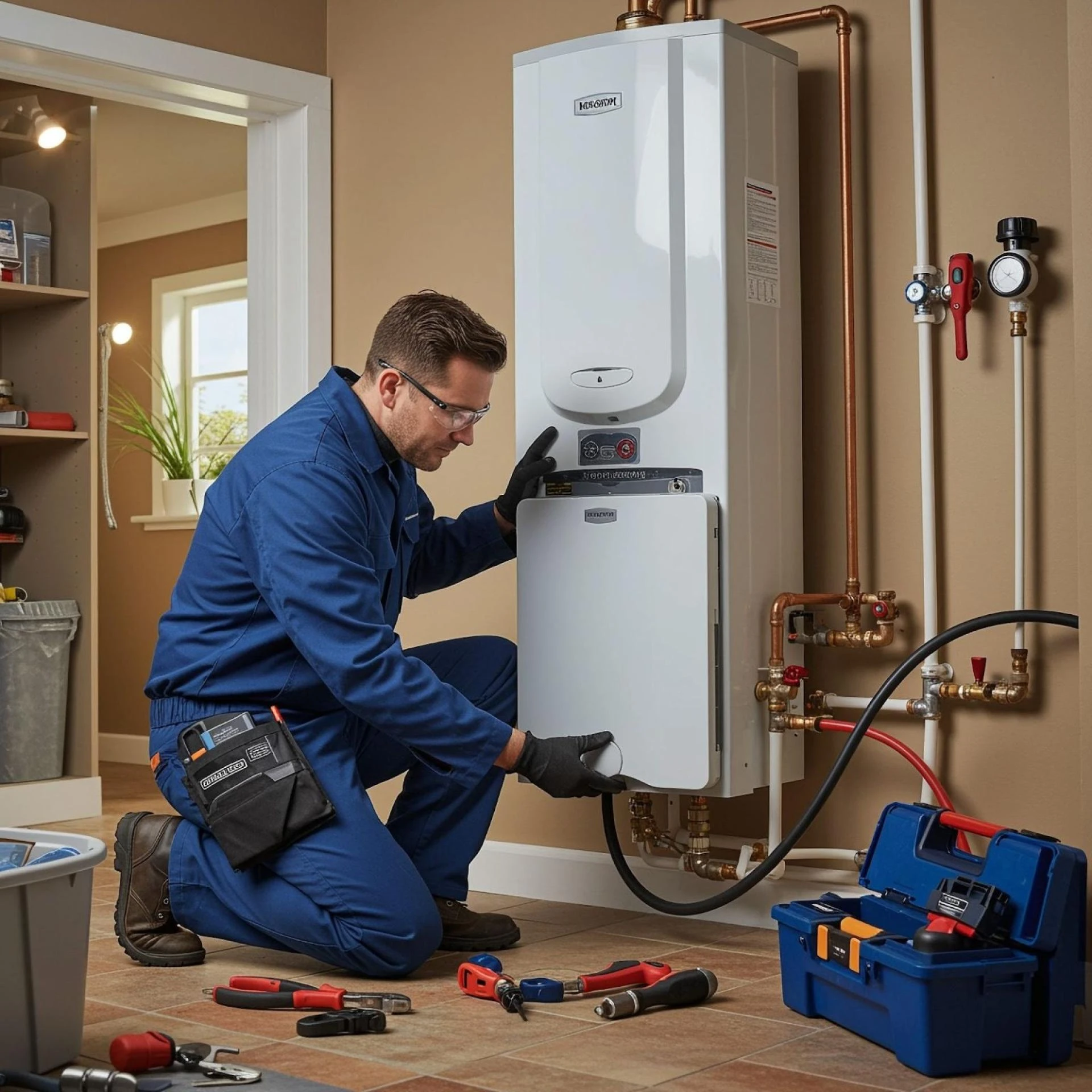
Water heater maintenance is necessary for achieving three goals. Annual water heater flushing represents one of the best methods, which helps to maintain your appliance’s peak performance. Regular flushing of both tank water heaters and tankless water heaters will stop sediment accumulation, boost energy efficiency, and decrease expensive maintenance costs. We will demonstrate why people need to maintain their water heaters, explain the differences between tank and tankless water heater flushing methods, and tell readers when to contact a maintenance expert.
Why Is Annual Water Heater Maintenance Important?
Your house needs water heaters as primary systems that provide hot water for showering, laundry, and dishwashing purposes. Tank units experience mineral and sediment accumulation from hard water, which keeps building up in their systems. The material buildup results in decreased efficiency, together with disruptive noises that may cause equipment to fail. Your system reaches its best performance through yearly water heater flushing, which removes all buildup and extends its useful life.
Tank Water Heater Flush: What It Is and Why It Matters
A tank water heater flush requires complete tank drainage to eliminate all sediment and mineral deposits that accumulate at the tank’s base throughout its operational period. The sediments create an insulating barrier that decreases heat transfer efficiency and requires your heater to operate at higher levels of power, resulting in increased energy expenses.
How to Perform a Tank Water Heater Flush
1. Turn off the power supply or gas to the unit.
2. Shut off the cold water inlet.
3. Attach a garden hose to the drain valve located at the bottom of the tank.
4. Open the drain valve and allow the tank to drain completely.
5. Flush the tank with cold water to clear out remaining sediments.
6. Close the drain valve, remove the hose, and turn the water supply back on.
7. Restore power or gas and check for leaks.
One should drain the regular tank water heater every year or two, in higher-mineral-water regions, to keep its efficiency up and prevent issues with sediment.
Tankless Water Heater Flush: Do They Need Flushing Too?
The tankless water heater heats the water when the demand arises for it, avoiding the need for a storage tank. While this design helps, hard water areas are not lessor on the system; a single stage of mineral buildup can clog the internal parts of your appliance and diminish both flow rate and output.
How to Perform a Tankless Water Heater Flush
1. Turn off the water inflow and the electricity source.
2. Connect hoses to the unit’s service ports, which are often found there.
3. Make a descaling solution, usually a commercial descaler or a blend of white vinegar.
4. To dissolve mineral deposits, run the mixture through the heat exchanger for roughly forty-five minutes.
5. Use clean water to flush the system to get rid of any remaining accumulation.
6. After reconnecting everything, turn the power back on and test the device.
Ideally, a tankless water heater should receive a flush every 12-18 months, depending on water quality, to ensure optimal efficiency.
Signs You Need to Schedule a Water Heater Flush
- Reduced hot water supply or temperature fluctuations
- Unusual sounds made during the operation, such as rumbling or slamming
- Bad-smelling or discolored water
- High energy costs
- Mineral accumulation that is visible around the unit
If you observe these symptoms, it is best to check the state of your water heater and carry out a complete water heater tank or tankless water heater flush.
Benefits of Regular Water Heater Flushing
- Increased energy efficiency and lower utility costs
- Extended longevity of your water heater
- Reduced the danger of leaks and costly repairs
- Improved water flow and quality
- Having peace of mind that your system is well-kept
DIY or Hire a Professional?
It would be best for an individual to call in a professional plumber to help with maintaining any kind of water heater, especially a plumbing water heater maintenance, including flushing, as they do not have the expertise necessary, which a licensed plumber has. The professional service verifies correct work completion while inspecting all system parts, which include the anode rod found in tank units, to solve any hidden problems that might arise later.