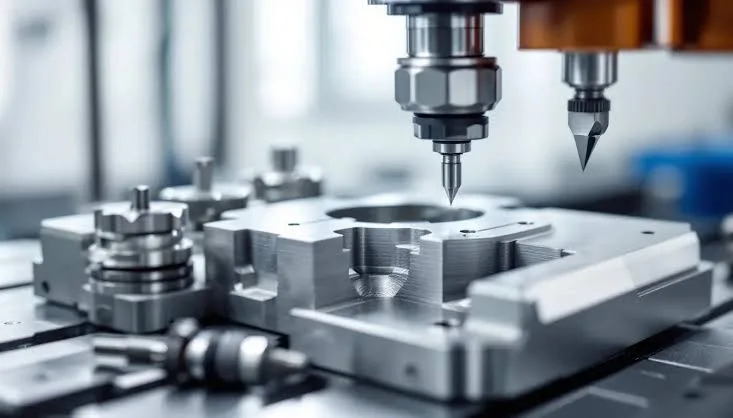
Aluminum has become a preferred material for many industries because of its lightweight properties, corrosion resistance, and excellent machinability. As products become more complex and performance requirements increase, manufacturers need reliable methods to produce accurate aluminum components. Aluminum CNC machining provides a practical solution by combining advanced automation, precise cutting processes, and consistent quality control to support applications across industrial equipment, electronics, automotive systems, and other precision-driven sectors.
Why Aluminum Is Widely Used in Precision Manufacturing
Aluminum offers a unique balance of performance, cost efficiency, and manufacturing flexibility. Compared with many other metals, it is easier to machine while still providing sufficient strength for demanding applications.
Common aluminum alloys are selected based on different engineering requirements:
Aluminum Alloy
Common Characteristics
Typical Applications
6061 Aluminum
Good strength, corrosion resistance, and machinability
Industrial components, frames, mechanical parts
6063 Aluminum
Excellent extrusion performance and surface finish
Profiles, structural applications
7075 Aluminum
High strength-to-weight ratio
High-performance mechanical components
The ability to combine lightweight properties with accurate machining makes aluminum suitable for many industries that require reliable and repeatable components.
How CNC Technology Improves Aluminum Component Production
CNC machining has changed the way manufacturers produce aluminum parts by improving accuracy, efficiency, and repeatability. Unlike traditional manual machining methods, CNC equipment uses programmed instructions to control cutting tools and maintain consistent results across production runs.
For aluminum components, CNC machining can create:
- Complex pockets and internal features
- Precision holes and threaded sections
- Accurate dimensional profiles
- Smooth surface finishes
- Consistent production batches
The machining process usually begins with a digital CAD model, followed by toolpath programming and production setup. Engineers consider factors such as material properties, part geometry, tolerance requirements, and production volume before selecting the optimal machining strategy.
For companies requiring reliable aluminum component production, working with experienced manufacturers that understand material behavior and machining processes is essential. Suppliers with advanced equipment and engineering experience can provide Yueyi Precision Manufacturing-style production capabilities, helping customers achieve consistent results for demanding industrial applications.
The Importance of Process Control in Aluminum CNC Machining
Producing high-quality aluminum components requires more than advanced CNC equipment. The machining process must be carefully controlled from material preparation to final inspection.
Aluminum alloys have different characteristics, and factors such as cutting parameters, tool selection, and thermal management can significantly affect the final results.
Experienced manufacturers typically focus on several key areas:
- Proper cutting speed and feed rate selection
- Suitable tooling for aluminum materials
- Stable workholding methods
- Real-time process monitoring
- Detailed quality inspection procedures
These steps help reduce machining errors and improve production consistency, especially for components with tight dimensional requirements.
For industries such as automation equipment, electronics, automotive systems, and industrial machinery, consistent quality is essential. A reliable manufacturing process ensures that each component can meet assembly requirements and perform as expected in the final application.
Improving Accuracy Through Advanced Aluminum Machining Capabilities
As industrial products become more compact and complex, manufacturers increasingly require aluminum parts with precise features and reliable performance. Achieving this level of accuracy requires a combination of suitable CNC equipment, experienced engineers, and effective quality management systems.
Modern CNC machining processes can support:
- Multi-axis machining for complex geometries
- Tight dimensional control for critical features
- Efficient production of customized components
Consistent results across different production volumes
For businesses sourcing aluminum components, selecting a manufacturing partner with strong technical expertise can reduce production risks and improve overall efficiency. Companies with advanced precision aluminum machining capabilities can help transform aluminum materials into finished components that meet specific engineering requirements.
Beyond machining accuracy, manufacturers must also consider surface treatment, inspection methods, and production scalability. These factors influence not only the appearance of aluminum parts but also their durability and long-term performance in practical applications.
Quality Control in Aluminum CNC Manufacturing
Quality control plays a critical role throughout the aluminum machining process. Even small dimensional variations can affect assembly performance, especially when components are used in precision equipment or complex mechanical systems.
Professional manufacturers often use advanced inspection equipment and structured quality procedures to verify component accuracy.
Common inspection methods include:
- Coordinate measuring machines (CMM)
- Dimensional measurement tools
- Surface finish testing
- Visual inspection procedures
- Production consistency checks
A complete quality control system allows manufacturers to identify potential issues early and maintain stable production standards.
For international buyers, quality assurance is also an important factor when choosing a CNC machining supplier. Beyond manufacturing capability, suppliers need to demonstrate reliable communication, process control, and the ability to support different production requirements.
Industrial Applications of CNC Machined Aluminum Components
Aluminum CNC machining supports a wide range of industries because of the material’s combination of strength, weight advantages, and processing flexibility. Many manufacturers rely on precision aluminum components to improve product performance and simplify assembly processes.
Common applications include:
- Industrial Equipment
Aluminum parts are widely used in machinery frames, brackets, housings, and functional components where lightweight structures and dimensional accuracy are required.
- Electronics and Communication Equipment
Because aluminum provides excellent thermal conductivity and corrosion resistance, it is often selected for enclosures, heat dissipation components, and precision structural parts.
- Automotive Components
Modern automotive systems require lightweight materials to improve efficiency. CNC machined aluminum components are commonly used in brackets, fixtures, and mechanical assemblies.
- Automation Systems
Automation equipment depends on accurate and repeatable components. Precision-machined aluminum parts help maintain positioning accuracy and reliable operation.
Selecting the Right CNC Manufacturing Partner
Choosing a suitable CNC machining supplier requires evaluating more than equipment availability. Companies should consider engineering experience, quality control systems, material knowledge, and production flexibility.
A capable supplier should be able to support customers throughout the manufacturing process, including:
- Material selection guidance
- Machining process optimization
- Quality inspection
- Surface finishing coordination
- Production scalability
For companies looking for consistent results across different aluminum components, working with experienced providers that offer integrated precision machining solutions can help improve efficiency and reduce manufacturing challenges.
A strong manufacturing partnership allows businesses to move from initial requirements to finished components with greater confidence, ensuring that each part meets functional and quality expectations.
Frequently Asked Questions
What industries commonly use aluminum CNC machining?
Aluminum CNC machining is widely used in industrial equipment, automotive, electronics, automation systems, and other industries that require lightweight and precise components.
Why is aluminum suitable for CNC machining?
Aluminum offers excellent machinability, corrosion resistance, and a strong balance between weight and mechanical performance, making it suitable for many precision applications.
What factors affect aluminum machining quality?
Tool selection, cutting parameters, material characteristics, machine accuracy, and inspection processes all influence the final quality of aluminum machined parts.
Can CNC machining produce customized aluminum components?
Yes. CNC machining can create customized aluminum components with complex geometries, precise features, and different production requirements.
How is aluminum CNC machining accuracy maintained?
Manufacturers maintain accuracy through optimized machining processes, advanced CNC equipment, and detailed quality inspection procedures.
What should companies consider when choosing an aluminum machining supplier?
Important factors include manufacturing experience, technical capabilities, quality systems, communication ability, and the supplier’s capacity to support long-term production needs.