
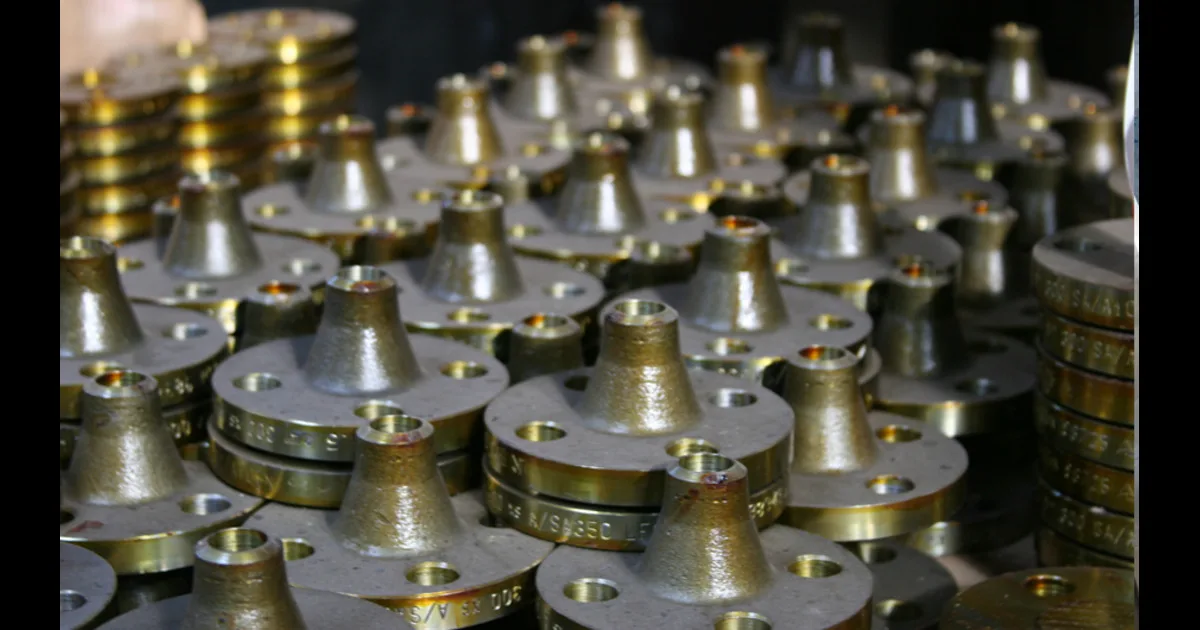
Alloy Steel ASTM A182 F91 Flanges are forged alloy steel components used in piping systems that operate under elevated temperatures, high pressures, and demanding mechanical conditions. These components are particularly relevant to power generation, steam distribution, petrochemical processing, and industrial energy infrastructure, where conventional carbon steel may not provide the required combination of high-temperature strength and long-term structural stability. The performance of these flanges depends on material chemistry, forging quality, heat treatment, dimensional accuracy, and compliance with the applicable engineering standards.

ASTM A182 Grade F91 is a modified chromium-molybdenum alloy steel developed for high-temperature pressure service. Its alloying system includes chromium, molybdenum, vanadium, niobium, and controlled nitrogen additions that contribute to its high-temperature mechanical characteristics. For this reason, engineers evaluating Alloy Steel ASTM A182 F91 Flanges must consider the complete material specification rather than relying exclusively on the nominal grade designation.
In industrial procurement, the distinction between material compliance and component suitability is particularly important. Alloy Steel ASTM A182 F91 Flanges Manufacturers, Alloy Steel ASTM A182 F91 Flanges Suppliers, Alloy Steel ASTM A182 F91 Flanges Stockists, and Alloy Steel ASTM A182 F91 Flanges Exporters may perform different roles in the supply chain, but the supplied components must ultimately satisfy the project's material, dimensional, inspection, and documentation requirements.
Metallurgical Characteristics and High-Temperature Performance
Grade F91 belongs to the family of creep-resistant ferritic alloy steels. It is designed to retain useful mechanical properties under elevated-temperature conditions where prolonged exposure to stress can cause time-dependent deformation. This characteristic makes the grade relevant to selected pressure-containing components in power plants and other high-temperature industrial installations.
Proper heat treatment typically produces a tempered martensitic structure. The stability of this structure is important because unsuitable thermal processing can reduce the material's mechanical performance. Accordingly, Alloy Steel ASTM A182 F91 Flanges should be evaluated using verified chemical analysis, mechanical test results, and heat-treatment documentation.
The principal performance considerations include:
- Creep resistance: The alloy is intended for service where sustained stress at elevated temperatures makes time-dependent deformation a design consideration.
- Oxidation resistance: Chromium improves resistance to oxidation compared with ordinary carbon steel under appropriate conditions.
- Mechanical strength: Proper processing supports the strength required for specified high-temperature applications.
- Microstructural stability: Controlled heat treatment helps establish the properties required for long-term service.
These characteristics do not establish a universal operating-temperature limit. The permissible service conditions depend on the governing design code, allowable stresses, component geometry, operating duration, and the specific environment.
Flange Configuration and Dimensional Requirements
Flange geometry influences load transfer, connection integrity, installation, and maintenance. The appropriate configuration depends on the piping arrangement, pressure class, nominal size, welding requirements, and operating conditions.
Common configurations include weld neck, blind, socket weld, threaded, and slip-on flanges. Each design has a specific purpose, and its suitability must be established through the applicable dimensional standard and piping design requirements.
When specifying Alloy Steel ASTM A182 F91 Flanges, the purchase documentation should identify the flange type, nominal pipe size, pressure class, facing, bore, and dimensional standard. Additional machining or project-specific requirements should also be stated clearly.
ASME B16.5 covers pipe flanges and flanged fittings within its defined size and pressure-class scope. ASME B16.47 addresses large-diameter steel flanges within its scope. These standards establish dimensional requirements and associated pressure-temperature ratings, but the applicable rating must be determined using the correct material group, temperature, and other relevant conditions.
Manufacturing Process and Heat-Treatment Control
The manufacturing route affects the structural integrity and metallurgical consistency of forged alloy steel flanges. Production generally begins with verified alloy steel feedstock, followed by controlled heating, forging, heat treatment, machining, inspection, and marking.
Heat treatment is particularly important for Grade F91. Normalizing and tempering are used to establish the required microstructure and mechanical properties under the applicable specification. The precise processing parameters depend on the governing requirements and approved manufacturing procedures.
For Alloy Steel ASTM A182 F91 Flanges, verification of heat-treatment records is an important part of quality assurance. These records help demonstrate that the material received the prescribed processing and achieved the required condition.
International Standards and Specification Compliance
The applicable editions should be identified in the purchase order or project specification. Requirements may differ between editions, and the governing contract or construction code determines which edition applies.
European projects may also reference applicable EN material, dimensional, and pressure-equipment requirements. DIN and BS designations may appear in project documentation, but equivalence with ASTM A182 Grade F91 should never be assumed solely because two grades have similar nominal alloy compositions. A formal technical assessment must consider chemical limits, mechanical properties, heat treatment, product form, and code acceptance.
Inspection, Testing, and Material Traceability
Quality verification provides evidence that the finished flange meets the specified requirements. For high-temperature alloy steel components, this includes material identity, chemical composition, mechanical properties, dimensions, and any required nondestructive examination.
Dimensional inspection checks the flange's outside diameter, thickness, bore, facing, bolt-hole arrangement, and other specified features. The applicable standard determines the relevant dimensional requirements and tolerances.
For Alloy Steel ASTM A182 F91 Flanges, traceability connects the finished component to its manufacturing and testing records. Marking should remain linked to the relevant heat identification and material documentation throughout inspection, storage, and shipment.
A complete quality dossier may include material test reports, chemical and mechanical test results, heat-treatment records, dimensional inspection reports, nondestructive examination reports, and other documents required by the purchase specification. Third-party inspection should be included when specified by the project.
Industrial Applications and Engineering Limitations
Grade F91 is used in selected industrial systems where elevated-temperature strength and resistance to creep deformation are important design considerations.
Power generation and steam distribution
Power-generation facilities use creep-resistant alloy steels in selected high-temperature steam piping and related pressure components. F91 may be specified when the design temperature, pressure, and expected service duration justify its material characteristics.
The integrity of a flanged connection depends on the entire assembly, including the mating flange, gasket, bolting, welds, and supporting pipework. Thermal expansion, installation loads, pressure cycles, and temperature changes can influence the stresses imposed on the connection.
Petrochemical and process installations
Certain process facilities operate with high-temperature fluids or steam. In appropriate applications, Grade F91 may be considered where the governing material selection and construction code permit its use.
Material selection must also consider fluid chemistry, corrosion mechanisms, thermal cycling, and potential degradation during operation. High temperature alone does not establish that F91 is the correct material.
Industrial energy systems
Selected boilers, heat-recovery installations, and thermal-process systems may require forged alloy steel components designed for sustained elevated-temperature service. Their specifications should reflect actual operating conditions and applicable design requirements.
In each sector, the engineering assessment must account for allowable stresses, service duration, cyclic loading, corrosion risks, and the consequences of component failure.
Welding, Fabrication, and Service Reliability
Fabrication practices can influence the performance of Grade F91. Welding changes the microstructure of the weld metal and heat-affected zone, making procedure qualification and thermal control particularly important.
Post-weld heat treatment is particularly important in many F91 applications because welding can create local microstructures that differ from those of the original forged material. The required treatment depends on the construction code, procedure qualification, component geometry, and project specification.
Repair welding, when permitted, must follow approved procedures and the applicable examination and acceptance requirements. Finished flange faces should also be protected against damage during handling, storage, and installation.
During service, inspection should reflect the component's operating history. Temperature excursions, pressure cycling, evidence of leakage, and changes in operating conditions may affect the assessment of long-term reliability.
Procurement Considerations and Supply-Chain Verification
Procurement documentation should establish the technical requirements before manufacturing or dispatch. This reduces ambiguity between manufacturers, distributors, fabricators, inspectors, and end users.
The terms Alloy Steel ASTM A182 F91 Flanges Manufacturers, Alloy Steel ASTM A182 F91 Flanges Suppliers, Alloy Steel ASTM A182 F91 Flanges Stockists, and Alloy Steel ASTM A182 F91 Flanges Exporters describe different commercial roles, although a single organization may perform more than one of these functions.
Manufacturers are responsible for the manufacturing activities assigned to them. Suppliers coordinate sourcing and delivery, stockists generally focus on inventory availability, and exporters manage international supply arrangements and related export documentation. The exact scope of responsibility should be established contractually.
For domestic sourcing, the phrases Alloy Steel ASTM A182 F91 Flanges Manufacturers in India, Alloy Steel ASTM A182 F91 Flanges Suppliers in India, Alloy Steel ASTM A182 F91 Flanges Stockists in India, and Alloy Steel ASTM A182 F91 Flanges Exporters in India may identify relevant sourcing channels. However, geographical location does not establish technical compliance. The supplied material must still meet the specified grade, dimensional requirements, testing provisions, and documentation requirements.
Export projects may require additional documentation, independent inspection, or project-specific quality records. These requirements should be agreed upon before production or dispatch, particularly when the components form part of critical pressure systems.
Engineering Basis for Selecting F91 Flanges
The suitability of Alloy Steel ASTM A182 F91 Flanges depends on the interaction of alloy chemistry, controlled heat treatment, forging integrity, dimensional conformity, and service-specific design requirements. Their creep-resistant characteristics make them relevant to selected high-temperature pressure systems, but the grade designation alone cannot guarantee reliable performance.
A defensible specification connects the material standard to the applicable flange dimensional standard and piping construction code. It also establishes the required inspection methods, traceability arrangements, fabrication controls, and documentation.
For engineers, procurement professionals, and quality-control personnel, the essential consideration is the complete chain of technical evidence: verified material identity, correct component geometry, a suitable metallurgical condition, and documented conformity with the intended service requirements. This approach provides a sound basis for evaluating Grade F91 flanges for demanding industrial piping applications.
Contact Us
10, Floor-2, 18, Vijay Apartment, Khetwadi 12th Lane, Girgaon, Mumbai-400004.
Gr. floor, Gala no B-5,Gupta Warehousing Complex, Dapode Road, Bhiwandi, Thane, Maharashtra - 421302
+91-9172559933