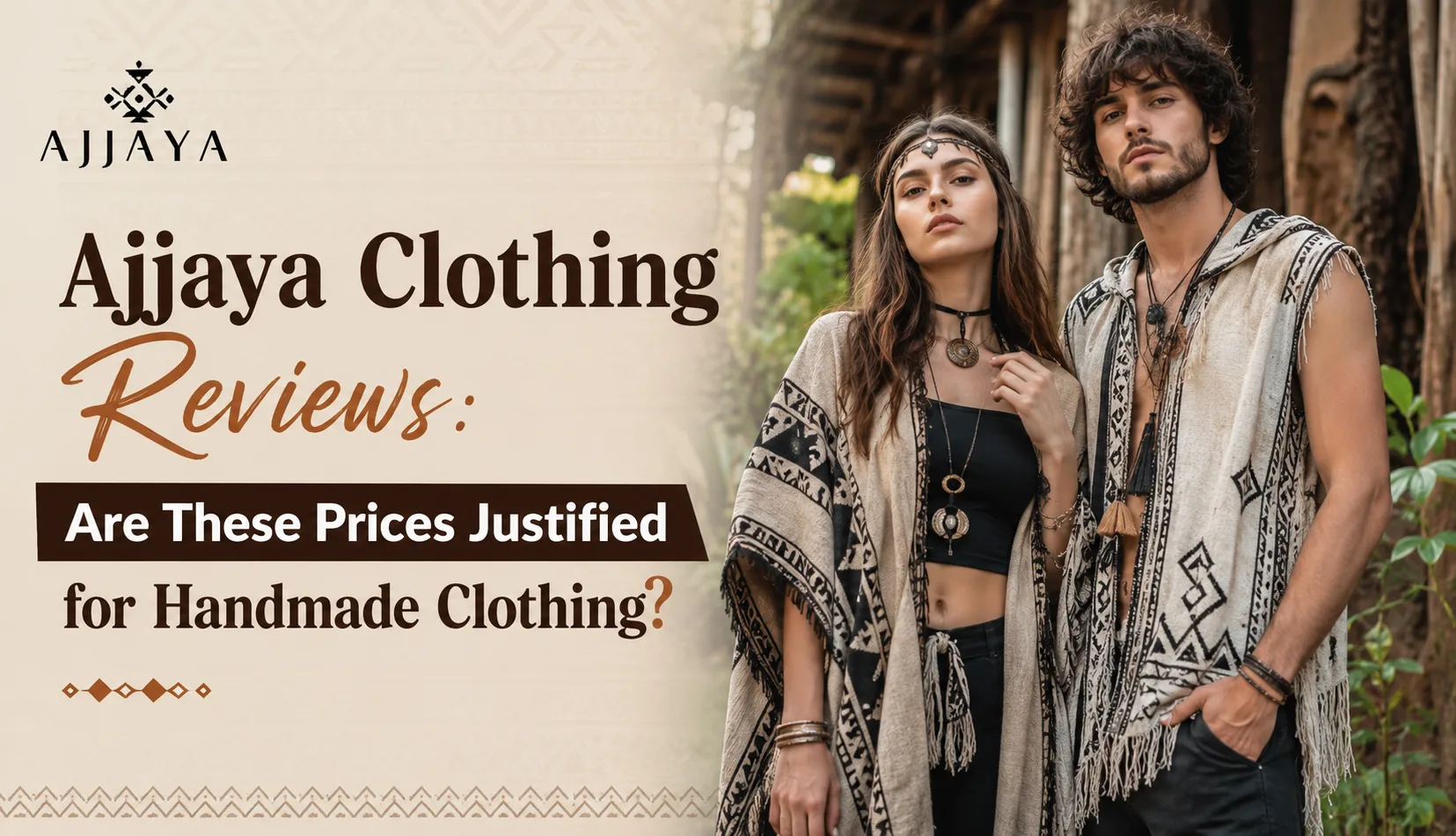
Ajjaya Clothing discovered something while exploring this field. They analyzed that there is no clothing that could match this way of living while honoring the values that mattered most. So they come up with the mindset that if cloth is touching your skin, then it should nurture it.
Is it worth it? It relies on who you ask, clearly, and it relies on which object you are checking. A $250 kimono and a $40 headband don't get judged the same way, so treating this as one flat yes-or-no question misses most of what actual shoppers are pronouncing. Below is what those who bought and, in fact, wore the stuff have to mention about the cloth, the handmade claims, how Ajjaya stacks up against cheaper competitors, and where the price tag holds up as opposed to where it does not.
What Are People Actually Paying For?
There are mainly three things that attract people, and those are the fabric itself, the hand-block printing, and the fact that nothing here comes off a factory line. A lot of buyers say the natural dyes keep their color longer than what they're used to from cheaper festival brands. One of the most common things that is highlighted in reviews, worded slightly differently each time, is something like "this doesn't look like it came off a rack. " Whether that fully justifies the price is another matter, but it's clearly part of what people think they're buying.
Does the Fabric Actually Match the Cost?
Cotton, hemp, and wool blends. That's mostly what gets mentioned, and mostly in the context of breathability and how the fabric holds up wash after wash. The meditation shawls get singled out. A lot of people describe the yak wool blend as heavy and warm, nothing like the thin acrylic stuff sold at a market stall for a fraction of the price. But it's not all praise across the board. Some of the lighter cotton tops get called out as thin for the money, especially when reviewers compare them to denser cotton from other brands. So quality isn't flat across the whole line. Certain pieces clearly earn their price better than others do, and you'll notice that gap if you read past the five-star reviews into the three- and four-star ones.
Is "Handmade" Backed Up By What Actually Arrives?
Every brand claims "handmade" these days, so skepticism is fair going in. But people who've actually opened the box tend to mention small imperfections: a stitch that wanders slightly, a print sitting an inch off from where it was in the catalog photo. Some buyers take that as proof the piece really is one of a kind, no two ponchos exactly alike. Others are less charitable about it; they paid premium prices and expected more consistency for the money. Both reactions show up often enough in the reviews that the handmade claim seems genuine; people just disagree on whether the resulting imperfections are charming or annoying.
How Does This Stack Up Against Cheaper Festival Brands?
The most common comparison is against fast-fashion boho sellers charging a third of the price for something that looks nearly identical in a product photo. People who've bought from both sides tend to say the cheap version starts fraying or fading within a season, while the Ajjaya piece keeps holding up. Not everyone agrees the gap is worth the money, though. A handful of reviewers admit that on the simpler items, basic pants and a plain tank top, the upgrade felt small next to what they paid extra for.
What Do Long-Term Buyers Say?
This is where the reviews get more interesting. People who've owned a piece for a year or more communicate less about first impressions and more about whether the shade's held and the stitching's still correct. One customer reported going through two less expensive poncho cloths within the time their Ajjaya one stayed wearable and said, "Once you factor that in, the better starting charge stops feeling like the sort of stretch." That form of long-term assessment is worth more than a 5-star review posted the same week the package deal arrived.
Does Free Shipping or the Return Policy Change Anything?
The clothing isn't the only thing people bring up. Free worldwide shipping gets mentioned a lot, especially by buyers outside the US who normally get hit with steep freight charges on top of everything else. The 30-day return window comes up too, usually from people who ordered the wrong size and needed to swap. Most call the process easy. None of this changes the number on the price tag, obviously. But it changes how that number feels. Paying $200 for a kimono lands differently when there's no shipping fee sneaking in at checkout and no fight to get a return processed.
Are There Real Complaints About Pricing?
Yes, and pretending otherwise wouldn't be honest. A smaller share of reviews, not most, but enough to notice, call out specific pieces as overpriced, especially simpler items like scarves or basic tops. A few reviewers also mention seeing a discount pop up on something they'd just bought at full price, which is never a good feeling. This isn't the dominant complaint across Ajjaya Clothing Reviews as a whole, but it shows up consistently enough to say satisfaction depends more on the individual piece than on the brand overall.
Pro Tip
Check the return window before you buy anything handmade, from Ajjaya clothing or anywhere else, and read the most recent reviews rather than just the top-rated ones. Handmade batches change over time. A review from last month tells you more about what's actually shipping right now than a five-star review from two years ago.
So, Is It Worth the Price?
No single solution covers the complete symbol. Clothes generally tend to get the maximum regular reward relative to their cost, with customers pointing to cloth and craftsmanship as the purpose. Simpler items get a more blended reaction, with humans wondering whether the markup over mass-marketplace alternatives is deserved. What's clean is that Ajjaya isn't looking to compete on rate. It's built round homemade creation, natural substances, and a transport-and-returns setup that does not quietly add fees later, and whether or not that trade-off is worth paying for probably comes down to the unique piece a person wants.
Frequently Asked Questions
Q1. Why does handmade clothing usually cost more than mass-produced clothing?
Someone is cutting, dyeing, printing, or stitching each piece by hand, rather than running it through a machine that churns out identical copies all day. Fewer pieces per batch, extra hours of hard work in each one, and usually higher-quality raw material costs than a factory would bother sourcing to keep its own expenses low.
Q2. How can you actually tell if something's handmade?
Look for the small imperfections: a stitch line that isn't perfectly straight, a print that's slightly misaligned, or natural variation in color from one dye lot to the next. Factory-made clothing comes out looking nearly identical piece to piece. Handmade rarely does.
Q3. Is handmade clothing automatically of better quality?
Not necessarily. It comes down to the skill of the person making it and the materials they chose, not the production method by itself. Plenty of handmade items have uneven stitching or an odd fit. The label doesn't guarantee anything on its own.
Q4. What should you check before paying extra for artisan or handmade clothing?
Confirm what the fabric's actually made from; look at the return policy before buying rather than scrambling to find it after, and read recent reviews instead of leaning on the product photos. Photos rarely tell you how something feels in your hands.
Q5. Does spending more on handmade clothing mean it'll last longer?
Often, but not automatically. Better fabric and tighter stitching give it an edge, but how it's washed, stored, and worn plays just as big a role in how long it actually lasts.