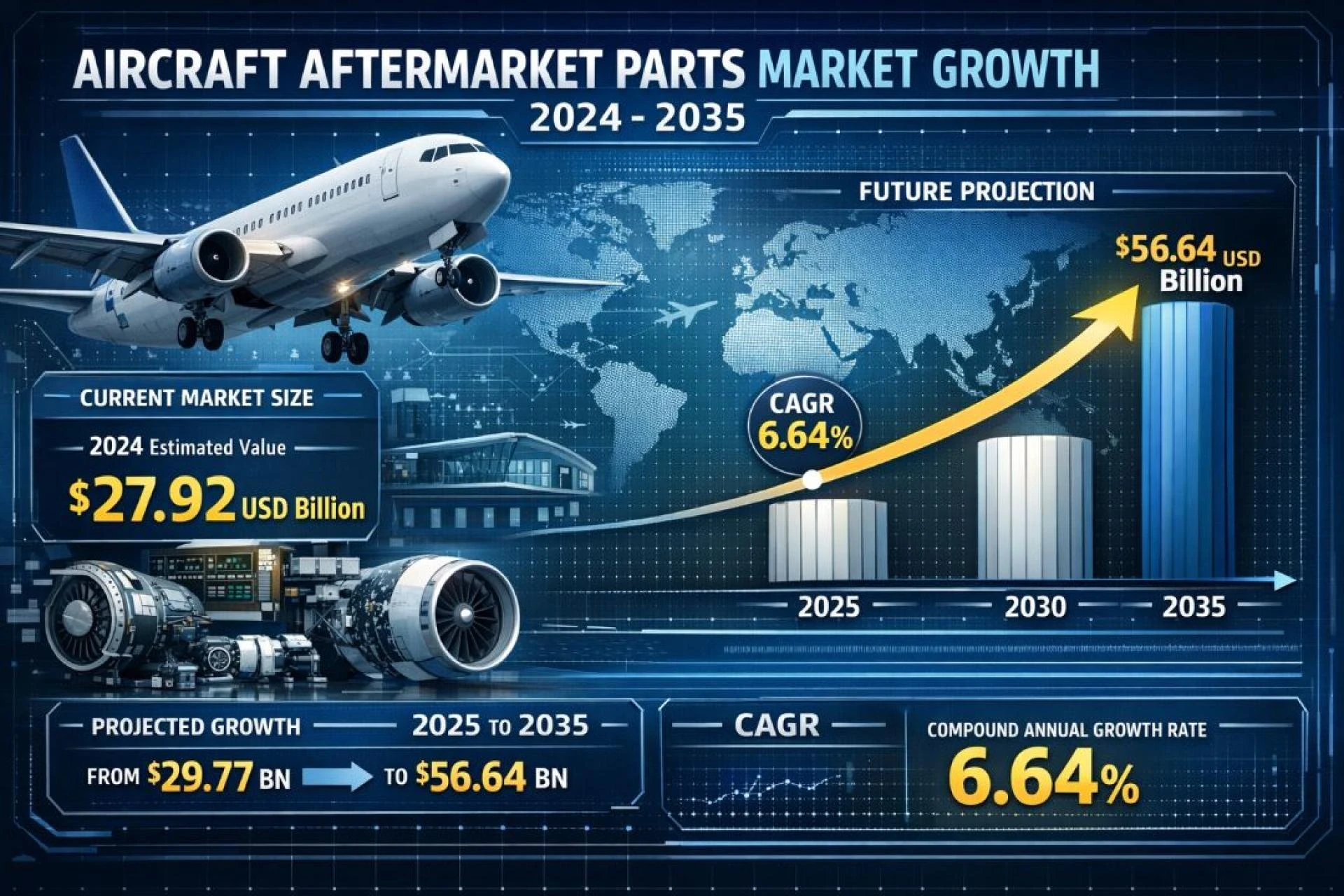
As per Market Research Future analysis, the Aircraft Aftermarket Parts Market was estimated at 27.92 USD Billion in 2024. The Aircraft Aftermarket Parts industry is projected to grow from 29.77 USD Billion in 2025 to 56.64 USD Billion by 2035, exhibiting a compound annual growth rate (CAGR) of 6.64% during the forecast period 2025 - 2035. This expansion highlights the increasing reliance of airlines on aftermarket solutions to manage operating costs and sustain fleet performance.
Maintenance represents one of the largest operational expenses for airlines. The commercial aircraft aftermarket plays a central role in controlling these costs by providing flexible and efficient access to replacement parts and services.
Market Growth and Trends
The growing aircraft aftermarket size is driven by higher aircraft utilization rates and extended service life strategies. Airlines are operating aircraft for longer periods, increasing the frequency of maintenance cycles and the need for aftermarket aircraft parts.
Aircraft aftermarket trends indicate a shift toward cost transparency and performance-based maintenance agreements. These arrangements align part usage with actual flight hours and cycles, allowing airlines to manage budgets more effectively. Additionally, data-driven aircraft aftermarket analysis supports better forecasting and inventory planning.
Cabin-related expenses are also being carefully managed through interior refurbishment rather than full replacements. The automotive aircraft interior genuine leather aftermarket market reflects demand for durable materials that reduce long-term maintenance costs while enhancing passenger comfort.
Key Players
The aircraft aftermarket share is influenced by a mix of OEM service divisions, independent MROs, and specialized suppliers. Key players compete by offering cost-efficient solutions, rapid turnaround times, and global support networks.
Independent aftermarket providers often help airlines reduce costs by offering alternative certified parts and flexible service models. This competitive environment encourages innovation and pricing efficiency across the commercial aircraft aftermarket parts market.
Future Scope
Aircraft aftermarket analysis suggests that cost management will remain a central theme driving future growth. Predictive maintenance and digital inventory systems will further reduce unnecessary part replacements and optimize asset utilization.
As airline business models continue to evolve, the aftermarket will increasingly support tailored maintenance strategies aligned with specific operational needs. This adaptability positions the commercial aircraft aftermarket as a critical enabler of financial sustainability.
FAQs
1. Why is the aircraft aftermarket important for cost control?
It provides flexible maintenance options and reduces reliance on expensive component replacements.
2. How do airlines forecast aftermarket needs?
Through data analytics, flight cycle tracking, and predictive maintenance systems.
3. Do interior upgrades affect maintenance budgets?
Yes, durable materials can lower long-term refurbishment costs.
Discover More Research Reports on Aerospace & Defense By Market Research Future:
· Commercial Aircraft Video Surveillance Market
· Commercial Aircraft Video Surveillance System Market
· Commercial Aviation Aircraft Seating Market