When it comes to safe and effective tumbling practice, choosing the right surface can dramatically impact performance, confidence, and injury prevention. Two of the most popular options today are inflatable air tracks and traditional foam mats. Both offer benefits, but they serve slightly different training needs.
In this detailed comparison guide, we’ll break down safety, durability, cost, portability, performance, and overall value to help you decide which option fits your goals best.
What Is an Air Track?
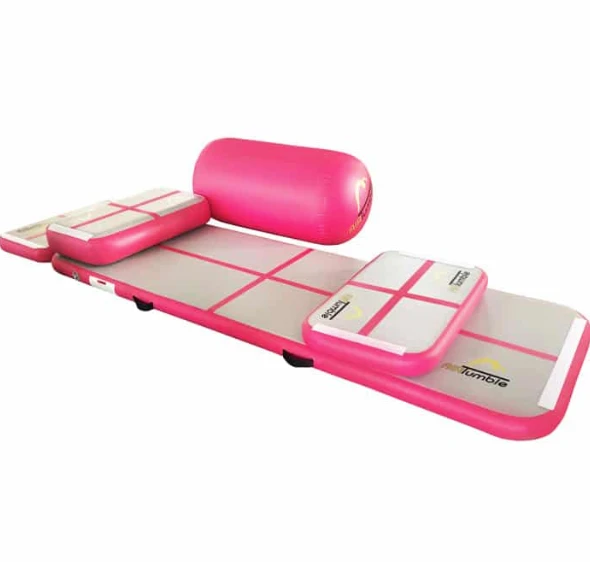
An Air Track is an inflatable tumbling mat made from durable PVC material that can be adjusted for firmness using air pressure. It provides a spring-like surface that absorbs impact while returning energy during jumps and passes.
Brands like AirTumble have refined these mats to offer enhanced rebound, airtight stitching, and anti-slip surfaces, making them popular for gymnastics, cheerleading, martial arts, and home tumbling practice.
What Are Foam Mats?
Foam mats are traditional padded training surfaces made of dense foam covered in vinyl. They are commonly used in gyms, schools, and martial arts studios. Foam mats provide cushioning but generally lack rebound.
They come in several forms:
- Panel mats (foldable)
- Carpet-bonded foam mats
- Puzzle mats
- Skill cushions
While they are reliable and affordable, their performance differs significantly from inflatable options.
1. Shock Absorption & Safety
Air-filled mats:
An Air Track distributes impact evenly through air pressure. The adjustable firmness allows athletes to customize softness based on skill level. This reduces stress on joints during back handsprings, tucks, and aerials.
Foam mats:
Foam absorbs impact but compresses over time. High-density foam can feel hard, while low-density foam may bottom out during strong passes.
Winner: Air-filled mats for advanced tumbling; foam mats for beginner cushioning.
2. Bounce & Performance
Performance is where differences become obvious.
- The Gymnastics community often prefers an Air Track because it provides controlled rebound, helping athletes gain height and confidence.
- Foam mats absorb energy rather than returning it, making tumbling feel slower and heavier.
If you're working on power tumbling, round-offs, or connected passes, rebound matters.
Winner: Air-filled option for dynamic skills.
3. Portability & Storage
Inflatable surface:
- Deflates quickly
- Easy to store
- Lightweight when empty
- Fits in smaller spaces
Foam mats:
- Bulky and heavy
- Require dedicated storage space
- Difficult to transport
For home users with limited space, portability is crucial.
Winner: Air Track
4. Durability & Longevity
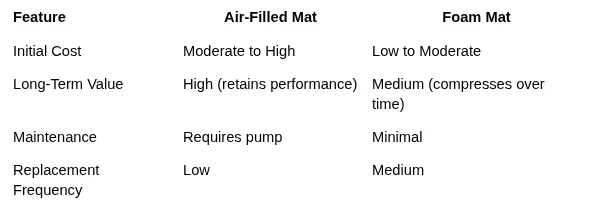
Foam mats compress and lose firmness over time. Creases and permanent dents can develop with heavy use.
Modern inflatable mats from brands like AirTumble are made with reinforced seams and multi-layer PVC. When maintained properly, they retain shape and bounce for years.
However, they must be protected from sharp objects.
Winner: Slight edge to inflatable option for long-term performance retention.
5. Cost Comparison
6. Skill Level Suitability
Beginners:
Foam mats provide stable, non-bouncy support for learning basics.
Intermediate to Advanced:
An Air Track allows safe progression into back handsprings, aerials, and connected tumbling passes.
Home Athletes:
Inflatable mats offer versatility and space-saving storage.
7. Training Versatility
Air-filled mats can be used for:
- Tumbling
- Cheer practice
- Martial arts
- Parkour drills
- Dance acro training
Foam mats are ideal for:
- Basic rolls
- Stretching
- Light drills
- Preschool gymnastics
If multi-sport use is important, inflatable surfaces offer more adaptability.
Air-Filled Mat
Pros:
- Adjustable firmness
- Strong rebound
- Portable
- Durable with proper care
- Great for skill progression
Cons:
- Higher upfront cost
- Requires inflation
- Needs protection from punctures
Foam Mat
Pros:
- Budget-friendly
- Low maintenance
- Simple and stable
Cons:
- No rebound
- Bulky storage
- Compresses over time
Choose foam mats if:
- You are teaching toddlers or beginners
- You want simple, low-cost padding
- Bounce is not required
Choose an Air Track if:
- You want realistic tumbling rebound
- You need portability
- You are progressing into advanced skills
- You want long-term performance value
For athletes serious about tumbling progression, inflatable mats provide a more dynamic and confidence-building surface.
While foam mats are practical and affordable, they cannot replicate the spring and performance benefits of an Air Track. For athletes looking to safely progress in tumbling skills while maintaining portability and long-term durability, inflatable mats stand out as the superior choice.
The right option ultimately depends on your training goals, budget, and available space—but for performance-driven athletes, rebound makes all the difference.
1. Is an inflatable tumbling mat safe for beginners?
Yes, adjustable air pressure allows softer settings that make it beginner-friendly while still offering support.
2. Do foam mats last long?
They can last several years but tend to compress and lose firmness with frequent use.
3. Can inflatable mats be used outdoors?
Yes, but they should be placed on clean, smooth surfaces to avoid punctures.
4. Which option is better for back handsprings?
Inflatable mats provide better rebound and joint protection for dynamic skills.
5. Are inflatable mats difficult to maintain?
Not at all. Basic care includes proper inflation, safe storage, and avoiding sharp objects.
6. Is the higher price worth it?
For athletes training consistently and progressing in tumbling, the performance benefits justify the investment.