Introduction
The pharmaceutical sector operates in highly regulated environments where maintaining product quality, safety, and hygiene is extremely important. Every stage of medicine production requires dependable systems that help maintain accuracy and prevent contamination. Among these essential systems, an air compressor for pharmaceutical industry provides a continuous supply of clean and controlled compressed air for various manufacturing applications.
Pharmaceutical production requires compressed air that meets strict cleanliness standards. Unlike traditional industrial uses, pharmaceutical processes cannot tolerate impurities such as oil traces, moisture, airborne particles, or microbial contaminants. Selecting the right compressor technology helps manufacturers maintain safe operations and meet industry quality expectations.
The increasing demand for compressed air pharmaceutical industry solutions is driven by the need for efficient, reliable, and contamination-free production environments. From sterile manufacturing and drug processing to packaging and testing operations, pharmaceutical compressed air supports critical activities that require precision and consistency.
Importance of Air Compressor for Pharmaceutical Industry
Compressed air is an essential utility in pharmaceutical facilities because it powers several production processes and automated systems. The reliability and purity of compressed air directly affect manufacturing efficiency, equipment operation, and product safety.
An air compressor for pharmaceutical industry is developed to provide consistent airflow while maintaining the required level of cleanliness. These systems are generally supported by advanced filtration units, dryers, and monitoring equipment to remove impurities and maintain air quality.
A properly designed compressed air setup helps pharmaceutical manufacturers improve productivity, minimize contamination concerns, and ensure smooth operation of production equipment. It provides dependable air supply for machinery, control systems, and laboratory applications where accuracy is essential.
Applications of Compressed Air in Pharmaceutical Manufacturing
Compressed air is widely used across different pharmaceutical processes where controlled and clean air supply is required. It helps operate equipment, maintain production standards, and support various manufacturing activities.
Some common applications include:
- Operating machines used for tablet and capsule manufacturing.
- Supporting sterile filling and medicine packaging operations.
- Providing clean air for controlled production areas.
- Powering pneumatic tools and automated systems.
- Assisting laboratory research and testing procedures.
- Supporting instrumentation and process control systems.
Since each pharmaceutical application has unique air quality needs, selecting a suitable compressor system is important for achieving reliable performance.
Importance of Air Quality in Pharmaceutical Compressed Air Systems
Compressed air quality is a critical factor in pharmaceutical manufacturing because contaminated air can affect production processes and final product quality. Even minor impurities can create challenges in maintaining hygiene standards and regulatory compliance.
A high-quality pharmaceutical compressed air system uses advanced purification technologies to remove unwanted contaminants. These systems typically include oil-free compressors, precision filters, and drying solutions to maintain clean and dry air.
Maintaining proper compressed air quality helps manufacturers improve process reliability, protect sensitive production environments, and reduce the possibility of contamination-related issues. Regular testing and monitoring further ensure that the system continues to deliver consistent performance.
Types of Air Compressors Used in Pharmaceutical Applications
Pharmaceutical facilities use different compressor types based on their operational requirements, production volume, and air purity expectations. Selecting the right compressor helps maintain efficiency while meeting strict quality standards.
Oil-free compressors are widely used in pharmaceutical applications because they eliminate the risk of oil contamination. They are ideal for sterile areas, laboratories, and processes where maintaining product purity is essential.
Rotary screw compressors are suitable for facilities requiring continuous compressed air supply. Their energy-efficient operation and stable airflow make them useful for various pharmaceutical manufacturing processes when combined with appropriate air treatment systems.
Scroll compressors provide clean and quiet operation, making them suitable for smaller pharmaceutical facilities, research centers, and laboratory environments. Reciprocating compressors may also be used for applications requiring lower air consumption and periodic operation.
Choosing the correct compressor type ensures efficient performance and supports pharmaceutical manufacturing requirements.
Factors to Consider When Selecting Pharmaceutical Compressed Air Systems
Selecting an appropriate compressed air system requires evaluation of multiple factors, including air purity, energy efficiency, reliability, and maintenance needs. Pharmaceutical companies must choose systems that support both operational efficiency and quality requirements.
Important selection factors include:
- Oil-free technology for reducing contamination risks.
- Effective filtration systems for removing harmful particles.
- Energy-efficient operation to control operating expenses.
- Reliable performance for continuous production.
- Easy servicing and maintenance accessibility.
- Air monitoring capabilities for quality assurance.
- Compliance with pharmaceutical industry guidelines.
A carefully selected system helps manufacturers achieve better productivity while ensuring consistent compressed air performance.
Benefits of Using Advanced Compressed Air Pharmaceutical Industry Solutions
Reliable compressed air systems offer significant advantages for pharmaceutical manufacturers. Since compressed air supports important production activities, maintaining high performance helps improve efficiency and product consistency.
Major benefits include:
- Improved manufacturing reliability.
- Enhanced product safety and quality.
- Reduced contamination risks.
- Better compliance with industry requirements.
- Increased equipment efficiency.
- Lower maintenance and operating costs.
- Reduced chances of production delays.
Advanced compressed air solutions allow pharmaceutical companies to maintain controlled environments while improving overall operational performance.
Role of Air Treatment Systems in Pharmaceutical Compressed Air
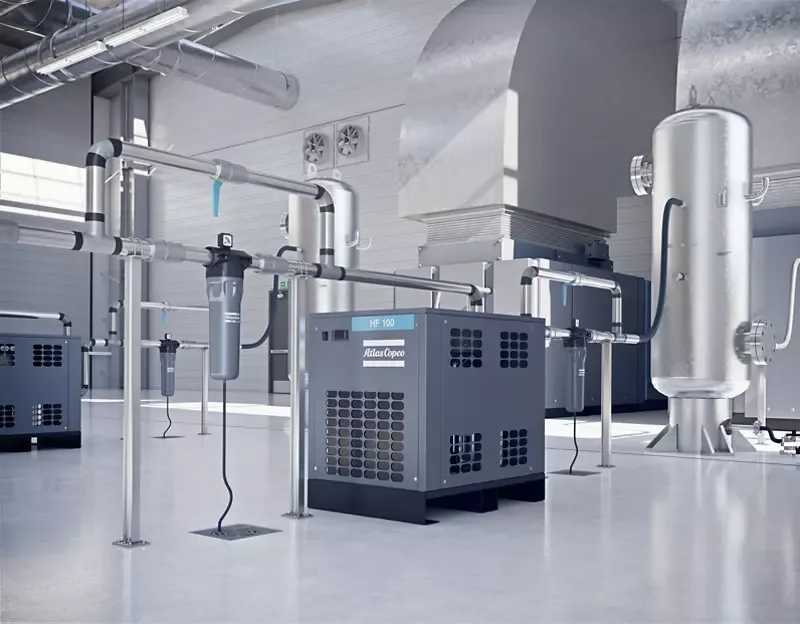
A compressor system requires additional treatment equipment to deliver air quality suitable for pharmaceutical applications. Air treatment components help remove contaminants and maintain the required purity level.
Common air treatment equipment includes dryers, filters, separators, and monitoring systems. These components help eliminate moisture, oil particles, and other impurities from compressed air before it reaches production areas.
Properly maintained air treatment systems improve compressed air reliability, protect manufacturing equipment, and support long-term system efficiency. They are an essential part of maintaining high-quality pharmaceutical compressed air.
Maintenance Practices for Pharmaceutical Compressed Air Systems
Regular maintenance plays an important role in ensuring efficient compressor performance and maintaining air quality standards. Without proper maintenance, systems may experience reduced efficiency, higher energy consumption, and unexpected downtime.
Recommended maintenance practices include:
- Inspecting and replacing filtration components regularly.
- Checking air dryers and moisture control systems.
- Identifying and repairing compressed air leaks.
- Performing routine equipment inspections.
- Monitoring compressed air quality.
- Replacing worn parts before failures occur.
Preventive maintenance helps pharmaceutical companies maintain uninterrupted production and extend the lifespan of their compressed air systems.
Future Trends in Pharmaceutical Compressed Air Technology
The future of compressed air systems in pharmaceutical manufacturing is focused on automation, sustainability, and improved monitoring capabilities. Modern technologies are helping manufacturers manage energy consumption and improve operational control.
Smart compressors equipped with digital sensors and monitoring systems allow companies to track performance, identify potential issues, and schedule maintenance more effectively. These innovations help improve efficiency while maintaining strict quality standards.
As pharmaceutical manufacturing continues to advance, the demand for intelligent and energy-efficient compressed air solutions will continue to grow.
Conclusion
An air compressor for pharmaceutical industry is a vital system that supports safe, efficient, and reliable pharmaceutical manufacturing. From sterile production areas and laboratories to packaging and automation processes, compressed air helps maintain consistent operations and product quality.
Investing in advanced compressed air pharmaceutical industry solutions enables manufacturers to improve efficiency, reduce contamination risks, and meet strict industry standards. With proper equipment selection, air treatment, and maintenance practices, pharmaceutical compressed air systems can provide dependable performance for long-term operations.