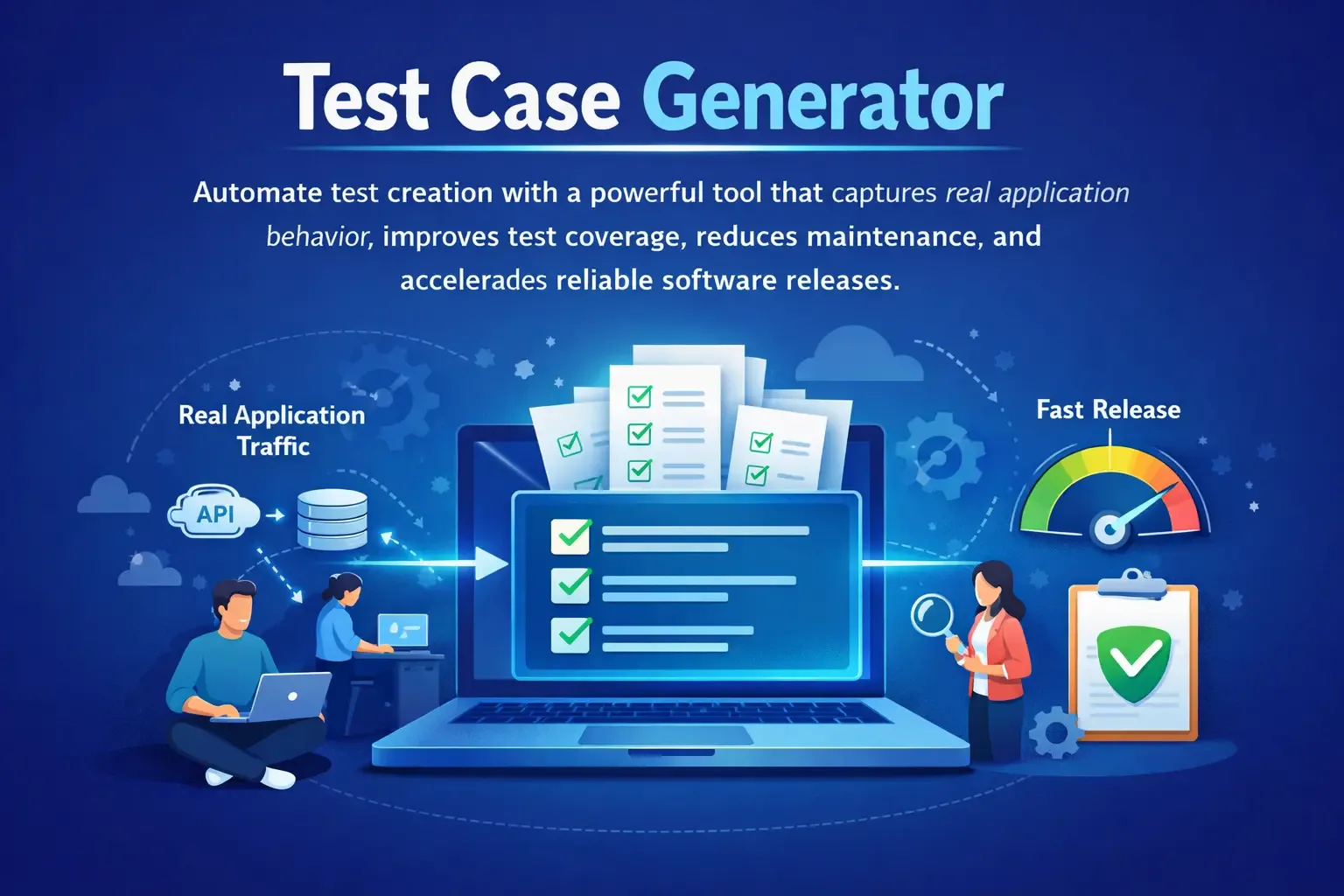
In modern software development, speed and accuracy are everything. Teams are expected to release high-quality applications faster than ever, but traditional testing methods often become a bottleneck. This is where an AI test case generator comes into play—transforming how developers and QA teams create, manage, and scale their tests.
What Is an AI Test Case Generator?
An AI test case generator is a tool that uses artificial intelligence and machine learning to automatically generate test cases based on application behavior, code changes, or real user interactions. Instead of manually writing hundreds of test scenarios, developers can leverage AI to create meaningful and comprehensive tests in minutes.
These tools analyze patterns in your system, identify edge cases, and ensure that critical workflows are always tested. This leads to improved test coverage and more reliable software releases.
Why AI Test Case Generators Matter
Manual test creation is time-consuming and often prone to human error. As applications grow more complex, maintaining test suites becomes even harder. AI-driven tools solve this by:
- Automatically generating test cases from real data
- Reducing repetitive manual work
- Increasing test coverage with minimal effort
- Detecting edge cases that humans may overlook
- Keeping tests updated as the code evolves
This shift allows teams to focus more on building features rather than maintaining tests.
How AI Improves Testing Efficiency
AI test case generators don’t just create tests—they make them smarter. By learning from application behavior and past test executions, these tools continuously improve the quality of generated test cases.
For example, instead of static test scripts, AI can adapt to changes in APIs, UI flows, or data structures. This results in fewer broken tests and more stable CI/CD pipelines. It also helps in faster debugging since the generated tests closely mirror real-world usage.
Real-World Application: Keploy
One powerful example is the AI test case generator, which captures real API traffic and converts it into automated test cases. This approach ensures that tests are based on actual user interactions rather than assumptions.
With Keploy, developers can:
- Record API calls directly from production or staging
- Automatically generate test cases with assertions
- Mock dependencies for consistent test results
- Run tests seamlessly in CI/CD pipelines
This makes it an ideal solution for backend and API testing, especially in microservices architectures.
Benefits for Development Teams
Using an AI test case generator offers several advantages:
- Faster development cycles: Reduce time spent on writing and maintaining tests
- Improved accuracy: Generate realistic test scenarios based on actual data
- Scalability: Easily handle growing applications and complex systems
- Cost efficiency: Minimize manual QA efforts and resource usage
By automating repetitive tasks, teams can allocate more time to innovation and product improvement.
Challenges to Consider
While AI test case generators are powerful, they are not without limitations. Some challenges include:
- Initial setup and integration effort
- Dependence on quality input data
- Learning curve for teams new to AI-driven tools
However, the long-term benefits often outweigh these initial hurdles.
Conclusion
AI test case generators are reshaping the future of software testing. By combining automation with intelligent insights, they help teams deliver high-quality software faster and more efficiently. As development cycles continue to shrink, adopting AI-powered testing tools is no longer optional—it’s a necessity.
If you're looking to streamline your testing process, tools like Keploy’s AI-powered solution can be a game-changer, enabling you to build robust, scalable, and reliable applications with ease.