In today’s highly competitive retail landscape, understanding customer behavior is no longer optional it is essential for survival and growth. While online retailers have long relied on detailed analytics to track visitor behavior, brick-and-mortar stores have traditionally operated with limited visibility into in-store customer movement. This gap is now being closed with the rise of AI Footfall Counting Software, which is transforming how retailers measure performance, optimize operations, and drive revenue.
By converting raw visitor data into actionable insights, AI-powered footfall counting enables retailers to improve conversion rates, enhance customer experience, and make smarter business decisions based on real-world data rather than assumptions.
What Is AI Footfall Counting Software?
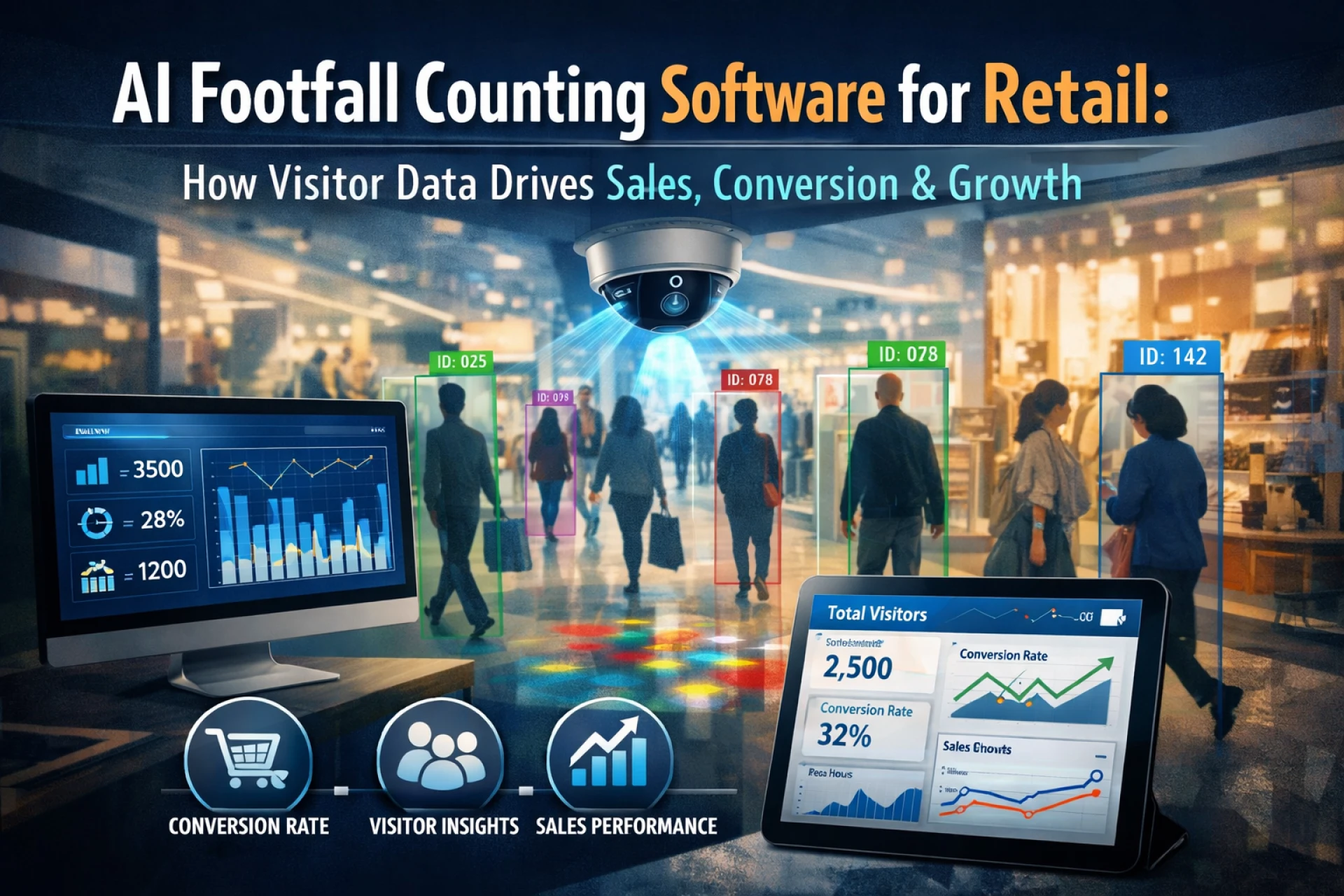
AI Footfall Counting Software uses computer vision and artificial intelligence to automatically detect, track, and analyze the number of people entering and moving within a retail space. Unlike traditional infrared or manual counters, AI-based systems rely on video analytics to provide highly accurate, real-time data.
These systems can distinguish between staff and customers, avoid double counting, and operate effectively even in crowded environments. Beyond simple entry counts, modern AI solutions deliver advanced insights such as dwell time, peak hours, zone-wise movement, and repeat visitor trends.
Why Footfall Data Matters in Retail
Footfall data is the foundation of data-driven retail decision-making. Knowing how many people visit a store—and how they behave inside it—helps retailers measure true store performance beyond just sales numbers.
With accurate footfall insights, retailers can:
- Understand customer engagement levels
- Identify high-traffic and low-performing areas
- Measure marketing campaign effectiveness
- Optimize staffing and store layout
Most importantly, footfall analytics bridges the gap between physical and digital retail analytics, enabling offline stores to operate with the same intelligence as eCommerce platforms.
Turning Visitor Data into Higher Sales
AI Footfall Counting Software directly impacts sales growth by revealing where opportunities are being missed. By comparing footfall data with transaction data, retailers can calculate conversion rates—how many visitors actually make a purchase.
If foot traffic is high but sales are low, it signals issues such as poor product placement, pricing concerns, or ineffective in-store engagement. Retailers can use these insights to adjust merchandising strategies, improve visual displays, and train staff to engage customers more effectively, leading to higher sales conversions.
Improving Conversion Rates with Behavioral Insights
Conversion rate optimization is one of the biggest advantages of AI-driven footfall analytics. Instead of guessing why customers leave without buying, retailers gain visibility into movement patterns and dwell time.
For example:
- Long dwell time with low purchases may indicate pricing or availability issues
- Short visits could signal poor store navigation or lack of engagement
- Zone-level data highlights underperforming areas that need redesign
By acting on these insights, retailers can create smoother customer journeys that naturally encourage purchases.
Optimizing Store Layout and Merchandising
Store layout plays a critical role in influencing buying decisions. AI Footfall Counting Software provides heatmaps and zone analytics that show exactly where customers spend the most time.
Retailers can use this data to:
- Place high-margin or promotional products in high-traffic zones
- Improve aisle design and product visibility
- Reduce congestion in busy areas
- Enhance customer comfort and navigation
Data-backed layout optimization leads to longer store visits and increased basket value.
Smarter Staffing and Operational Efficiency
Staffing decisions based on guesswork often result in overstaffing during slow hours or understaffing during peak times. AI Footfall Counting Software eliminates this problem by identifying precise peak hours and traffic trends.
Retail managers can align staff schedules with actual customer demand, ensuring better service during busy periods while reducing unnecessary labor costs. This not only improves operational efficiency but also enhances customer satisfaction and staff productivity.
Measuring Marketing and Campaign Performance
Retail marketing efforts—such as discounts, window displays, or in-store promotions—are only effective if they increase store visits and engagement. AI footfall analytics makes it easy to measure campaign impact.
Retailers can compare footfall before, during, and after campaigns to see what truly drives traffic. This data-driven approach helps brands invest in strategies that deliver real results rather than relying on assumptions.
How Nextbrain Supports AI-Powered Retail Analytics
Nextbrain delivers advanced AI-powered footfall counting solutions designed specifically for modern retail environments. As a trusted AI development company, Nextbrain leverages computer vision and deep learning to provide accurate, real-time visitor analytics without disrupting store operations.
Nextbrain’s solution transforms standard CCTV cameras into intelligent sensors that deliver insights on foot traffic, customer movement patterns, dwell time, and conversion performance. By integrating seamlessly with existing retail systems, the platform enables retailers to make faster, smarter decisions that directly impact sales growth and customer experience.
Scalable and privacy-compliant, Nextbrain’s AI solutions are ideal for single stores, retail chains, shopping malls, and enterprise retail networks.
Driving Long-Term Retail Growth with AI Insights
The true value of AI Footfall Counting Software lies in long-term growth and strategic planning. By analyzing historical data trends, retailers can forecast demand, plan inventory more accurately, and identify new growth opportunities.
This shift from reactive decision-making to predictive, data-driven retail operations helps businesses stay competitive in an increasingly digital-first world.
Conclusion
AI Footfall Counting Software is redefining retail success by turning visitor data into measurable business growth. From improving conversion rates and optimizing store layouts to enhancing staffing efficiency and marketing performance, AI-powered footfall analytics empowers retailers with the insights they need to thrive.
As customer expectations evolve and competition intensifies, adopting intelligent retail analytics is no longer a luxury it’s a necessity.
Ready to unlock the power of in-store visitor data? Contact Nextbrain today to explore AI-driven footfall counting solutions that accelerate retail sales, conversion, and growth.
Frequently Asked Questions (FAQs)
1. What is AI Footfall Counting Software used for in retail?
It is used to track store visitors, analyze movement patterns, measure conversion rates, and improve sales and operational efficiency.
2. How accurate is AI-based footfall counting?
AI-powered systems are highly accurate as they use video analytics to avoid double counting and distinguish between staff and customers.
3. Can footfall data improve retail conversion rates?
Yes. By identifying behavior patterns and drop-off points, retailers can optimize layouts, staffing, and merchandising to increase conversions.
4. Is AI footfall counting suitable for small retail stores?
Absolutely. AI solutions are scalable and can be deployed in single stores as well as large retail chains.
5. Does AI Footfall Counting Software comply with privacy regulations?
Yes. Most modern systems, including Nextbrain’s, use anonymized data and comply with global data protection standards.