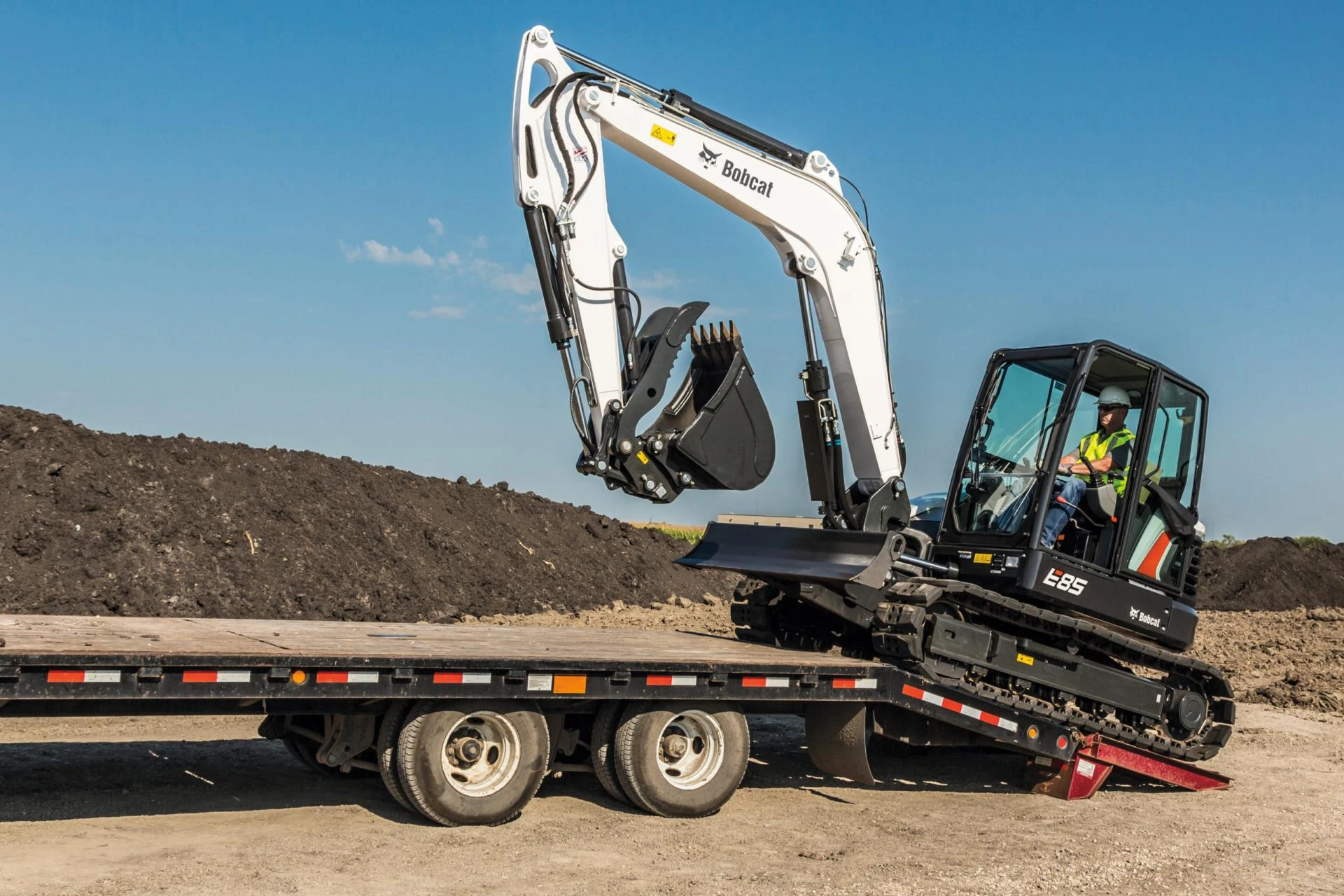
The global construction industry has reached a critical hinge moment, currently accounting for a significant share of energy-related carbon dioxide emissions and a substantial portion of global waste. As urbanization accelerates, the strain on the Earth's environmental limits necessitates a rapid transition towards resource-efficient and low-carbon development. This shift is no longer merely an ethical choice, but a regulatory and economic requirement to meet global net-zero targets. Central to this transformation is the evolution of Construction Equipment engineering, which now leverages artificial intelligence (AI) and high-fidelity digital modeling to decarbonize the built environment. By integrating AI-driven intelligence into the lifecycle of infrastructure projects, stakeholders can bridge the divide between architectural intent and actual environmental performance.
The Role of BIM and 6D Sustainability Modelling
A primary catalyst for this transition is Building Information Modelling (BIM), which has evolved from simple 3D visualization into a multi-dimensional platform incorporating environmental intelligence. The philosophy of “building twice”—first virtually and then physically—allows engineers to identify inefficiencies during the earliest design stages when the cost of modification is minimal. Integrating 6D BIM specifically focuses on sustainability parameters, enabling advanced energy modelling, solar path analysis, and carbon tracking. Statistical insights indicate that utilizing these digital tools during the design phase can significantly reduce material waste through precise quantity take-offs.
Hi-performance case studies, such as “The Edge” in Amsterdam, demonstrate the tangible impact of these engineering advancements. By using BIM-driven energy simulations and automated clash detection, the project achieved major reductions in material waste while lowering operational energy consumption. Furthermore, automated Life Cycle Assessments (LCA) within the BIM environment allow for the real-time comparison of low-carbon material alternatives, potentially reducing a project’s total embodied carbon. This data-driven approach to Construction Equipment Engineering ensures that sustainability becomes a quantifiable variable rather than an abstract goal.
Autonomous Systems and Reinforcement Learning
Beyond static models, the engineering of heavy-duty mobile machines is witnessing a paradigm shift through Reinforcement Learning (RL) agents. Traditional model-based control often fails in unstructured environments where irregular rocks interact with granular soil, making autonomous capture highly challenging. By traininginmodel-free RL agents in high-fidelity simulators such as AGX Dynamics, engineers can develop policies that output joint velocity commands directly to boom, arm, and bucket systems. These autonomous frameworks allow machinery to capture rocks with success rates comparable to skilled human operators while ensuring machine stability and avoiding hazardous tilting. Such AI-driven autonomy removes humans from dangerous environments like open-pit mines, significantly boosting both safety and operational productivity.
These AI-driven controllers are trained using domain randomization of rock geometry, density, and mass to ensure robustness across varying soil conditions. Experimental results show that these autonomous agents generalize well to unseen rocks and different materials, such as sand, without requiring explicit modelling of material properties. Because these policies execute via a simple neural network forward pass, inference is extremely fast, making them suitable for real-time deployment on autonomous jobsites. This engineering breakthrough reduces the physical strain on operators and prevents machine stalling in unpredictable terrain.
Electrification and Hybrid Engineering Strategies
Current jobsite activities are heavily dominated by fossil fuel consumption, with diesel use accounting for a large portion of total project emissions. Achieving major reductions in jobsite emissions requires a coordinated strategy involving the transition of Construction Equipment through several high-impact actions. The first stage involves the electrification of light-duty vehicles and small equipment, such as compressors and pumps. These technologies are already mature and offer strong economic returns, often achieving a positive return on investment within a short operational period.
For heavy machinery where full electrification currently faces technical barriers, such as large excavators and cranes, hybrid systems and renewable diesel serve as important bridge technologies. Hybrid systems can significantly reduce fuel consumption while allowing operators to gain experience with next-generation electric components. Renewable diesel offers an immediate solution that can dramatically reduce lifecycle emissions without requiring equipment modifications. To maximize these benefits, AI-enhanced 4D models are utilized to ensure that tools and materials are in the right place at the right time, while also identifying potential hazards as the site evolves.
Conclusion
The path toward net-zero infrastructure is paved with data-driven engineering and coordinated industry action. While the adoption of advanced BIM and AI technologies presents a steep initial learning curve, the long-term return driven by reduced project costs and enhanced asset performance makes them indispensable toold. Canada’s construction sector faces unprecedented demands, including the need for millions of new homes and large-scale investments in transit and health care infrastructure. Meeting these needs while adhering to net-zero commitments requires a systematic approach to implementing proven technologies. Ultimately, Construction Equipment engineering driven by AI provides the roadmap for an industry that is not only greener but also more competitive and efficient.