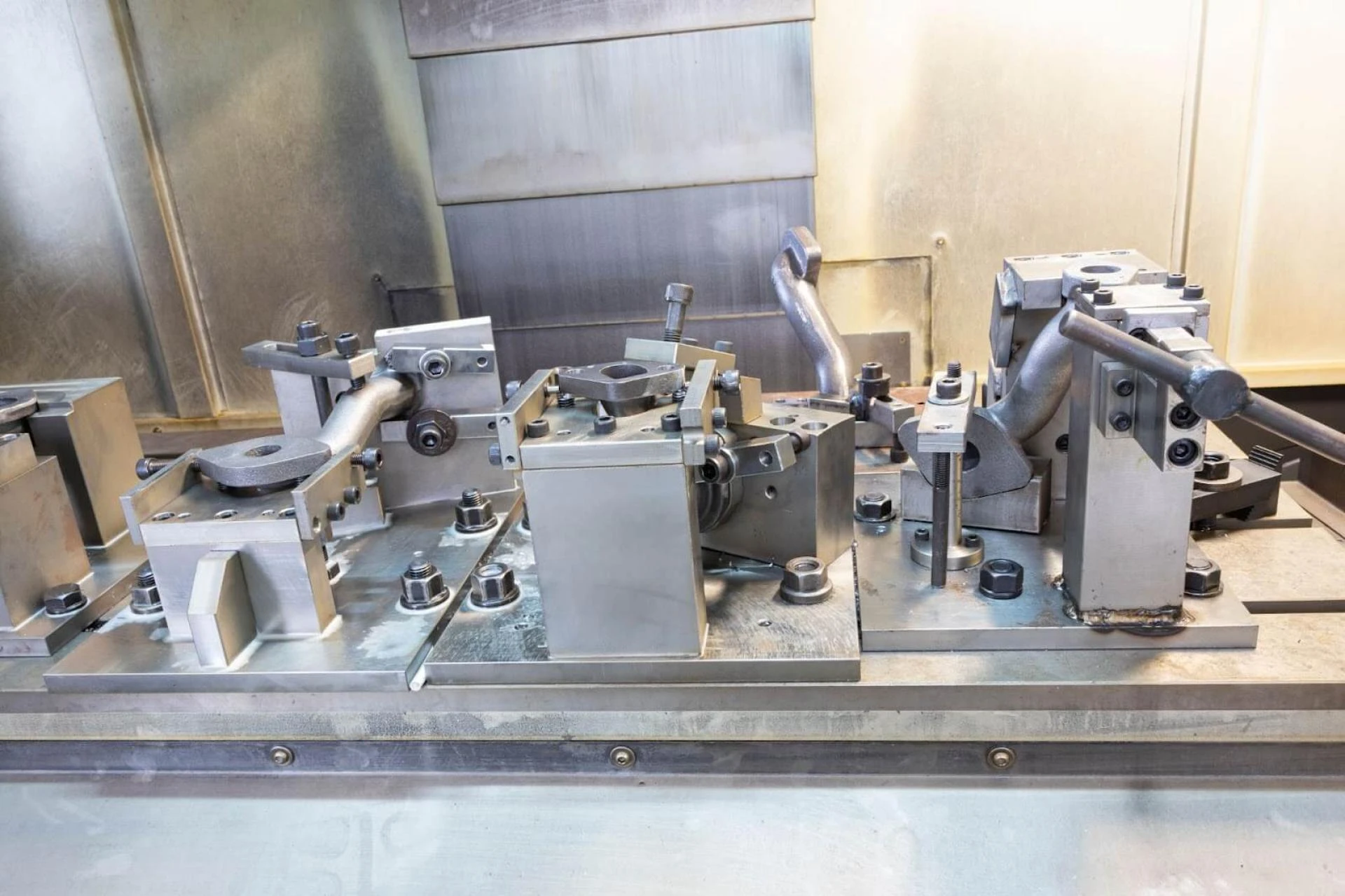
Precision in CNC machining begins long before the cutting tool engages the material. Jig and fixture design establishes the physical control required to achieve repeatable accuracy, stable machining, and predictable output. When components are correctly supported and positioned, CNC programs can perform exactly as intended without compensation or adjustment. This disciplined approach reduces dimensional variation and allows manufacturers to meet strict tolerance demands with confidence.
In competitive CNC environments, manufacturers rely on engineered Workholding tools to reduce setup variability and improve process reliability. Fixtures act as the bridge between raw material and finished component, transforming machining plans into real-world results. As production volumes increase and part complexity grows, the role of accurate fixture engineering becomes even more critical to sustaining quality and efficiency.
Importance of Jig and Fixture Design in CNC Operations
Controlling Part Location and Orientation
Effective CNC fixture design ensures that every workpiece is located in a fixed and repeatable position relative to the machine axes. This control allows machining operations to be performed consistently across multiple cycles without manual alignment. Precision locating devices such as pins and reference faces establish reliable datums, enabling accurate feature placement and dimensional consistency.
Minimizing Errors and Rework
Poorly supported parts can shift during cutting, leading to tolerance issues and surface defects. Machining support tooling minimizes these risks by providing rigid support throughout the machining process. Stable setups allow higher cutting parameters while maintaining accuracy, which directly reduces scrap rates and rework costs in high-value production.
Key Elements of Effective Workholding Tools
Structural Stability and Material Selection
The foundation of reliable Workholding tools lies in structural rigidity. Fixtures must resist cutting forces without deflection, as even minor movement can compromise precision. Designers select materials based on load requirements, thermal behavior, and production volume. Steel fixtures offer durability for long runs, while aluminum solutions support flexible manufacturing with reduced handling effort.
Clamping Strategy and Accessibility
Clamping systems must secure parts firmly without inducing distortion. This is especially important when machining thin-walled or delicate components. Fixture layouts are designed to provide tool clearance, coolant access, and efficient chip evacuation. Proper accessibility improves cutting performance and extends tool life while maintaining operator safety.
CNC Fixture Design for Complex Components
Supporting Irregular Geometries
Modern components often feature complex shapes that standard clamps cannot handle. Custom CNC fixture design addresses this by matching support surfaces to part geometry. Contoured nests, modular clamps, and vacuum systems stabilize irregular parts without compromising reference accuracy. These solutions enable consistent machining of complex profiles.
Enabling Multi-Axis Machining
Advanced CNC machines frequently perform multiple operations in a single setup. Fixtures designed for multi-axis access allow tools to reach different faces without repositioning the part. This reduces cumulative error and shortens cycle time. Fewer setups also improve repeatability and simplify quality control.
Role of Machining Support Tooling in Productivity
Reducing Setup Time and Changeovers
Machining support tooling standardizes part loading and alignment. Operators can complete setups quickly with minimal adjustment. This is essential in high-mix, low-volume environments where frequent changeovers are required. Faster setups increase spindle utilization and improve overall shop efficiency.
Enhancing Cutting Performance
Stable fixtures reduce vibration and chatter during cutting. This stability allows tools to engage material smoothly, improving surface finish and dimensional control. Reduced vibration also extends tool life, lowering tooling costs and maintaining consistent machining quality over time.
Precision Locating Devices and Accuracy Control
Establishing Reliable Datums
Precision locating devices define the reference framework for all machining operations. Hardened pins, bushings, and stops ensure parts are positioned the same way every time. Consistent datums maintain dimensional relationships between features, which is critical for assemblies and functional components.
Durability and Long-Term Consistency
High-quality locating elements are designed to resist wear under repeated use. Hardened contact surfaces maintain accuracy over long production cycles. Routine inspection and maintenance preserve fixture performance and prevent gradual drift that can affect part quality.
Designing Fixtures for Scalable Manufacturing
Adapting to Production Volume Changes
Effective fixture strategies consider future scalability. Modular designs allow manufacturers to adapt fixtures for prototypes, small batches, or full-scale production. This flexibility reduces tooling investment and supports product evolution without complete redesign.
Supporting Automation Integration
As automation becomes more common, fixtures must work seamlessly with robotic loaders and probing systems. Consistent locating and clamping allow automated verification of part position before machining. This supports unattended operation and data-driven quality control.
Practical Advantages of Optimized Fixture Engineering
- Improved dimensional accuracy and repeatability
- Reduced setup time and operator dependency
- Higher machine utilization and throughput
- Lower scrap and rework costs
- Consistent surface finish and feature alignment
- Extended cutting tool life
- Easier integration with automation
- Predictable quality for demanding industries
Conclusion
A foundational explanation of how fixtures guide tools and locate parts can be found in Wikipedia’s overview of jigs and fixtures, which highlights their essential role in manufacturing accuracy. These principles remain central to modern CNC machining, where precision and repeatability define competitiveness.
As CNC technology continues to evolve, fixture engineering will remain a core contributor to efficiency and quality. Broader insights into current manufacturing trends and technologies can be explored through Google’s manufacturing technology resources, offering valuable context on how advanced tooling strategies support scalable and reliable CNC production.