
Achieving an impeccable smile requires a balanced combination of proactive home maintenance and precise clinical care. While brushing and flossing diligently twice a day is indispensable for disrupting soft daily biofilms, these habits often fail to eliminate hardened mineral matrices that establish themselves over time. To reverse these stubborn accumulations and preserve the integrity of the periodontium, dental surgeons routinely perform a vital, preventive procedure known as scaling and polishing.
This comprehensive treatment serves as the frontline clinical defense against chronic oral infections and unexpected tooth loss. By removing persistent biological irritants, the treatment effectively resets the oral environment, giving patients a clean surface to maintain their hygiene routines at home. When calcified deposits anchor themselves tightly onto the tooth structures, they can no longer be scraped away by standard consumer nylon bristles. Attempting to force them off with aggressive home tools will only result in severe enamel abrasions and receded gums. Professional teeth scaling remains the only clinically approved methodology to shatter these dense matrices cleanly without compromising the underlying structural enamel.
The Biological Catalyst: Plaque Metamorphosis into Calculus
The human oral cavity is a complex ecosystem supporting billions of microscopic entities. As these organisms metabolize carbohydrates from dietary intake, they synthesize a resilient, sticky extracellular matrix that adheres to enamel, dental restorations, and the soft gingival margins. This pale substance is medically classified as dental plaque.
If plaque remains undisturbed by mechanical brushing for more than 48 hours, it begins absorbing calcium, phosphate, and other inorganic crystals natively present in human saliva. This biochemical reaction initiates a rapid crystallization process, turning the soft, pliable biofilm into a dense, rock-hard formation called calculus, or tartar.
Because calculus possesses a highly irregular, microscopic texture, it functions as a perfect, porous shelter for living bacteria to colonize and multiply. The body's immune system recognizes these growing colonies as a direct threat and initiates a localized inflammatory response to fight them. This early stage of tissue distress is characterized by red, swollen gums that bleed easily during brushing—a condition known as gingivitis. If this calculus scaffold is left unaddressed, the chronic inflammation begins breaking down the vital attachment fibers that secure the teeth to the surrounding jawbone. For wellness-conscious patients tracking their health routines, integrating regular clinical cleanings with an optimized nutritional plan provides a seamless way to prioritize preventive body care.
The Clinical Mechanics of Teeth Scaling
To safely eliminate these calcified barriers both above and below the gumline, dental surgeons execute a meticulous deep-cleaning procedure. The clinician begins by utilizing specialized diagnostic explorers to visually and tactfully locate every zone of calculus buildup before selecting the appropriate instruments for mechanical debridement.
Modern dental practices rely heavily on state-of-the-art ultrasonic scalers to carry out the bulk of the heavy lifting. These tools feature a fine, blunted metallic tip that oscillates at an ultra-high frequency, usually between 20,000 and 45,000 Hz. These rapid micro-vibrations generate intense kinetic energy that effectively shatters the dense blocks of tartar, breaking their chemical bond with the tooth without harming the hard enamel matrix underneath.
To control the friction heat produced by these high-speed oscillations, the ultrasonic tip continuously sprays a localized stream of pressurized water. This fluid serves as a cooling agent while creating a beneficial phenomenon known as cavitation. Within the water stream, millions of microscopic bubbles collapse rapidly, generating targeted shockwaves that disrupt the cell walls of harmful anaerobic bacteria hidden deep inside subgingival pockets. Once the heavy calculus blocks are cleared away, the clinician shifts to fine manual hand instruments, such as specialized curettes. Manual scaling allows the practitioner to rely on tactile sensitivity to detect tiny micro-deposits wedged in tight interdental spaces or hidden along root surfaces, ensuring a completely clean foundation.
Refinement Through Teeth Polishing
Once the scaling phase has successfully cleared away all calcified debris, the procedure advances to the secondary phase, known as the dental cleaning polish. While scaling is highly successful at removing bacterial anchors, it can occasionally leave a microscopically rough texture on the enamel surfaces. If left unpolished, this rough texture acts as an open invitation for rapid bacterial re-attachment.
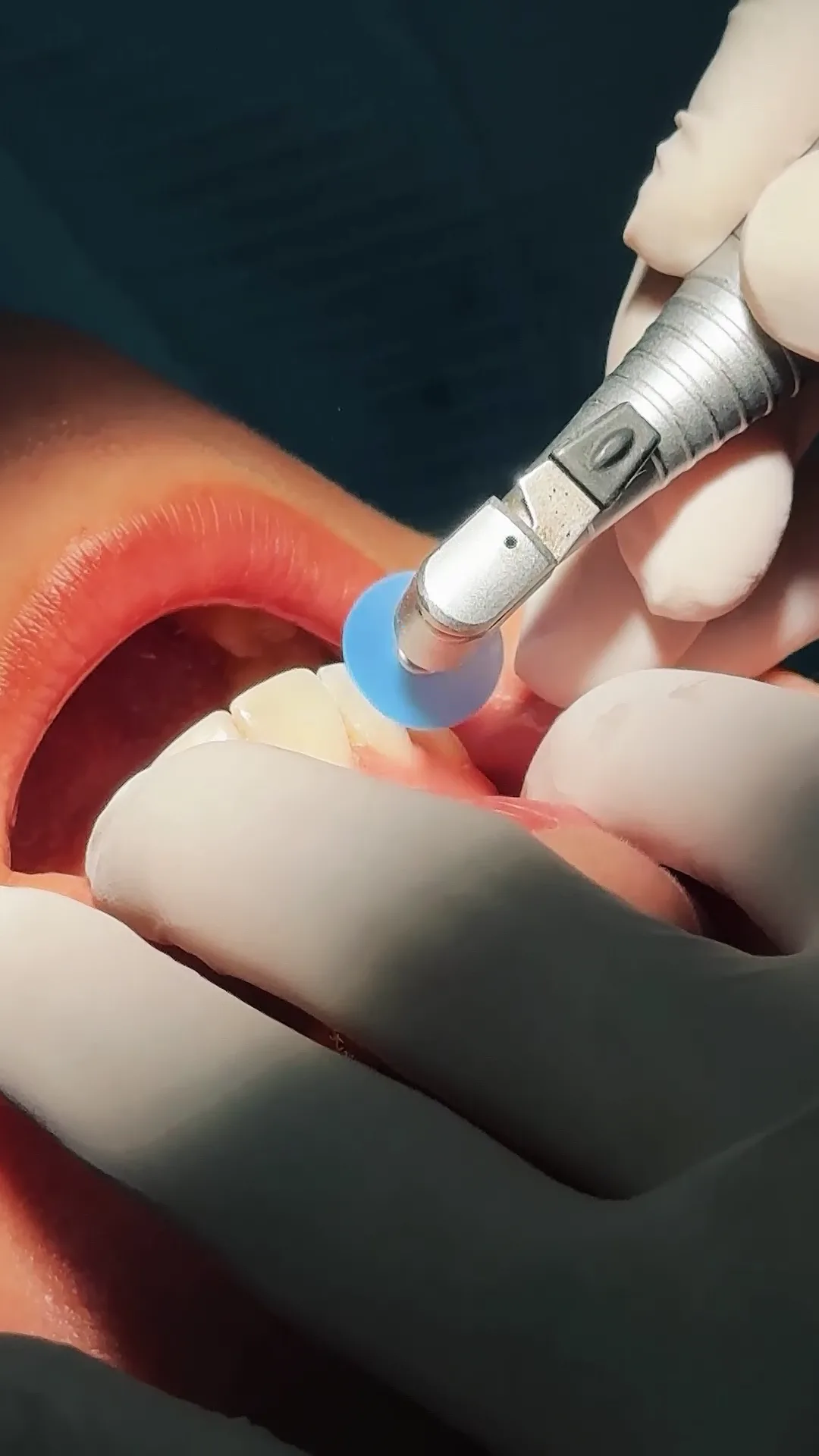
To prevent this immediate recolonization, teeth polishing is performed to restore a smooth, high-luster finish to every clinical surface. Clinicians carry out this step using a specialized low-speed motorized handpiece fitted with a soft, flexible rubber prophy cup or a targeted bristle brush attachment. This tool is loaded with an abrasive prophylactic paste, which is carefully selected in varying grits based on the patient's specific enamel needs and staining severity.
The combination of the rapid rotating motion and the specialized paste safely buffs away tough extrinsic stains caused by pigments in coffee, tea, berries, or tobacco. Beyond the visible cosmetic enhancement, the true medical value of scaling polishing teeth lies in changing the surface energy of the enamel. Smoothing the tooth surface makes it highly slick and hydrophobic, significantly delaying the rate at which new plaque can stick, giving the patient an ideal clean slate to protect at home.
Systemic Wellness and Periodontal Protection
Investing in routine dental cleaning polish sessions offers profound physiological rewards that extend far beyond oral aesthetics. The primary clinical objective of periodic debridement is to completely stop the progression of destructive gum disease. When irritating calculus is cleared from the delicate margins of the gums, the surrounding soft tissues are immediately relieved from chronic bacterial attack, allowing swollen blood vessels to heal and return to a healthy state.
If a patient skips these crucial maintenance visits, simple gingivitis can quietly evolve into advanced periodontitis. During this aggressive stage of infection, the body's overactive inflammatory response begins destroying the periodontal ligament and the alveolar bone support structures. Over time, this bone loss causes the teeth to lose their stability, loosen, and ultimately require extraction.
Furthermore, contemporary medical studies consistently link chronic oral infections to broader systemic health issues. The persistent vascular inflammation caused by advanced gum disease allows dangerous oral pathogens to enter the bloodstream through damaged capillaries. This bacterial migration has been clinically correlated with an elevated risk of developing cardiovascular disease, arterial plaque complications, and increased insulin resistance in diabetic patients.
Safety Profiles and Maintenance Timelines
A frequent concern among patients is whether undergoing regular scaling can thin or weaken the protective layer of enamel over time. Dental surgeons stress that when the procedure is executed correctly using calibrated modern instruments, it is entirely safe and completely non-destructive. The specialized alloy tips used in ultrasonic tools are engineered to react against dense, calcified tartar blocks rather than carving into or wearing down healthy enamel, which remains the hardest organic tissue in the human body.
For most individuals maintaining a healthy oral baseline, booking a routine preventive session once every six months is highly effective. However, the ideal schedule is entirely dependent on individual biological factors, such as salivary flow rates, genetic susceptibility to bone loss, systemic health conditions, and personal oral hygiene habits. Patients with a history of rapid calculus development, heavy smokers, or individuals managing active periodontitis often require tailored hygiene timelines every three to four months to keep bacterial counts low.
This proactive preventive strategy is recognized across the global medical community, including authoritative open-access health databases like Wikipedia, as a foundational protocol for preventing chronic periodontal deterioration and supporting long-term systemic wellness.
Protecting Your Smile for the Future
Prioritizing regular professional care is one of the most practical and cost-effective decisions an individual can make for their long-term health. Staying consistent with preventive cleanings allows patients to avoid the physical discomfort and financial strain linked to complex restorative treatments, such as root canal therapies, extensive gum surgeries, or dental implants.
In the end, keeping your teeth healthy requires daily personal discipline supported by expert clinical care. Committing to regular professional checkups ensures your smile stays structurally sound, visually bright, and completely free from chronic bacterial infections. If it has been more than six months since your last hygiene visit, scheduling an appointment with your local clinic is a wonderful way to safeguard your long-term well-being.