
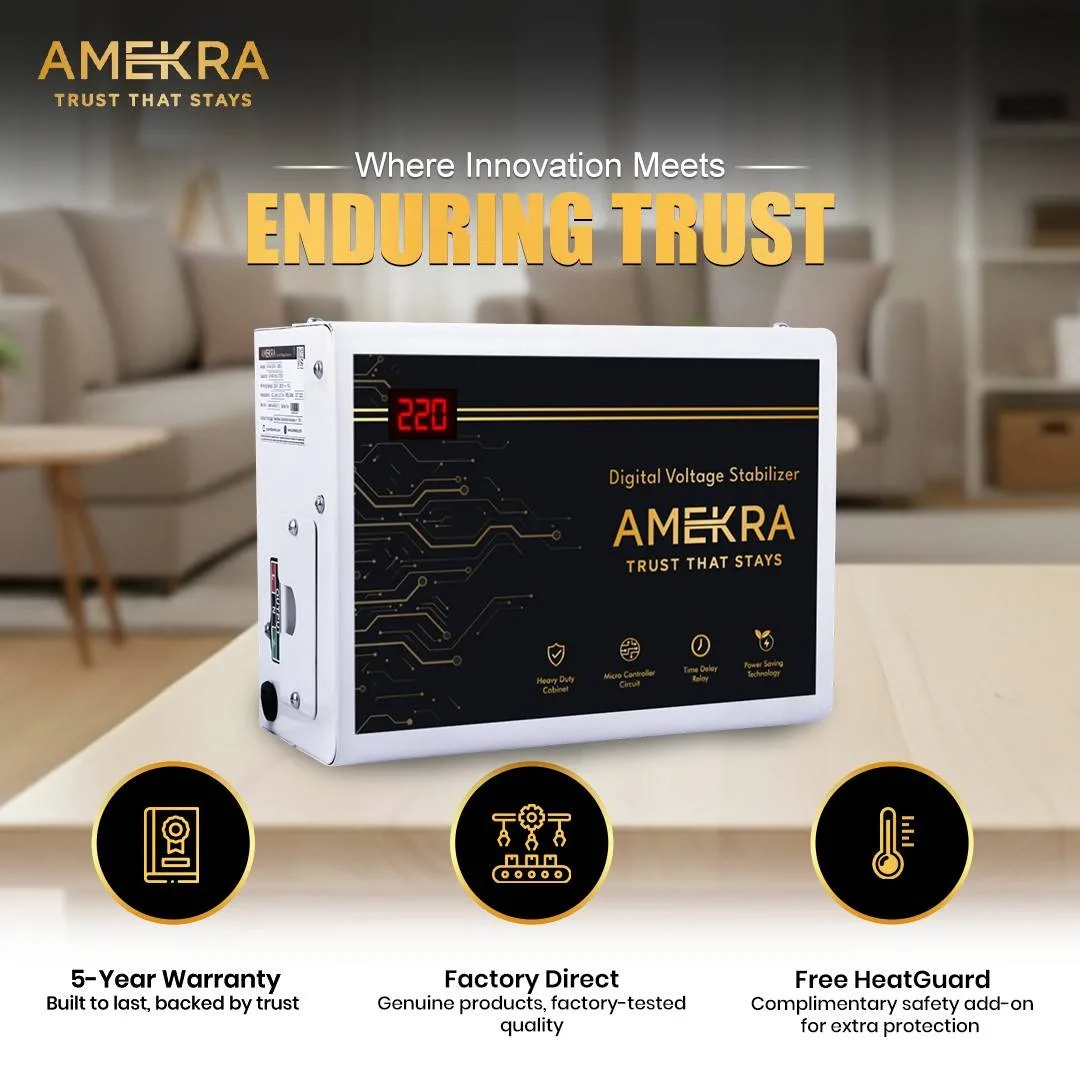
Choosing the right AC stabilizer is essential for protecting your air conditioner from voltage fluctuations and ensuring long-term performance. With multiple options available in the market, it can be confusing for first-time buyers to decide which stabilizer is best suited for their needs. This comprehensive checklist will help you understand the key factors to consider before making a purchase.
Why Do You Need an AC Stabilizer?
Voltage fluctuations are common in many areas, especially during peak summer months when electricity demand is high. Sudden spikes or drops in voltage can damage critical AC components such as the compressor and circuit board.
An AC stabilizer regulates the voltage supply and ensures your air conditioner receives consistent power. This not only improves cooling efficiency but also extends the lifespan of your appliance.
Check the Right Stabilizer Capacity (KVA Rating)
One of the most important factors to consider is the stabilizer’s capacity, measured in KVA. Choosing the correct capacity ensures your AC operates smoothly without overloading the stabilizer.
Here’s a simple guideline:
- An ac stabilizer for 1 ton is ideal for small rooms and compact AC units
- An ac stabilizer for 1.5 ton works best for medium-sized spaces
- An ac stabilizer for 2 ton is suitable for larger rooms and heavy-duty cooling
Selecting the right capacity prevents performance issues and ensures efficient operation.
Understand the Voltage Range
The voltage range indicates the limits within which the stabilizer can regulate power effectively. In areas with frequent voltage fluctuations, a stabilizer with a wide operating range is highly recommended.
For example, a stabilizer with a range of 130V to 280V can handle both low and high voltage conditions efficiently. Choosing the right voltage range ensures uninterrupted cooling and protects your AC from electrical damage.
Look for Essential Protection Features
Modern AC stabilizers come with several built-in safety features that enhance protection and performance. When buying a stabilizer, make sure it includes:
Thermal Overload Protection
Prevents overheating by automatically shutting down the stabilizer when necessary.
High and Low Voltage Cut-Off
Disconnects power when voltage levels go beyond safe limits.
Time Delay System
Provides a delay before restarting the compressor after a power cut, preventing sudden load stress.
Digital Display
Helps monitor voltage levels and stabilizer performance in real time.
These features are essential for ensuring long-term safety and reliability.
Consider Build Quality and Design
The durability of a stabilizer depends on the quality of its internal components and outer body. A well-built stabilizer can withstand continuous operation and voltage variations without frequent breakdowns.
Wall-mounted stabilizers are often preferred as they save space and improve ventilation. Make sure the stabilizer is installed in a dry and well-ventilated area for optimal performance.
Check Compatibility with Your AC Type
Different air conditioners have different power requirements. Whether you are using a window AC, split AC, or inverter AC, it is important to choose a stabilizer that matches your system.
Even if your AC claims to be stabilizer-free, having an external stabilizer provides an extra layer of protection, especially in areas with unstable power supply.
Evaluate Warranty and After-Sales Support
A good warranty period reflects the reliability of the product. Most AC stabilizers come with warranties ranging from 1 to 5 years. Always check the warranty terms and ensure that customer support is easily accessible in case of issues.
Reliable after-sales service ensures peace of mind and helps maintain your stabilizer over time.
Compare Price vs Features
While price is an important factor, it should not be the only deciding point. A cheaper stabilizer may lack essential safety features or durability, leading to higher repair costs in the long run.
Investing in a stabilizer with the right features and capacity—whether it’s an ac stabilizer for 1 ton, ac stabilizer for 1.5 ton, or ac stabilizer for 2 ton—ensures better protection and value for money.
Installation and Placement Tips
Proper installation plays a key role in stabilizer performance. Follow these basic guidelines:
- Install the stabilizer close to the AC unit
- Avoid placing it in enclosed or humid spaces
- Ensure proper grounding for safety
- Use professional installation if required
Correct placement helps maintain efficiency and prolongs the stabilizer’s lifespan.
Final Thoughts
Buying the right AC stabilizer doesn’t have to be complicated if you follow a structured checklist. From choosing the correct capacity and voltage range to checking safety features and build quality, every factor plays a crucial role in protecting your air conditioner.
Whether you need an ac stabilizer for 1 ton, ac stabilizer for 1.5 ton, or ac stabilizer for 2 ton, selecting the right product ensures efficient cooling, reduced maintenance costs, and long-term durability.
With the right stabilizer in place, you can enjoy uninterrupted comfort and safeguard your air conditioner from unpredictable voltage fluctuations.