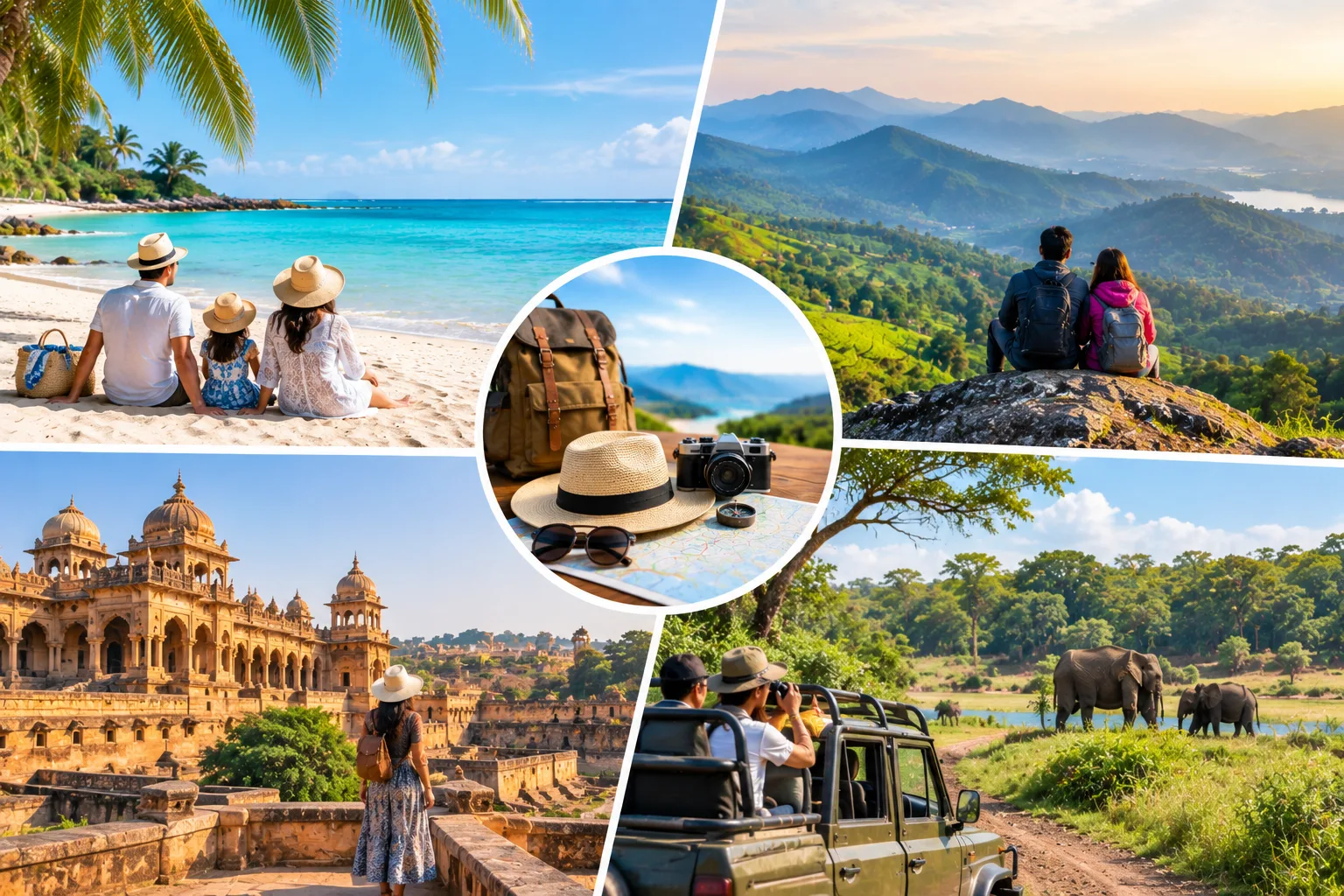
Few countries can offer a sunrise over the sea, a snowfall in the mountains, a palace glowing at dusk, and a tiger's silent gaze, all within the same map. India does this so effortlessly that travellers sometimes forget how lucky they are. One country, endless holidays, and every one of them carries its own fragrance, sound, and story.
Whether you are planning a first family trip, a quiet honeymoon, or a long-awaited break after a demanding year, this guide will take you through four faces of India: the coast, the hills, the heritage trails, and the wild forests. Come along, and see which one calls your name.
The Coast: Sand, Sea and Slow Evenings
India's shoreline is a story of many moods. In Goa, the beaches hum with music, beach shacks, and easy laughter. Along the Kerala coast, coconut palms lean over calm backwaters where houseboats drift past fishing villages at a gentle pace. Farther away, the Andaman Islands reveal turquoise water so clear that you can count the pebbles beneath your feet.
A coastal holiday works like a soft reset. Mornings begin with the sound of waves and the smell of filter coffee or fresh bread. Afternoons are for swimming, reading, or napping under a shady tree. As the sun sets, the sky turns amber and pink, and the whole beach seems to exhale together. Families build sandcastles, couples walk hand in hand, and solo travellers find a rare, comfortable silence.
To make the most of it, visit during the season when the sea is calm, taste local fish and regional sweets, and spend at least one evening simply watching the horizon. Nothing else will be required of you.
The Hills: Where Clouds Come to Rest
Head north or south, and India's hills open up like a different world. In Himachal and Uttarakhand, snow-capped peaks rise above deodar forests and stone-roofed villages. In Kashmir, still lakes mirror the mountains like silver glass. In the south, Munnar and Ooty roll out endless green tea gardens under drifting mist.
A hill holiday asks you to slow down. Roads wind gently, and every corner offers another view worth pausing for. Evenings smell of woodsmoke and hot tea, and the night sky feels so wide that you may find yourself looking up for a long time without speaking.
For a comfortable trip, carry warm clothes even in summer, allow a rest day to adjust to altitude, and try local dishes such as steaming momos, simple dal and rice, or a plate of freshly fried pakoras beside a rain-washed window. Above all, talk with the local people. Their tales about seasons, festivals, and old paths often become the treasured part of the journey.
Heritage: Where India Tells Its Own Story
Nowhere does history feel as close as it does in India. In Rajasthan, sandstone forts stand tall above desert cities, and palaces float like dreams on lake waters. In Hampi, ancient ruins lie scattered among giant boulders, quietly glowing in the light of dawn. In Varanasi, the ghats fill with lamplight and prayer as the river carries centuries of devotion past your eyes.
Heritage travel is best done slowly. Walk through narrow lanes, sip masala chai from a clay cup, and let a local guide reveal the secrets you would otherwise miss. Notice the carvings on old doorways, the patterns in a temple ceiling, and the songs of street musicians who keep old traditions alive.
Journeys through history often involve early starts, long walks, and full days, so a reliable place to rest at night makes a big difference. Many frequent travellers now choose a 3 year hotel membership to enjoy predictable comfort and easier planning across popular destinations, so that more of their energy goes to exploring and less to searching for a room.
The Wilderness: A Different Kind of Awakening
India's forests hold some of the most thrilling encounters on Earth. In Jim Corbett and Ranthambore, dawn safaris can reveal a tiger crossing a dusty track. In Kaziranga, one-horned rhinos graze beside golden wetlands. In the Western Ghats, hornbills swoop above emerald canopies while streams whisper somewhere below.
Wilderness travel teaches patience. You may wait an hour for a single glimpse, yet the wait itself is part of the reward. The forest slowly wraps around you with its sounds, and your worries become smaller with every quiet minute. When the moment finally arrives, whether it is a leopard's calm stare or a herd of elephants moving in the mist, you feel a deep gratitude to be there.
Travel responsibly by staying inside the vehicle, following your guide's advice, keeping noise low, and never leaving waste behind. The forest belongs to its residents, and we are only visitors.
For Families Who Serve the Nation
Many defence families spend long stretches apart, which makes shared holidays especially meaningful. Fauji Club is a brand that welcomes such travellers with a respectful and comfortable holiday experience.
Planning Your Own Journey Across India
Choosing among so many possibilities can feel overwhelming, so begin with a feeling rather than a place. If you want rest, pick the coast. If you want calm, pick the hills. If you want stories, pick heritage. If you want thrill and wonder, pick the wild.
Then build gently around that feeling. Book early for festival months, keep some hours free, and pack light. Carry a small notebook, and write a few lines each night. Years from now, those pages will bring back the smell of sea salt, the crunch of mountain frost, the warmth of a temple courtyard, and the hush of a forest at dawn.
Final Thoughts
India does not ask you to choose only one kind of holiday. It invites you to sample them all, one journey at a time, over seasons and years. A beach teaches you to rest, a mountain teaches you to breathe, a fort teaches you to remember, and a forest teaches you to listen.
So open the map, pick a place that makes your heart skip, and go. The best holiday is not the one that looks perfect in photographs. It is the one that leaves you a little softer, a little wiser, and already dreaming of the next.