
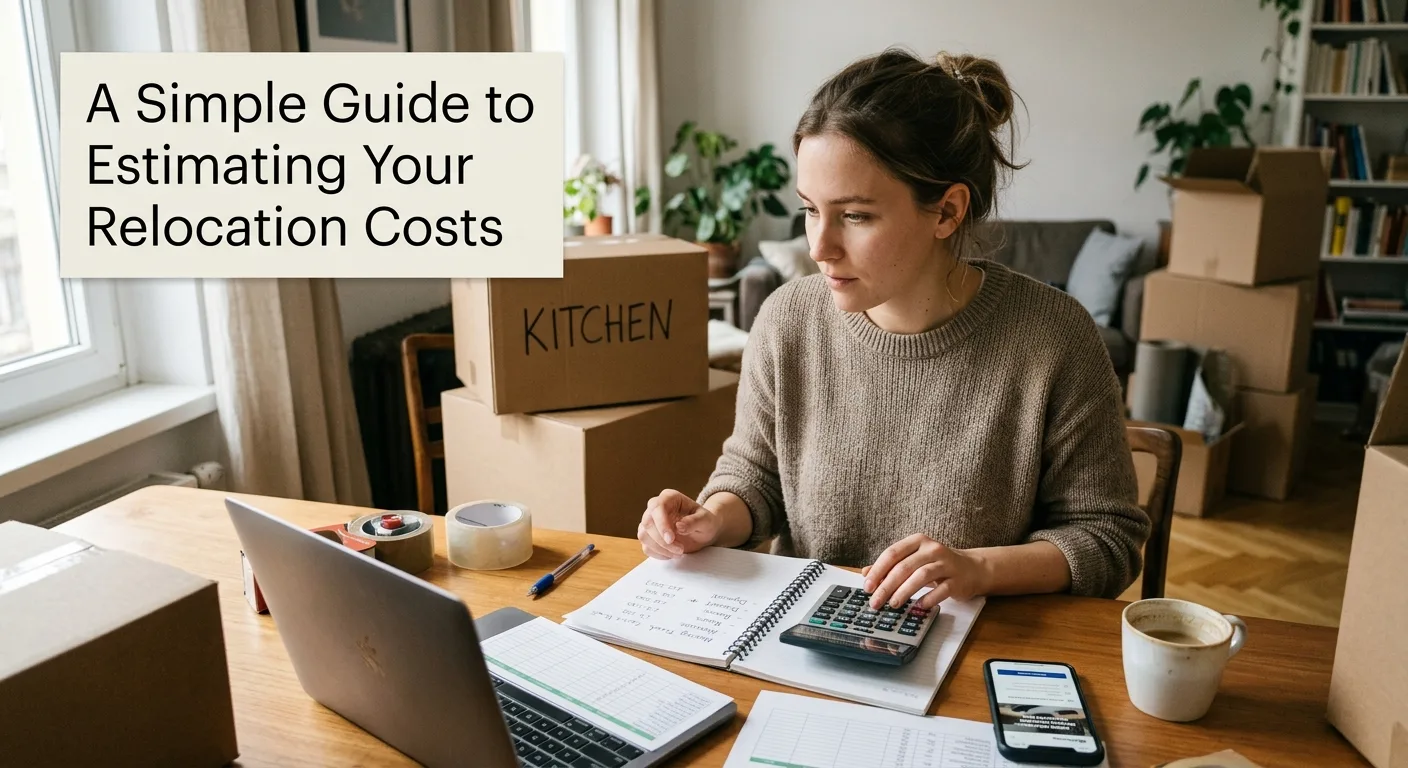
Relocating to a new home involves more than choosing a moving date and packing boxes.
Transportation, labor, packing supplies, insurance, travel, and unexpected expenses can all affect the final bill.
A realistic estimate helps households prepare financially and make better decisions before moving day arrives.
The challenge is that no two moves cost exactly the same. A family relocating from a three-bedroom house across several states will face very different expenses from someone moving from a studio apartment across town.
Instead of relying on a single average figure, a useful relocation budget should be built around the specific details of the move.
Start With the Basic Details of the Move
Before calculating expenses, it helps to establish the basic scope of the relocation. Distance, household size, moving method, timing, and the amount of property being transported all influence the final cost.
A household should start by answering a few practical questions:
- How far is the new home from the current address?
- How many rooms need to be moved?
- Will professional movers handle the entire relocation?
- Will packing services be required?
- Are there oversized or unusually valuable belongings?
- Does the move involve crossing state lines?
- Will temporary storage be necessary?
Answering these questions creates a much stronger foundation for estimating costs.
Moving directory and resource websites such as My Moving Journey can also help consumers research moving-related information, compare options, and understand the expenses they may encounter during relocation.
Understand the Difference Between Local and Long-Distance Moves
Distance is one of the biggest factors affecting moving expenses, but local and long-distance moves are often priced differently.
Local Moving Costs
Local movers commonly charge based on time. The total can depend on the hourly rate, number of movers, number of hours required, truck fees, and additional services.
A smaller apartment may require only a few hours of labor, while moving a larger home can take most of the day.
Consumers should therefore avoid looking only at the advertised hourly rate. A company charging a lower rate may still produce a larger bill if the move takes longer or additional fees apply.
Long-Distance Moving Costs
Long-distance and interstate moves are generally more complex.
Pricing may consider:
- Shipment weight or volume
- Total transportation distance
- Origin and destination
- Required labor
- Additional services
- Accessibility at both properties
- Time of year
For interstate moves, consumers can verify a mover's federal registration information through the Federal Motor Carrier Safety Administration. Checking registration and complaint information before signing an agreement adds an important layer of due diligence.
Estimate How Much Property Will Be Moved
The amount of furniture and household property being transported can significantly influence the final price.
Larger shipments usually require more labor, truck space, fuel, and loading time. This is one reason the number of bedrooms is often used as an initial indicator when estimating relocation expenses.
However, bedroom count alone is not always reliable.
A two-bedroom home packed with furniture, books, appliances, and storage boxes may contain more property than a lightly furnished three-bedroom home.
Creating a household inventory is more accurate.
The inventory should include major items such as:
- Beds and mattresses
- Sofas and chairs
- Dining tables
- Desks
- Dressers
- Appliances
- Outdoor furniture
- Boxes
- Garage or storage items
A detailed inventory also makes it easier to compare quotes because each moving company can price approximately the same shipment.
Decide Between Professional Movers and a DIY Move
The method chosen for the relocation can dramatically change the budget.
Hiring full-service movers typically costs more upfront because the price includes professional labor and transportation. Depending on the service selected, movers may also handle packing, furniture disassembly, loading, unloading, and reassembly.
A DIY move can reduce labor expenses, but it introduces other costs.
These can include truck rental, mileage charges, fuel, equipment rental, insurance, tolls, hotel stays, and help with loading or unloading.
The cheapest-looking option on paper is therefore not automatically the least expensive overall.
Time should also be treated as part of the decision. A household may save money by handling everything independently, but packing, loading, driving, and unloading can require considerable time and physical effort.
Calculate Transportation Expenses Carefully
Transportation is usually one of the largest components of a relocation budget.
For a professional move, transportation costs are generally incorporated into the quote. For a rental-truck move, several separate expenses may need to be calculated.
These can include:
- Base truck rental
- Mileage
- Fuel
- Tolls
- Parking
- Rental insurance
- Additional rental days
- Equipment such as dollies and moving blankets
Fuel deserves particular attention on longer moves. Rental trucks generally consume considerably more fuel than passenger vehicles, so estimating fuel costs using the truck's expected fuel economy can prevent an unpleasant surprise.
Include Packing and Moving Supplies
Packing materials are easy to underestimate because individual items appear inexpensive.
However, the cost can grow quickly when an entire household needs to be packed.
Common supplies include boxes, packing paper, tape, bubble wrap, mattress covers, labels, furniture protection, and specialty containers.
Before buying everything new, households can check whether they already have reusable containers or can obtain suitable boxes locally.
For fragile or valuable property, purchasing proper packing materials is generally worth the additional expense. Saving a few dollars on protection can become costly if electronics, artwork, glassware, or furniture are damaged.
Build a More Accurate Moving Budget
Once the main expenses have been identified, they can be combined into a working budget.
Instead of relying entirely on broad national averages, consumers can use a moving cost estimate based on details such as distance and move size as an initial planning reference. That figure can then be refined using actual mover quotes, transportation expenses, packing costs, and other known charges.
A practical budget might include separate categories for:
- Moving company or truck rental
- Packing supplies
- Insurance or additional valuation coverage
- Storage
- Travel
- Lodging
- Meals
- Utility setup
- Cleaning
- Pet transportation
- Childcare
- Emergency expenses
Separating expenses makes it easier to see where the budget is going and where savings may be possible.
Watch for Additional Moving Fees
One reason relocation budgets go off track is that consumers focus on the base moving price while overlooking additional services.
Certain circumstances can increase the final bill.
Stairs and Elevators
Moving furniture through multiple flights of stairs can require additional labor and time. Some companies may charge additional fees depending on the circumstances and contract.
Elevator access can also affect scheduling and loading time, particularly in high-rise buildings.
Long Carry Fees
If a moving truck cannot park close to the entrance, movers may need to carry belongings over a longer distance.
Depending on the mover and agreement, this can result in an additional charge.
Specialty Items
Pianos, safes, antiques, artwork, pool tables, and other heavy or delicate items may require specialized equipment or additional labor.
These items should be disclosed when requesting a quote rather than on moving day.
Storage and Delayed Delivery
A household may need temporary storage if the new property is not ready when the shipment arrives.
Storage, handling, and redelivery can add substantial costs, so potential timing gaps should be discussed before the move.
Compare Multiple Written Estimates
Consumers should avoid choosing a mover based entirely on the lowest advertised price.
Getting estimates from several companies provides a better view of the realistic price range for a particular relocation.
Each estimate should be reviewed for:
- Transportation charges
- Labor
- Packing services
- Additional fees
- Valuation coverage
- Pickup and delivery terms
- Payment requirements
- Cancellation terms
For interstate moves, FMCSA advises consumers to understand their estimates and moving documents before agreeing to service. Federal rules also distinguish among different types of estimates, making it important to understand whether and how the quoted amount may change.
A dramatically lower quote deserves additional scrutiny, particularly when it is based on limited information about the shipment.
Consider the Timing of the Move
Moving demand is not consistent throughout the year.
Summer is traditionally a busy period for household moves in the United States. Weekends and month-end dates may also experience stronger demand because they are convenient for leases, work schedules, and school calendars.
Higher demand can affect availability and pricing.
Households with flexible schedules may find better options by comparing multiple dates rather than committing immediately to the busiest period.
Booking early can also provide more time to compare movers, review contracts, and prepare financially.
Do Not Forget Travel and Temporary Living Expenses
The mover's invoice is only one part of the total cost of relocating.
For a long-distance move, the household itself must also reach the destination. That can mean paying for fuel, airfare, hotels, rental cars, meals, and other travel expenses.
There may also be a gap between leaving the old residence and entering the new one.
Temporary accommodation can quickly increase the overall relocation budget, especially for families requiring multiple hotel rooms or longer stays.
These expenses should be estimated alongside transportation costs rather than treated as an afterthought.
Keep a Buffer for Unexpected Costs
Even carefully planned moves can produce unexpected expenses.
A truck may need to park farther away than expected. Additional packing materials may be required. Travel plans may change, or temporary storage may become necessary.
Adding a contingency amount to the moving budget gives households room to handle these situations without disrupting essential expenses.
The appropriate amount depends on the move, but the principle is straightforward: a budget should not assume that every part of relocation will go exactly according to plan.
Look for Practical Ways to Reduce Costs
Reducing relocation expenses does not necessarily mean choosing the cheapest mover.
Often, the most effective savings come from reducing the amount of property being transported and avoiding unnecessary services.
Before packing, households can sort belongings into items to keep, donate, sell, recycle, or discard.
Other practical strategies include:
- Comparing several written moving quotes
- Packing non-fragile items independently
- Reusing suitable boxes and containers
- Moving during less competitive dates when possible
- Measuring furniture before paying to transport it
- Avoiding last-minute bookings
- Confirming potential extra charges in advance
Selling items that are inexpensive to replace can sometimes cost less than transporting them hundreds or thousands of miles.
Review the Budget Before Moving Day
A relocation estimate should not remain static.
As moving day approaches, estimated figures can be replaced with confirmed costs. The household may receive a final mover estimate, know the exact travel route, purchase packing supplies, and confirm whether storage is necessary.
A final review should compare the original budget against current expected expenses.
Any major difference should be investigated before the move rather than discovered after the final invoice arrives.
Final Thoughts
Estimating relocation costs becomes much easier when the move is divided into individual expenses instead of treated as one large number.
Distance, shipment size, labor, transportation, packing materials, storage, travel, timing, and additional services can all influence the final amount. Building the budget around these factors gives households a more realistic picture of what their move may cost.
A strong estimate is not about predicting every dollar perfectly. It is about identifying likely expenses early, comparing reliable information, checking contracts carefully, and leaving enough financial flexibility for the unexpected.