Retaining walls are no longer just structural necessities tucked away at the edge of a property. In Australia, they’ve become integral to residential landscaping, commercial developments, transport infrastructure, and industrial sites.
As urban density increases and sloped land is developed more intensively, engineered solutions such as retaining wall concrete panel systems are gaining attention for their structural efficiency and installation speed. Whether managing soil retention on a suburban block or stabilising large commercial earthworks, the choice of system plays a critical role in long-term performance.
Understanding how modern retaining wall systems work and what factors influence design decisions helps developers, builders, and property owners avoid costly mistakes and compliance issues.
Why Retaining Walls Matter More Than Ever
In Australia, construction is increasingly taking place on challenging terrain. Sloping blocks, tight lot boundaries, and commercial earthworks projects demand solutions that balance structural integrity with cost efficiency.
Retaining walls serve several essential functions:
- Holding back soil and preventing erosion
- Creating usable level surfaces
- Protecting foundations and infrastructure
- Managing drainage and water flow
- Enhancing landscape design
When poorly designed or installed, retaining walls can fail dramatically. Soil movement, water pressure build-up, and inadequate footing preparation are common causes of structural compromise.
That’s why system selection and engineering input are so important at the planning stage.
Understanding Concrete Panel Retaining Systems
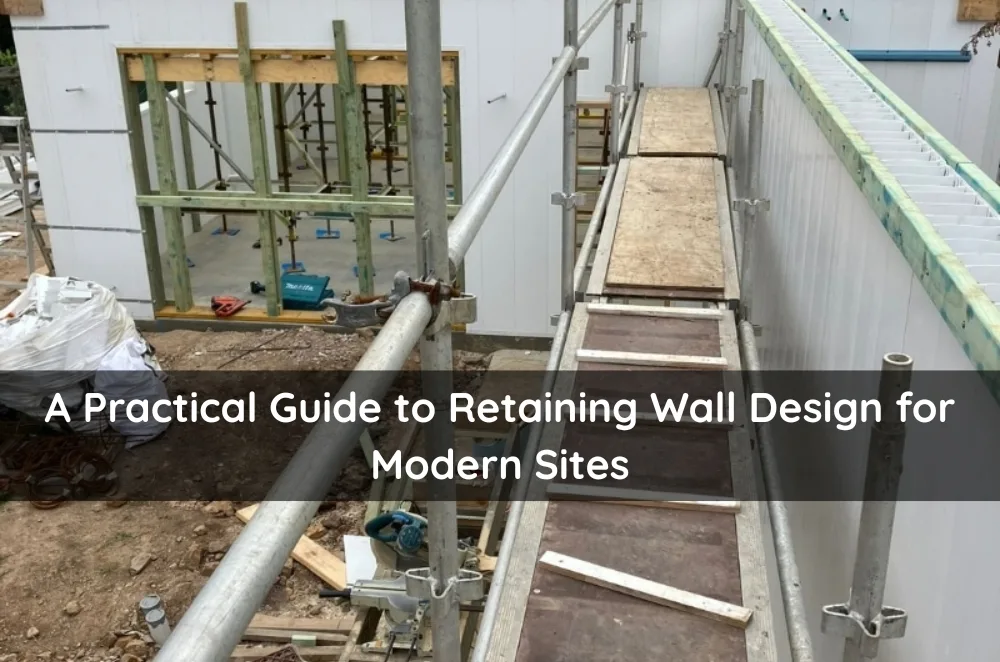
Modern concrete panel systems typically consist of precast concrete panels supported by structural posts embedded into engineered footings.
This modular approach offers several advantages over traditional masonry or mass concrete walls:
1. Speed of Installation
Precast components allow for faster assembly on-site, reducing labour time and weather-related delays.
2. Structural Consistency
Factory-manufactured panels maintain consistent strength and quality compared to site-poured alternatives.
3. Scalability
Panel systems can be adapted to varying heights and loads, making them suitable for residential and commercial projects alike.
4. Reduced On-Site Disruption
Because components arrive ready to install, site disturbance is often lower, which is particularly beneficial in tight urban developments.
However, system suitability depends on soil type, drainage conditions, height requirements, and local regulatory standards.
Common Mistakes in Retaining Wall Projects
Across both markets, similar mistakes appear repeatedly in retaining wall construction.
1. Ignoring Drainage Planning
Hydrostatic pressure behind a wall is one of the leading causes of failure. Drainage design must be integrated from the beginning.
2. Underestimating Soil Loads
Not all soil behaves the same. Expansive clays in parts of Australia demand different engineering considerations.
3. Skipping Professional Engineering Input
Walls above certain heights often require certified engineering drawings and approvals.
4. Choosing Systems Based on Cost Alone
Lower upfront material costs can result in higher lifecycle maintenance and structural risk.
5. Inadequate Footing Depth
Footings must be designed to suit soil conditions and anticipated loads.
These issues are avoidable when planning is structured and evidence-based.
Decision Factors When Selecting a Retaining Wall System
When evaluating system options for a project, consider the following factors:
Site Conditions
Assess slope gradient, soil classification, groundwater presence, and load requirements.
Wall Height
Higher walls require greater structural reinforcement and potentially engineered approvals.
Drainage Requirements
Incorporate backfill specifications, agricultural drains, and weep holes where necessary.
Local Regulations
Australian councils impose height thresholds and engineering standards.
Construction Timeline
Precast panel systems can reduce build time, which may be critical for commercial schedules.
Aesthetic Considerations
Some panel systems offer textured finishes or architectural facades suitable for visible installations.
Matching system characteristics to site conditions ensures safer and more durable outcomes.
A Simple 7–14 Day Planning Framework
If you’re preparing for a retaining wall project, use this structured approach:
Days 1–3: Conduct a Site Review
Measure slope angles, note existing drainage paths, and identify access constraints.
Days 3–5: Obtain Soil Information
Arrange soil testing or consult local geological data to understand the load-bearing capacity.
Days 5–7: Define Wall Height and Function
Clarify whether the wall is purely structural or also aesthetic.
Days 7–10: Seek Engineering Advice
Engage a qualified engineer to assess load calculations and compliance requirements.
Days 10–14: Finalise System Selection
Choose a retaining solution aligned with structural needs, timeline, and long-term durability goals.
Early clarity prevents redesigns and compliance setbacks later.
Operator Experience Moment
On mid-sized commercial projects, delays often occur when drainage considerations are treated as an afterthought. Experienced contractors frequently observe that integrating back-of-wall drainage and footing depth planning early reduces variation costs and avoids remedial works. In Australian subdivisions, proactive coordination between engineers and installers consistently leads to smoother outcomes.
Local SMB Mini-Walkthrough: Suburban Development Scenario
A developer in Australia acquires a sloped residential block.
A preliminary site survey identifies a required retaining height of 1.8 metres.
Soil testing reveals reactive clay conditions.
Engineering drawings are commissioned to confirm footing depth and reinforcement.
A precast panel system is selected to reduce construction time.
Drainage is installed behind the wall prior to backfilling.
The project proceeds without structural variation during inspection.
The same workflow applies in many suburban developments, where frost lines and local code requirements may adjust footing depth but follow similar planning logic.
Practical Opinions
Drainage planning deserves as much attention as structural design.
Precast systems offer efficiency when site access and timelines are tight.
Engineering input early is cheaper than remediation later.
Key Takeaways
- Retaining walls play a critical role in both structural safety and land usability.
- Soil conditions and drainage design significantly influence system performance.
- Precast concrete panel systems offer speed, consistency, and scalability.
- Early engineering consultation reduces risk and compliance issues.
- A structured 7–14-day planning process supports smoother project delivery.
Common questions we hear from businesses in Australia
Do all retaining walls require engineering approval?
Usually, walls above a certain height threshold require engineering certification, though exact requirements vary by council or municipality. Next step: check local regulations before commencing design. In Australia, height limits determine approval requirements.
How important is drainage behind the wall?
In most cases, drainage is critical to long-term stability. Next step: incorporate back-of-wall drainage design into initial engineering plans. Australian reactive soils increase the importance of proper water management.
Are precast panel systems suitable for residential properties?
It depends on wall height, soil conditions, and design preferences. Next step: consult with an engineer to determine structural suitability. In suburban developments across both regions, precast systems are commonly used for boundary and tiered landscaping walls.
How long should a retaining wall last?
Usually, lifespan depends on design quality, material durability, and drainage effectiveness. Next step: review manufacturer specifications and engineering documentation before installation. In Australia, well-designed systems can perform reliably for decades when properly maintained.