Industrial businesses often keep spare parts and equipment available to avoid production delays. But when projects change, facilities upgrade their systems, or a plant closes, extra inventory can quickly become a problem. Instead of allowing unused equipment to sit in storage, businesses can review their inventory and look for practical ways to recover value.
Why Industrial Equipment Becomes Surplus
Surplus equipment can come from many situations. A company may have purchased more parts than needed, replaced older machinery, discontinued a production line, or consolidated multiple facilities.
This can leave businesses with electrical components, automation equipment, PLCs, motors, pumps, valves, tooling, sensors, and other industrial parts that are no longer required.
Organizing and selling suitable inventory can help free warehouse space while giving useful equipment another opportunity to be used.
Understanding Surplus Industrial Supply
The term surplus industrial supply can cover a wide range of excess industrial parts and equipment. Depending on the business and inventory, this may include circuit breakers, contactors, relays, PLC modules, sensors, drives, motors, pumps, valves, bearings, tooling, and other MRO components.
The condition of surplus equipment can vary. Some items may be new and unused, while others may be used or older inventory. Providing accurate information about the condition is important when preparing equipment for evaluation.
What Should You Do With Excess Equipment?
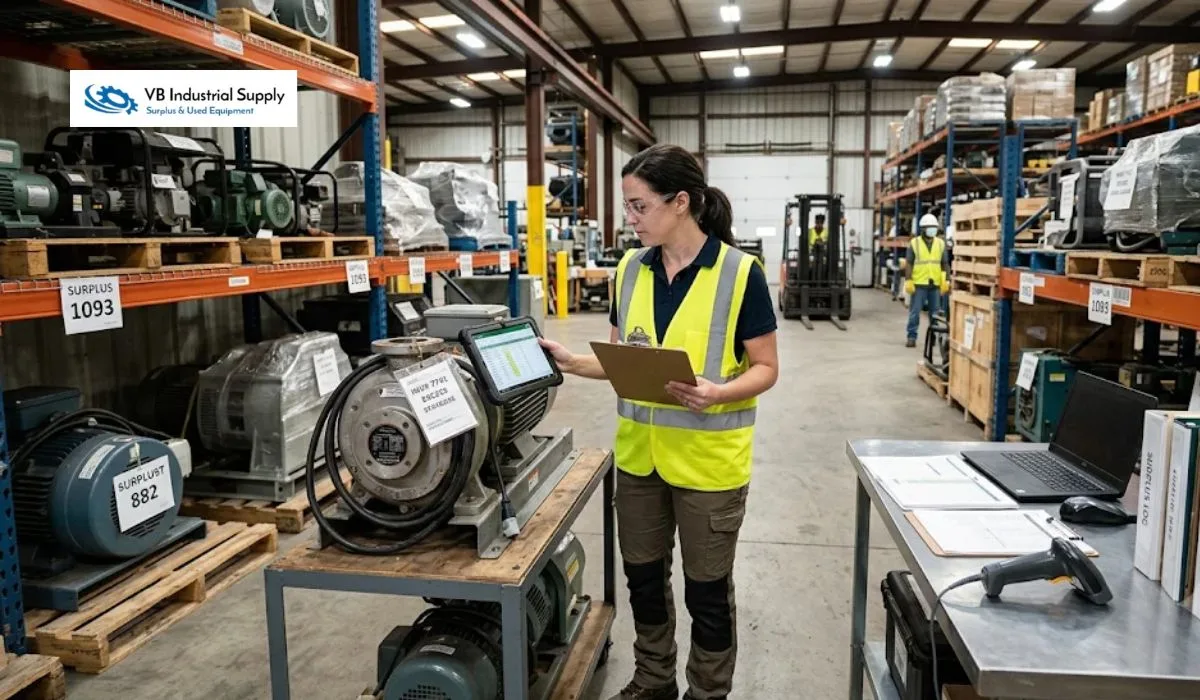
Start by creating a basic inventory list. Include the manufacturer, model or part number, quantity, condition, and photographs when possible.
For larger inventories, an existing parts list or ERP/SAP inventory export can make the process easier. Grouping similar equipment together can also help a buyer understand what is available.
If the inventory comes from a plant closure, warehouse cleanout, or facility consolidation, mention the size and scope of the project.
We Buy Industrial Equipment and Surplus Parts
Businesses searching for companies that we buy industrial equipment can consider an industrial surplus buyer that works with different types of equipment and inventory sizes.
VB Industrial Supply purchases surplus PLC systems, automation equipment, electrical components, MRO inventory, circuit breakers, motors, pumps, valves, sensors, tooling, and other industrial components. The company also works with larger warehouse cleanouts and industrial liquidation projects.
VB Industrial Supply allows businesses to submit an inventory list, ERP or SAP export, or photos for evaluation. Its current Sell Us page states that written offers are generally provided within one business day for industrial asset recovery projects.
Preparing for a Surplus Equipment Sale
Before contacting a buyer, organize the equipment and collect as much accurate information as possible. Clear photos can be especially helpful for older or specialized components.
Separate new, used, and damaged items where possible, and make a note of original packaging or identifying labels. This gives the buyer a better understanding of the inventory and can make the evaluation process more efficient.
Give Unused Equipment a Second Opportunity
Excess industrial inventory does not have to remain unused in a warehouse. Reviewing surplus parts and connecting with an experienced industrial buyer can be a practical way to manage excess stock and recover potential value.
Whether you have a few surplus components or inventory from a larger facility project, having accurate product information and an organized inventory can make the selling process much easier.