Food businesses need clear procedures, reliable records, and effective controls to maintain food safety and prepare for certification audits. Understanding FSSC 22000 Version 7 documentation requirements helps organizations review their existing food safety management system (FSMS), identify documentation gaps, and determine which updates are needed.
Rather than creating documents simply to satisfy an audit, businesses should ensure that their documentation reflects actual operations, addresses food safety risks, and supports consistent implementation.
Why Is FSSC 22000 Documentation Important?
Documentation provides evidence that food safety activities are planned, implemented, monitored, and reviewed. It also helps employees understand their responsibilities and follow consistent processes.
A well-structured set of FSSC 22000 documents supports hazard control, traceability, corrective action, and continual improvement. It can also help food manufacturers identify missing records before an internal or certification audit.
However, documentation requirements depend on the applicable scheme requirements, product category, operational processes, and risks associated with the business. Organizations should therefore review their existing FSMS before deciding which documents need revision or development.
Key Documentation Areas to Review for Version 7
When reviewing FSSC 22000 Version 7 documents, organizations should assess their existing documentation against the applicable scheme requirements and relevant prerequisite programme standards. Understanding the key documentation changes in FSSC 22000 Version 7 can help businesses identify areas that may require further review and determine whether existing procedures and records need updating.
1. Food Safety Management System Documentation
The food safety manual, policies, procedures, and supporting records should describe how the FSMS operates. Organizations should check whether responsibilities, process interactions, monitoring activities, and corrective actions are clearly defined.
2. HACCP Plan and Hazard Control Records
The HACCP plan should reflect current products, processes, hazards, and control measures. Hazard analysis, monitoring records, verification activities, and corrective action evidence should remain consistent with actual operations.
3. Additional Requirement Documentation
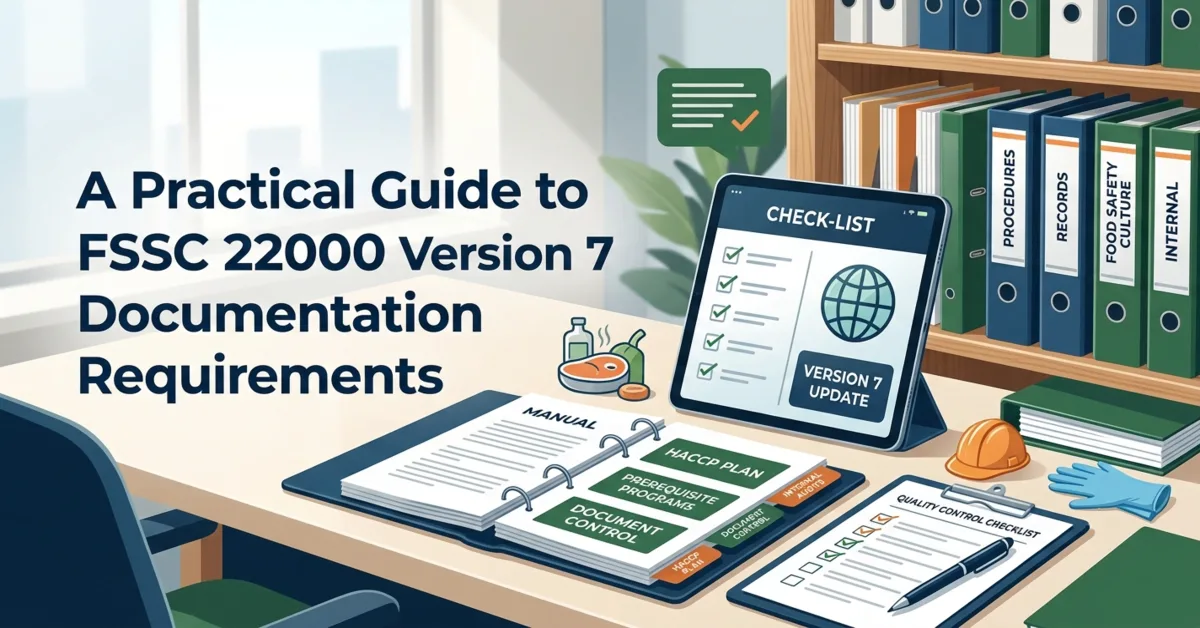
The FSSC 22000 additional requirements need careful attention during a Version 7 review. Depending on applicability, businesses may need to evaluate their food defense plan, food fraud vulnerability assessment, allergen management controls, environmental monitoring programme, and equipment management practices.
Organizations should also assess applicable requirements relating to food safety and quality culture, packaging design, and food loss and waste. The necessary documented information should support implementation rather than exist only on paper.
4. Document Control and Audit Records
A document control procedure helps ensure that employees use current, approved documents. Review document versions, approval responsibilities, record retention, and access to relevant information.
Internal audit records should demonstrate whether processes meet applicable requirements and whether identified nonconformities receive appropriate corrective action.
How to Prepare an FSSC 22000 Documentation Checklist
A practical FSSC 22000 documentation checklist can make the review process easier. Start by listing applicable requirements and matching each one with the relevant procedure, record, or other documented evidence.
Next, identify missing documents, outdated references, inconsistent responsibilities, and records that do not reflect actual activities. Assign responsibility for each corrective action and establish realistic completion dates.
Finally, verify that revised documents are implemented, communicated to employees, and supported by appropriate records. An FSSC 22000 audit checklist can help organize these reviews and track readiness before the certification audit.
Simplify Documentation Preparation
Developing an FSMS from scratch can require considerable time and coordination. Using structured, editable documentation resources can help businesses organize their procedures, records, and implementation activities more efficiently.
The FSSC 22000 documents package provides editable Microsoft Word documentation, including a food safety manual, procedures, SOPs, forms and templates, HACCP-related documents, and supporting audit resources. The materials can be customized to suit an organization's processes, responsibilities, and applicable requirements.
These resources provide a starting point, but businesses should review and adapt them to their operations rather than adopt them without evaluation.
Conclusion
Preparing for FSSC 22000 Version 7 requires more than updating document titles. Organizations should review applicable requirements, strengthen food safety controls, maintain reliable records, and ensure that documented procedures reflect everyday practices. A structured documentation review can help identify gaps, improve audit preparation, and support an effective food safety management system.