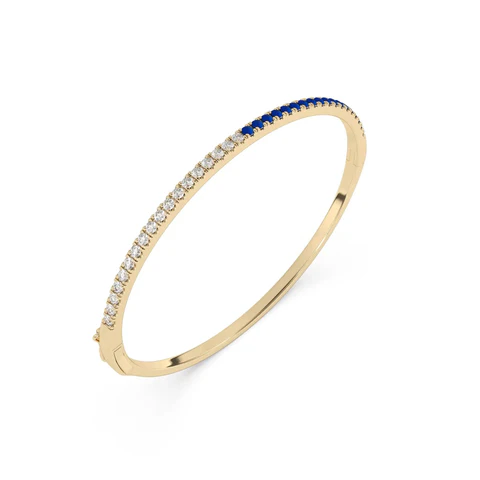
A very deserving comparison to the vast night sky, Lapis Lazuli jewellery comes with its mesmerising charm that has kept us hooked for ages.
Consider this guide 101 on lapis lazuli where you will get to learn the history, its usage in modern jewellery and how to identify high-quality lapis lazuli as well as care for your pieces so your purchasing decisions have no loopholes!
The Rich History of Lapis Lazuli
Ancient Beginnings and Historical Significance
Who knew the stone mined around 7000 years ago in Afghanistan would still be popular even today? From South Asia, it found its way to the Middle East where in ancient Mesopotamia and Egypt, it was associated with gods and pharaohs and symbolized as protection and power. Being buried with lapis lazuli was believed to ensure a safe passage in the afterlife.
Cultural Importance Across Civilizations
The colour and rarity of the stone allowed it to cross all the borders. Therefore, it is highly prized across many cultures and civilizations. You will find it in the expensive Renaissance artwork as the blue pigment from the stone called ultramarine was used in such esteemed work.
Evolution in Jewellery Making
The stone that was used for crowns and artefacts found its way to modern jewellery where it is often set in silver or gold, and a popular choice for its striking colour.
Understanding Lapis Lazuli
What Is Lapis Lazuli?
It is a metamorphic rock mainly composed of Lazurite, which is responsible for its blue colour. There are other minerals such as calcite and pyrite. The former has a white appearance, and the latter has sparkly golden flecks that pop out in the deep blue.
How It's Used in Jewellery Today
You will find the stone in many popular jewellery pieces. From rings and pendants to bracelets and earrings, it is now found in minimalist and geometric designs, catering to modern fashion trends and establishing itself as appealing to the younger generation.
Key Properties of Lapis Lazuli
Physical Traits and Appearance
The blue of lapis lazuli can range from indigo to royal blue. A metallic gold lustre is the presence of pyrite, which you can say looks like tiny stars scattered around the sky. Consistent colours are high-quality and lower-quality ones are uneven and have excess calcite streaks. The gemstone is softer than sapphire or diamond, with a 5 to 6 Mohs hardness rating.
Symbolic and Metaphysical Properties
Many people believe the stone to have wisdom, truth, and spiritual enlightenment. Since it is a stone of the gods, it is both divine and royal. It is said to help with self-awareness, stimulate clarity of thought, and encourage honest communication.
Factors Influencing Quality
Colour, cut, and polish affect the appearance of the stone and therefore its quality. The presence of pyrite is a positive feature so that speaks quality. Large amounts of calcite are not sought-after and detract from the value. The cut and polish of the stone also affect its standard, with well-cut stones reflecting light evenly across their surface.
Benefits of Wearing Lapis Lazuli
Healing and Spiritual Advantages
Many people believe the stone to have healing properties as it can relieve stress and improve mental clarity. While it’s not scientifically proven, many wearers experience a sense of tranquillity and balance in their emotional energies.
Emotional and Psychological Benefits
In addition to its spiritual benefits, lapis lazuli is said to help with self-expression. If you are someone struggling with self-esteem, try wearing the stone for a boost of confidence. Perhaps it can help relieve any past traumas and encourage emotional healing.
Evil Eye of Positive Energy
Yellow Gold (14k)
White Gold (14k)
Rose Gold (14k)
14 reviews