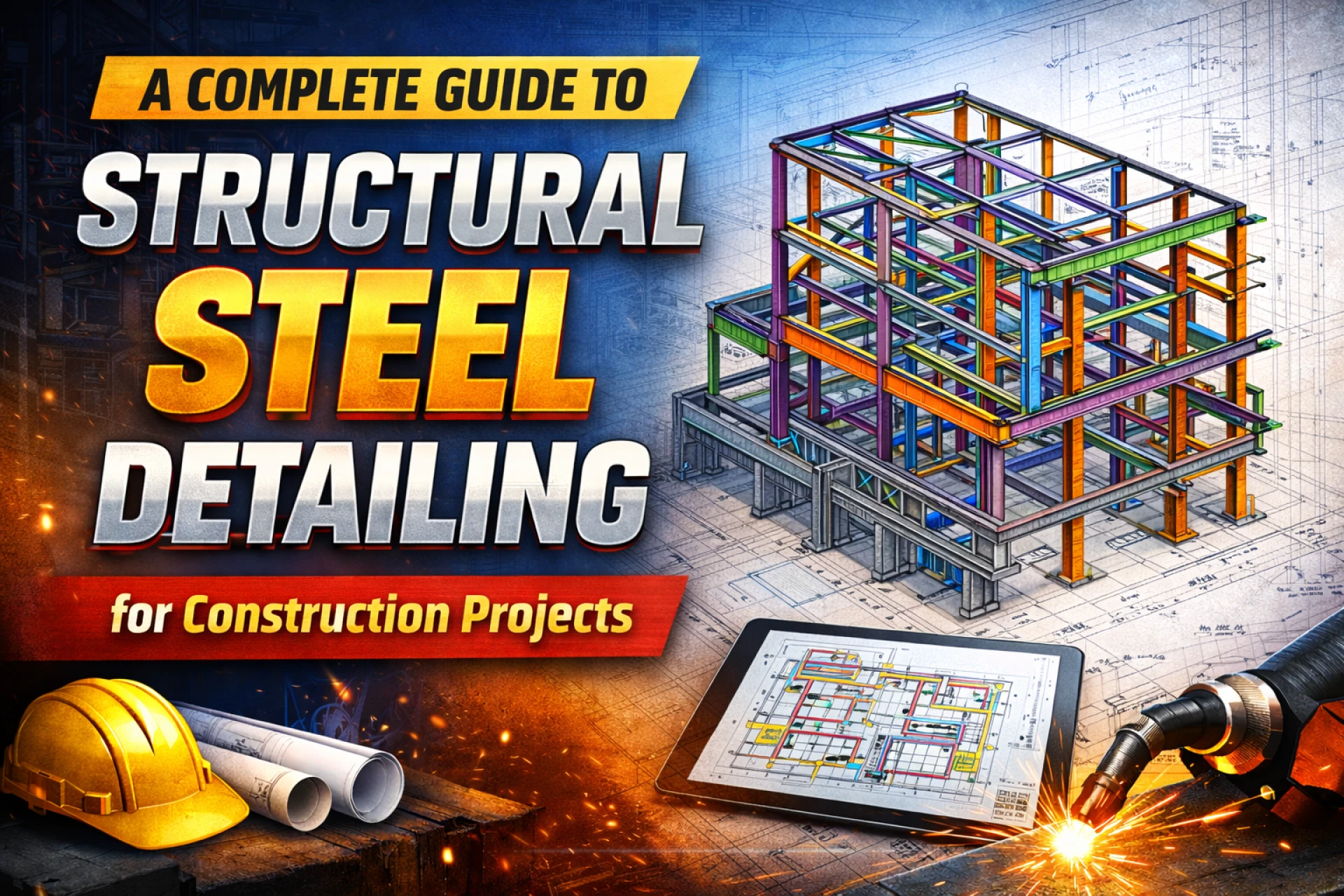
Imagine a skyscraper without a skeleton. It wouldn't stand for a minute. In the world of construction, steel is that skeleton, providing the strength and stability necessary for everything from industrial warehouses to towering office blocks. But before a single beam is lifted into place, a crucial, behind-the-scenes process must occur: structural steel detailing.
This process is the bridge between a structural engineer’s vision and the fabricator’s reality.
It involves translating general design drawings into precise, actionable instructions for manufacturing and assembly. Without accurate detailing, projects face costly delays, material waste, and potentially dangerous structural failures.
For construction managers, architects, and engineers, understanding this phase is vital for project success. This guide explores the definition, processes, tools, and best practices of structural steel detailing, ensuring your next project stands tall and secure.
What is Structural Steel Detailing?
Structural steel detailing is a specialized discipline within construction that involves the creation of detailed drawings for steel fabricators and erectors. While a structural engineer designs the steel framework—calculating loads, stresses, and member sizes—the detailer takes those engineering drawings and creates the "instruction manual" for building the structure.
This role is critical.
The detailer must interpret architectural and engineering plans to generate precise specifications for every column, beam, brace, truss, and connection. These details include dimensions, bolt placements, weld specifications, and material requirements. Essentially, the detailer ensures that every piece of steel fits together perfectly on site, like a massive, high-stakes 3D puzzle.
Key Steps in the Steel Detailing Process
The journey from a design concept to a standing structure involves several meticulous steps. Accuracy at each stage is non-negotiable.
1. Reviewing Architectural and Engineering Drawings
The process begins with a thorough examination of the design drawings provided by the structural engineer and architect. The detailer looks for inconsistencies, missing information, or potential clashes (such as a steel beam running through a planned HVAC duct). This initial review is a quality control checkpoint, resolving design intent questions before any fabrication begins.
2. Creating Erection Drawings
Erection drawings are used on the construction site. They act as a roadmap for the steel erectors, showing exactly where and how to install every fabricated component. These drawings provide the overall layout, dimensioning, and specific details for assembling the frame.
3. Producing Shop Drawings
While erection drawings are for the site crew, shop drawings are for the factory floor. These are highly technical documents that specify every detail for an individual steel component. A shop drawing for a single beam will show its exact length, the size and location of every bolt hole, the type of protective coating required, and specific welding instructions. Fabricators rely entirely on these documents to cut and drill the raw steel.
4. Generating the Bill of Materials (BOM)
A Bill of Materials is a comprehensive list of every item required to build the structure. It includes raw materials, fasteners, bolts, and washers. This document is essential for procurement, helping project managers order the correct quantity of materials and avoid budget overruns or supply shortages.
Software and Tools Used in Steel Detailing
The days of drafting tables and manual calculations are largely behind us. Modern structural steel detailing relies heavily on advanced Computer-Aided Design (CAD) software.
Popular Software Solutions
Industry-standard tools like Tekla Structures, AutoCAD, and SDS/2 have revolutionized the field. These programs allow detailers to create 3D models of the steel framework.
- AutoCAD: Remains a staple for 2D drafting and basic 3D modeling, prized for its versatility.
- Tekla Structures: A dominant force in steel detailing, allowing for highly detailed, constructible 3D models that can handle massive project data.
The Power of BIM (Building Information Modeling)
Building Information Modeling (BIM) has transformed how detailers work. Unlike standard 3D modeling, BIM creates intelligent models where every element holds data. If a beam's size is changed in the model, the software automatically updates the associated shop drawings and BOM. This integration significantly reduces human error and enhances coordination between architects, engineers, and fabricators.
Best Practices for Effective Steel Detailing
Achieving high-quality results requires more than just knowing how to use software. It requires adherence to strict industry best practices.
Uncompromising Accuracy and Precision
There is no margin for error in steel fabrication. A bolt hole misaligned by a fraction of an inch can halt construction on site, leading to expensive rework. Detailers must employ rigorous checking processes, often having peer reviews where one detailer checks another’s work to ensure absolute precision.
Collaboration and Communication
The detailer sits at the center of the construction workflow. Effective communication is essential. If a design drawing is ambiguous, the detailer must proactively issue Requests for Information (RFI) to the engineer rather than making assumptions. Regular coordination meetings with the design team help identify constructability issues early.
Adherence to Standards and Codes
Every drawing must comply with relevant industry standards, such as those set by the American Institute of Steel Construction (AISC) or the Occupational Safety and Health Administration (OSHA). This ensures not only structural integrity but also the safety of the workers fabricating and erecting the steel.
Challenges and Solutions in Steel Detailing
Despite the advanced technology, the detailing process faces several hurdles.
Common Issues
- Incomplete Design Data: Engineers sometimes provide drawings with missing dimensions or conflicting information.
- Tight Deadlines: Construction schedules are notoriously aggressive, putting pressure on detailers to rush, which breeds errors.
- Last-Minute Changes: Architectural changes late in the game can require a complete overhaul of the shop drawings.
Strategies to Mitigate Risks
To handle these challenges, many firms are turning to specialized partners. Companies like Archdraw Outsourcing provide dedicated support to handle fluctuations in workload. Outsourcing can offer access to a larger pool of experienced detailers and advanced software without the overhead costs of expanding an in-house team.
Additionally, implementing strict RFI protocols and using cloud-based collaboration tools can keep all stakeholders aligned, even when design changes occur rapidly.
The Future of Steel Detailing
As construction technology evolves, the role of the detailer continues to shift. We are moving toward an era of greater automation, where AI-driven tools may begin to automate routine connection designs. However, the human element—the ability to solve complex geometric problems and ensure constructability—remains irreplaceable.
Structural steel detailing is the backbone of modern infrastructure. It transforms theoretical calculations into physical reality. By understanding the intricacies of this process, from software selection to quality control, construction professionals can ensure their projects are built safely, efficiently, and to the highest standards of quality.
Whether handling detailing in-house or partnering with experts like Archdraw Outsourcing, prioritizing high-quality detailing is an investment in the safety and longevity of your building.