Managing a group of children on a day out is a different job entirely from taking your own one or two kids to the park. As a childminder or nursery worker, you're accountable for multiple little ones at once, often with different ages, nap schedules, and energy levels. A kids wagon can genuinely change how manageable those outings feel, but only if you understand how to get the most out of one and where its limits sit.
This guide pulls together practical, real-world advice for anyone using a wagon professionally, not just as an occasional weekend accessory.
Why a Wagon Beats a Standard Buggy for Group Care
When you're minding more than one child, a conventional pushchair simply runs out of seats. Most double or triple buggies max out at two or three children, and even then, they can be awkward to steer through narrow shop aisles or busy pavements.
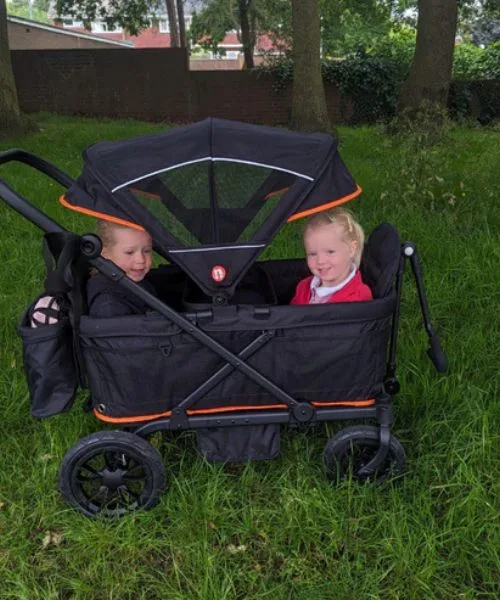
A wagon changes that equation. With seating that can expand to accommodate up to four children using additional accessories, it offers a practical way to keep a small group together, seated, and safely harnessed without needing multiple pushchairs or asking older kids to walk the whole way.
More Room for Bags, Snacks, and Emergency KitChildminders know that a day out involves more than just the children. Spare clothes, snacks, water bottles, first aid basics, and toys all need to travel too. A wagon's larger footwell and storage netting mean you're not compromising between child space and gear space, something a standard buggy rarely allows for.
What to Look For Before Choosing One
Not every wagon is built for professional, repeated use. If you're using one for daily outings rather than occasional trips, a few features matter more than they might for a casual family buyer.
Seat Capacity and Harness SecurityLook for a model with proper five-point harnesses on each seat, not just a shared lap belt. Children of different ages will wriggle, twist, and try to climb, so secure individual harnesses matter for safety compliance and peace of mind.
All-Terrain WheelsNursery and childminding days rarely stay on smooth pavement. Parks, gravel paths, and grassy picnic spots are common destinations, so look for a wagon with air-filled, all-terrain tyres rather than small plastic wheels designed only for flat surfaces.
Push-and-Pull FlexibilityBeing able to switch between pushing and pulling matters more than people expect. Pulling is often easier on soft ground like sand or grass, while pushing gives better visibility and control in crowded areas like shopping centres or school gates.
Managing Multiple Children Safely on the Move
Establish a Boarding RoutineWith several children to manage, having a consistent routine for getting in and out of the wagon saves time and reduces chaos. Teach older children to wait their turn, sit down first, and help with buckling younger ones if age-appropriate. Predictability calms group outings considerably.
Balance Weight and SeatingIf children vary significantly in size, think about where each child sits. Distributing weight evenly helps with manoeuvrability, particularly when pulling the wagon uphill or across uneven ground. Heavier bags are often best placed in a central storage area rather than stacked at one end.
Keep a Visual Headcount HabitEven with children secured, professional carers benefit from building in regular headcounts, especially when stopping at busy locations like parks, markets, or beaches. A wagon keeps children contained, but awareness habits shouldn't slip just because there's a physical barrier.
Where a Wagon Isn't the Right Tool
It's worth being upfront: a wagon isn't a replacement for every piece of equipment. If your day involves jogging, fast-paced walking, or genuinely rough off-road terrain, a dedicated running stroller is a better fit. Wagons are heavier and wider than most single or double buggies, so they don't offer the same speed or manoeuvrability across rugged ground.
Similarly, newborns generally need a flatter, more supportive setup than a wagon seat provides on its own, so many childminders keep a separate pushchair on hand for babies under a certain age.
Practical Maintenance for Daily Use
Wagons used professionally get more wear than ones used occasionally. Wipe down seats and footwells regularly, especially after beach or muddy park visits, and check tyre pressure and wheel attachments weekly if you're using it daily. A quick fold-down check before storage also helps you spot loose bolts or fraying straps early, before they become safety issues.
Final Thoughts
For childminders and nursery workers managing multiple children on outings, a well-chosen wagon can make transporting a small group significantly easier, provided it's matched to the right terrain and paired with sensible safety habits. It won't replace every piece of childcare equipment, but for day trips, park visits, and school-run logistics, it's one of the more practical investments available.