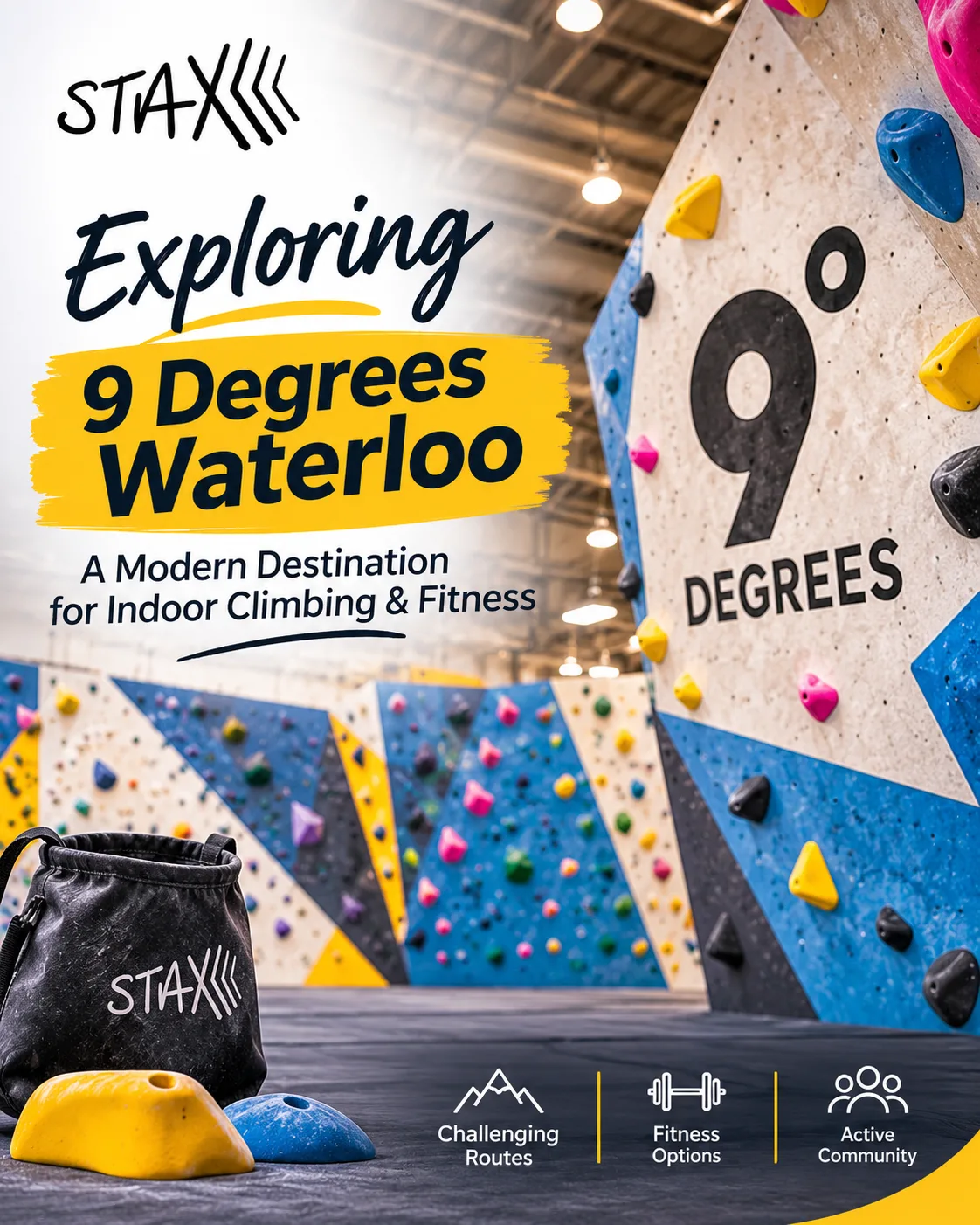
Indoor climbing facilities require a great deal of thought. We know how to design and plan climbing facilities that will allow climbers to have fun!
Bringing your 9 Degrees Waterloo Project to Life
Every climbing facility starts with a vision! We want to create a space that allows people to climb, learn new skills, and have an amazing time. We need to think about the space available, wall design, and what kind of climbing experience you want.
Our aim for this facility was to add to an indoor climbing facility to allow people to boulder!
We know that every climbing facility will require different things. We will plan out your facility to ensure the walls are designed and built to provide a great climbing experience for your visitors.
Planning Your Climbing Walls
A large part of designing climbing walls is considering how they will look. We can consider the angles, panels, and climbing holds to create a great experience.
Your bouldering facility should offer variety. Using different wall profiles will provide your route setters with more of a challenge, as they can create problems that will require balance, strength, flexibility, and coordination.
Some key things to consider when designing your climbing walls are:
(1) Angles – Slabs, vertical, and overhangs.
(2) Panels – Durable panels.
(3) Climbing Holds – Positioning to create routes for different abilities.
(4) Layout – Practical layout.
(5) Safe landing areas – Consider safe landing areas.
Manufacturing Practical Climbing Walls
It is important to design climbing walls that can be used regularly. We will consider what materials to use, quality of manufacture, and how to install.
Our climbing wall panels are manufactured in our Fremantle workshop (Western Australia). They are made using high-quality 21mm Plywood and cut using 5-axis CNC machines.
By manufacturing our climbing walls in-house, we can ensure they are produced to a high standard and can manage the building requirements for your facility.
We believe it is very important to consider all the little details when creating climbing walls. By thoughtful planning and using quality materials, we can create climbing structures that will be suitable for your facility.
Improving Your Bouldering Facility
Bouldering is a form of climbing on short walls. Climbers will use specific landing areas and crash pads.
There are many factors to consider when creating your bouldering facility. You should consider how many routes there are, what climbing holds you have, and how the climbing areas are set out.
A well-planned bouldering facility will allow:
- Routes for different skill levels.
- Variety of angles and climbing styles.
- Opportunities to improve technically and physically.
- Appropriate crash pads.
- Encourages climbers to come back and try new challenges.
Climbing Holds
Climbing holds are an important aspect of any climbing wall. The shape, texture, and position of your climbing holds will affect how climbers move around.
Different climbing holds can encourage different climbing styles. Larger climbing holds may be more comfortable to grip. Smaller or specialist climbing holds can provide more of a challenge.
We represent various climbing hold brands in Australia and New Zealand. We know it is important to choose the right climbing holds.
You should consider:
- What styles of climbing you want.
- Who will be using the facility and their skill level.
- Route setting requirements.
- What shape, size, and texture of climbing holds.
- How varied the climbing walls will be.
By choosing the right climbing holds and planned climbing walls, you can create more exciting routes for your route setters.
Safety and Crash Pads
Safety is a huge factor when designing an indoor bouldering facility. As there are no ropes used when bouldering, you need to consider the landing area below your climbing areas.
Climbing crash pads will provide cushioning. You need to consider how much coverage you will have, where they will go, and if they are appropriate.
- We represent Flipp Crashpads in Australia and New Zealand.
- When planning your climbing facility, you should consider:
- How much coverage you will have below your climbing areas.
- Appropriate crash pads for your climbing facility.
- Clear landing areas.
- Regular checks and maintenance.
- Easy access for cleaning.
By carefully planning your crash pads, you can include safety in your climbing facility.
How Stax Climbing Can Help With Your Climbing Gym
Climbing gyms can be a complex product to design. With years of experience and knowledge in the industry, we at Stax Climbing will make the entire process easy for you. We manage all the suppliers, materials, equipment plus construction and installation to give you real ideas for your climbing facility.
We can help with:
- Climbing wall design.
- Climbing wall manufacture.
- Climbing wall installation.
- Climbing holds.
- Crashpads.
- Fit-outs.
- Advice, repairs and maintenance.
Our team includes climbing wall designers, qualified tradesmen and nationally accredited route setters. This means we understand what is required to create a successful climbing facility.
We know that a climbing gym can become a social hub for your community. People will enjoy learning new skills, exercising, and sharing their passion.
Conclusion
The 9 Degrees Waterloo project shows our experience in creating indoor climbing facilities. We know how important it is to create practical climbing walls, quality materials, climbing features, and safety.
We have industry knowledge and real-world experience when it comes to climbing projects. We can help you turn your vision into a functional space. We can manufacture, install, and provide climbing holds and crash pads to help encourage people to try climbing and create long-lasting communities.
FAQ
1 . Where is the 9 Degrees Waterloo facility?
21 Danks Street, Waterloo, New South Wales, Australia.
2 . What should I consider when designing my indoor bouldering wall?
Angles, climbing hold positioning, variety of routes, space, and appropriate landing areas.
3 . What materials are used in Stax climbing walls?
Premium-quality 21mm Plywood. The panels are cut using 5-axis CNC machines.
4 .Do you provide climbing mats?
Yes. We represent Flipp Crashpads in Australia and New Zealand.