
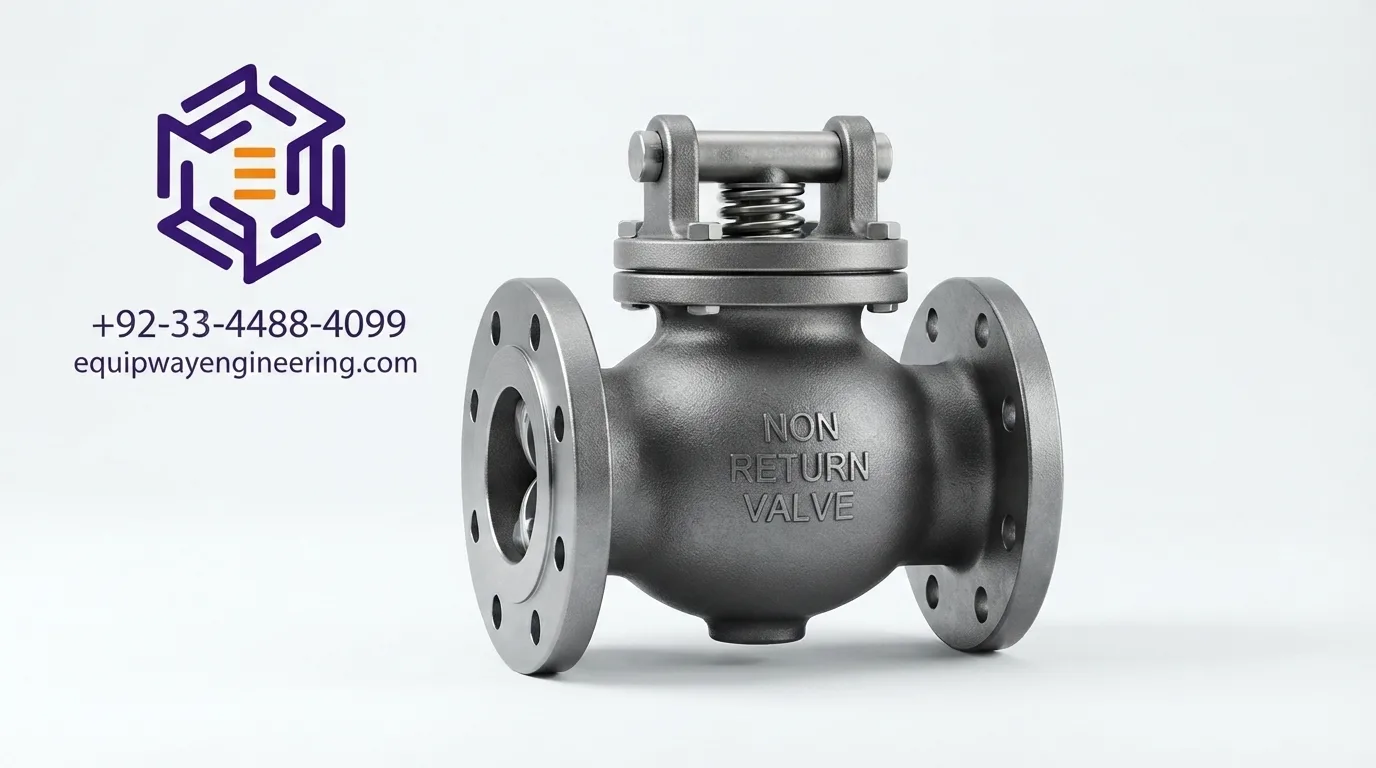
A non return valve is a small component with a massive responsibility. It works silently, often out of sight, ensuring that fluids and gases travel in only one direction through your piping systems. Its job is simple: prevent backflow. But when a non return valve fails, the consequences can be swift and expensive.
This guide covers seven warning signs that your valve needs attention. It also explains the common types, the importance of proper selection, and how proactive maintenance protects your industrial systems.
What Does a Non Return Valve Actually Do?
A non return valve, also called a check valve or one-way valve, is a mechanical device that permits flow in a single direction and blocks any reverse movement . It operates automatically, relying on the pressure and velocity of the media to open its internal mechanism .
When the upstream pressure exceeds the valve's cracking pressure, the internal disc, ball, or piston lifts off its seat. When flow stops or reverses, the element returns to its seat, creating a tight seal . This simple function protects pumps from pressure surges, prevents contamination, and maintains system pressure in hydraulic circuits .
7 Clear Indicators of Non Return Valve Failure
Flow in Both Directions
If fluid or gas moves backward through the valve, the internal sealing element has failed. This indicates a worn seat, a damaged disc, or debris preventing proper closure . Reverse flow is the most direct sign that your non return valve is no longer performing its primary function.
Unexplained System Pressure Drop
An unexpected loss of pressure often points to a valve that is no longer holding . This could result from internal leakage past the seat or from the valve being stuck in a partially open position . If your system cannot maintain pressure, inspect the valve immediately.
Unusual Noises
Hissing, clicking, or chattering during operation often signals a problem with the spring mechanism or valve seat . Rapid, repeated opening and closing—known as chattering—can occur when the valve is undersized or when flow conditions are unstable . This noise is not just annoying; it accelerates component wear.
Visible Leakage
Air or fluid escaping around the valve body is a clear sign of worn seals or gaskets . Over time, elastomers degrade from heat, chemicals, or simple age. A leaking valve body should be repaired or replaced before it causes further system inefficiency.
Slow or No Forward Flow
When flow is restricted or absent even when the system is running, the valve may be jammed, installed backwards, or blocked by debris . Always check the flow direction arrow on the body. If it is correct, the internal mechanism may be stuck.
Frequent Pump Cycling or Surging
If a pump cycles on and off more frequently than normal, a faulty non return valve may be allowing backflow, causing pressure to drop rapidly . This forces the pump to work harder and more often, reducing its lifespan.
Contamination or Backflow in Sensitive Areas
In water treatment or food processing systems, backflow can introduce contaminants into clean lines. A failed valve compromises the integrity of the entire system. If you observe contamination where it should not exist, suspect the valve.
Types of Non Return Valves and Their Applications
Selecting the right valve depends on your media, pressure, flow rate, and installation orientation .
Swing Check Valve: Uses a hinged flap. Common in water and wastewater pipelines. Suitable for large diameters with low pressure drop .Ball Check Valve: Uses a ball to seal. Compact and reliable for low-pressure systems and wastewater applications .
Spring-Loaded Check Valve: Uses a spring to hold the disc closed. Standard in hydraulics and pneumatics . Offers faster response times .
Lift Check Valve: A disc lifts vertically off the seat . Often used in high-pressure steam or water systems.
Dual Plate Check Valve: Two spring-loaded plates. Designed for large pipelines with low obstruction and quick closure .
Resilient Hinge Check Valve: Encapsulated rubber disc. Nearly zero maintenance. Prevents water hammer in water and sewage pumping systems .
Pilot-Operated Check Valve: Uses system pressure to unlock the main valve. Used in hydraulic circuits for controlled holding functions .
How to Choose the Right Valve
Match the Grade: Choose materials compatible with your media. Brass suits low-pressure water and air. Stainless steel 316 is required for aggressive chemicals or high temperatures .
Verify Standards: Ensure the valve meets ISO 5208 for leakage classification and appropriate pressure-temperature ratings .
Consider Installation: Some valves, like recoil check valves, are suitable only for horizontal installation . Spring-loaded types can be installed in any orientation .
Account for Water Hammer: In systems with rapid flow reversal, resilient hinge or recoil valves are preferred for their fast closure and reduced slam .
Practical Maintenance for Long-Term Reliability
A proactive maintenance routine prevents unexpected downtime. Begin by isolating the valve and depressurizing the line before any inspection .
Regular Cleaning: Remove dirt and deposits from the flow path and seat area .
Seal Inspection: Check gaskets and sealing elements for wear. Replace any damaged components promptly .
Spring Check: Verify the spring moves freely. Lubricate it if needed to maintain consistent response time .
Tighten Connections: Inspect mounting points and body joints for leaks .
Using genuine replacement parts ensures that the valve returns to its original performance specification. As one technical source notes, keep a spare internal assembly on hand to minimize downtime .
Equip Way Engineering Services Private Limited (EES) has 15 years of experience in the engineering and industrial products sector. Sourcing quality components like non return valves requires a partner who understands global standards, material compatibility, and the importance of reliable after-sales support. EES assists clients in navigating these complexities, ensuring that procured valves meet precise operational requirements.
Frequently Asked Questions
What is a non return valve used for?
It is used to prevent backflow in piping systems. It allows fluid or gas to flow in only one direction, protecting pumps and equipment from damage .
What are the common types of non return valves?
Common types include swing check, ball check, spring-loaded, lift check, and dual plate check valves . Each is designed for specific pressure, flow, and media conditions.
How do I choose the right non return valve for my system?
Match the material (e.g., stainless steel for corrosive media) to your system conditions . Verify pressure ratings and ensure the valve type suits your pipe orientation and flow requirements .
What are the symptoms of a faulty non return valve?
Symptoms include backflow, pressure loss, unusual noise, visible leakage, and restricted forward flow . Any of these signs indicate immediate inspection or replacement is needed.
How do you maintain a non return valve?
Clean the valve body, inspect seals and springs, tighten connections, and replace worn components with genuine parts . Establish a regular schedule based on your system's severity and media type.
What should I look for when sourcing a non return valve?
Look for compliance with international standards (e.g., ISO 5208, ASME B16.34), verify material certifications, and check the supplier's reliability . A partner with experience in import and export can help verify quality before shipment .