Paid acquisition can bring quick results. It can also become an expensive habit. Recent SaaS benchmarks show that the median cost of acquiring new customer revenue increased in 2024.
Meanwhile, expansion revenue accounted for 40% of total new ARR. This tells us something important. Sustainable growth depends on keeping and expanding customers, not just finding new ones.
In 2026, we need a more balanced SaaS growth strategy. We must reach buyers when they’re researching, help them experience value sooner, and give them reasons to stay.
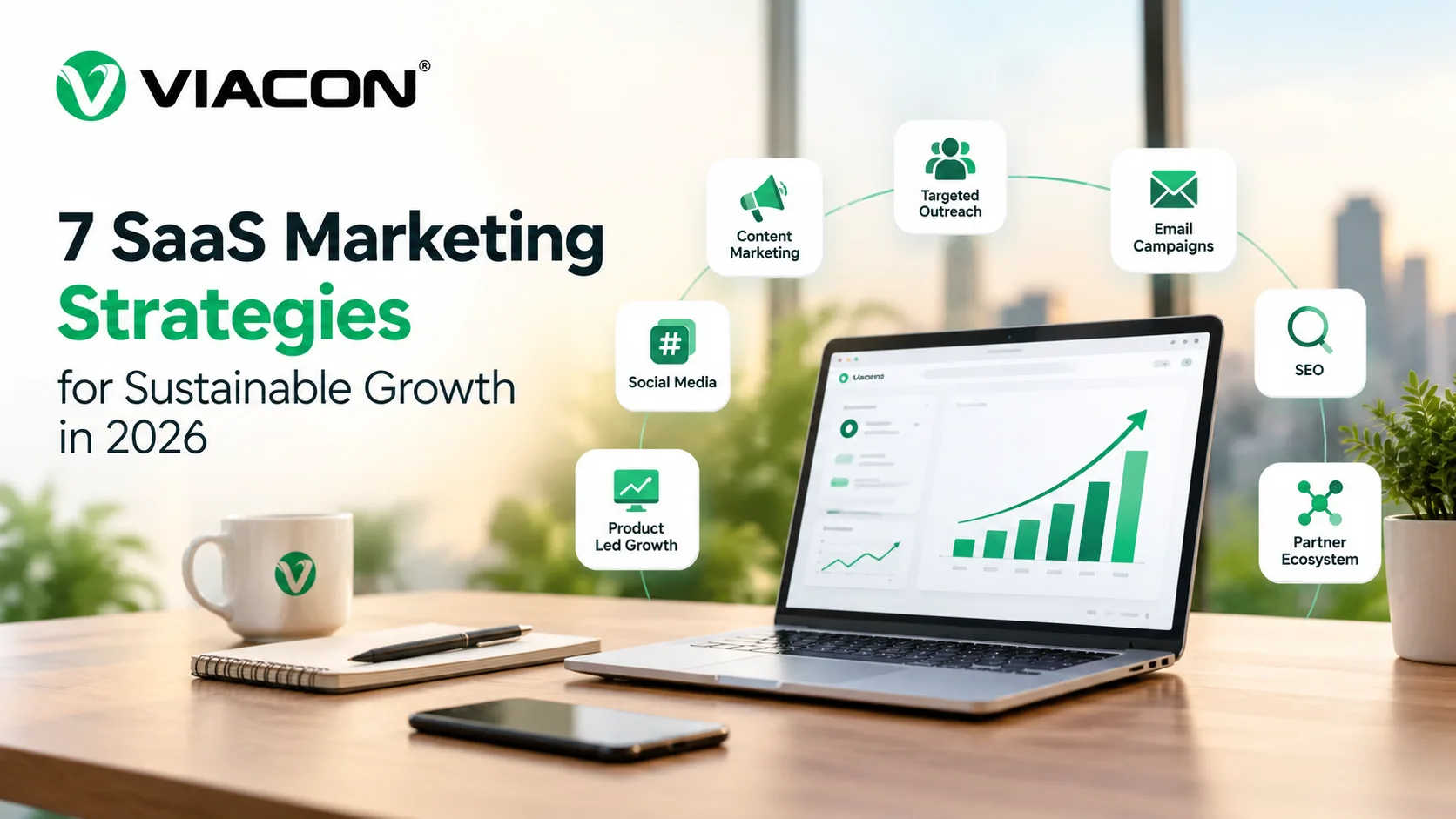
The following seven SaaS marketing strategies can help us build predictable growth without endlessly increasing the acquisition budget.
1. Improve Visibility Across AI Answer Engines
Software buyers no longer rely on traditional search alone. They may ask ChatGPT, Gemini, or another AI platform to compare products before visiting a vendor’s website.
Generative Engine Optimization, or GEO, helps you prepare content for this behavior.
Smart marketers now start by creating answer blocks for common buyer questions. They use headings, comparison tables, and structured product information. Most importantly, they also focus on the documentation page. They ensure that it’s easy to navigate.
Structured data can give search systems information about a page and its content. However, GEO does not guarantee visibility. The underlying content must still be accurate, original, and useful.
Another aspect of AI visibility of a SaaS is going through the brand mentions. It’s important to check where your brand is mentioned. Industry directories, review platforms, comparison articles, and public documentation can all influence how a product is understood. It’s the will to appear when a high-intent buyer is building a shortlist of similar solutions.
2. Build Product-Led Content
Many SaaS blogs are packed with broad “what is” articles. These pages may attract traffic, but they don’t always support SaaS lead generation.
Product-led content takes a different approach. It shows readers how to solve a real problem with the product.
Map important features to high-intent searches. Build integration pages, alternative pages, workflow templates, and implementation guides. Include relevant screenshots or short product demonstrations.
Then create Jobs-to-be-Done tutorials.
Users looking for SaaS tools aren’t focused on features. They want to know what benefits those tools can provide. Therefore, it’s well and good to publish a page on “What is Workflow Automation?” But a topic on how a small operations team can automate approval requests in 20 minutes holds more value for the target audience. A reader learns something really interesting and gets to see the product in action.
Every article should offer a natural next step. That might be starting a trial, using a template, or testing a specific feature.
3. Combine Product-Led Growth with Sales Support
Self-service works well when the product is simple to try. Larger accounts may still require security reviews, procurement discussions, or tailored onboarding.
We don’t need to choose between product-led and sales-led growth. We can connect them.
Track behavioral signals inside the product. These may include frequent logins, rapid feature adoption, team invitations, or repeated contact with account limits. Together, these actions can help identify Product-Qualified Leads.
Sales teams can then focus on users who have already experienced value.
This changes the conversation. Instead of making a cold introduction, the salesperson can ask, “We noticed your team is using the reporting workflow across several projects. Would consolidated administration make that easier?”
Use contextual chat and guided onboarding to support trial users. Keep human help available for complex questions. This hybrid model lets the product create momentum while sales removes buying friction.
4. Grow Through Ecosystems and Native Integrations
Sometimes the fastest way to reach new customers is to work with platforms they already trust.
Software marketplaces connected to Salesforce, Slack, HubSpot, and Zapier can give SaaS products access to established audiences. An integration also makes the product more useful within the customer’s existing workflow.
Start with the tools your best customers already use. Build dedicated integration pages around specific tasks, not vague compatibility claims.
“Connect our platform with your CRM” is forgettable.
“Automatically send qualified trial accounts to your CRM” explains the value.
Create joint webinars, workflow templates, and “better together” case studies with suitable partners. These assets can support SaaS customer acquisition while giving both brands something practical to share.
5. Align Pricing with Customer Value
A product isn’t always the solution. That’s something any aspiring SaaS product marketer must understand first. Pricing points, flexibility, ease of integration, and user experience are key deciding factors.
Not all SaaS users purchase with seat-based cost in mind. Some of them have API calls, transactions, contacts managed, or data processed.
However, before you change or set your pricing model for your SaaS, it’s best to evaluate what your clients value the most.
- Don’t pick a measure only because it’s easy to charge for.
- Ensure that the pricing model is easy to understand. The users shouldn’t wonder what to do next once they arrive on your page.
- Use tools such as calculators and dashboards to help users track their usage and limits.
Marketing should explain how costs grow alongside results. When users understand the relationship between usage and value, expansion feels less like an unexpected charge.
6. Publish Original Data and Benchmark Reports
Original research gives people a reason to reference us.
Look for anonymized patterns in product data. We might study adoption times, workflow completion rates, or common integration combinations. If internal data isn’t suitable, run a well-designed industry survey.
Explain the sample size and research method. Mention any limitations. This builds more trust than presenting a large number without context.
Turn one study into several assets. Publish the full report, an executive summary, visual charts and smaller insights for social posts. Give sales teams a short version they can share during conversations.
We can also pitch the strongest findings to relevant publications and industry newsletters. Useful proprietary data may earn citations, backlinks, and community discussions long after the original campaign ends.
7. Invest in Community-Led Growth and Dark Social
The best marketing is word-of-mouth, especially for SaaS. Therefore, one of your SaaS marketing strategies must include community-based marketing. Many buying decisions happen through users recommending your tool to other users.
These interactions later on translate into traffic flowing into the homepage and onto the landing page. These are conversations that matter, although they can’t be tracked, especially private messages.
The best strategy here would be encouraging community conversations regarding a SaaS product. Answering customer questions and product insights is also part of driving word-of-mouth for SaaS.
Create places where users can share templates, workflows, and honest feedback. A helpful community can help people stay engaged and also lead to word-of-mouth recommendations.
Include a How did you hear about us?” field on the right forms. Customer interviews can also show influences that tracking tools often miss.
Build a More Sustainable SaaS Growth Engine
Sustainable SaaS marketing isn’t about abandoning paid acquisition. It’s about reducing our dependence on it. We can begin by auditing our current ARR channels. Identify where prospects lose interest, where trial users fail to activate, and where existing customers stop expanding.
Then choose two or three strategies from this guide. Improve high-intent content, strengthen onboarding, or develop one valuable integration. Measure the outcome before adding another initiative.
That’s how these seven SaaS marketing strategies start compounding. Each improvement supports the next, creating a growth engine that becomes stronger instead of more expensive.