
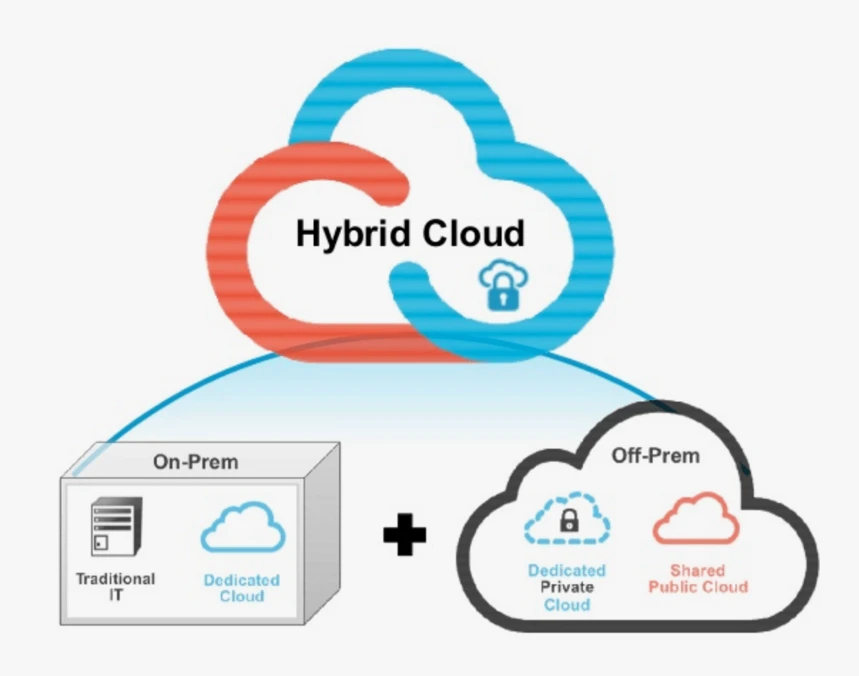
Managing data across different environments presents unique challenges for modern businesses. You need to know where your information lives and why it belongs there. Hybrid cloud systems combine private infrastructure with public cloud services. This results in a complex situation that requires particular regulations for where the data can be placed. Your data's location affects a wide range of issues, from performance to compliance.
The majority of organizations face difficulties as they treat the hybrid clouds as a traditional system. You must understand the specialized rules that govern data placement in these mixed environments. These rules are inapplicable to single-cloud or anywhere installations; they hold true only when you are working on multiple platforms at the same time.
Let's talk to understand in detail!
Why Data Placement Matters More in Hybrid Environments
Traditional cloud systems tend to adopt straightforward placement logic. Everything operates in one place under one set of guidelines. However, a robust Hybrid cloud infrastructure undermines this simplicity by forcing every workload to balance latency, cost, compliance, and control across multiple execution environments simultaneously.
The location of data where it is stored has a great influence on the performance of your applications. Moving data from one environment to another might not only be expensive but also a long process.

Rule 1: Sovereignty-Based Geographic Restrictions
Data sovereignty laws vary by country and region. Your hybrid cloud must respect these legal boundaries strictly.
Some data cannot leave specific geographic areas. Healthcare records in Germany must stay within German borders. Financial information in Singapore faces similar restrictions. These aren't suggestions but legal requirements.
Your placement rules need to enforce geography automatically:
- Flag data based on its origin country.
- Block transfers to non-compliant regions.
- Route storage requests to appropriate zones.
- Maintain audit trails of all location decisions.
Public clouds offer multiple regions globally. Your private infrastructure sits in fixed locations. The rules must map sensitive data to compliant storage options without manual intervention.
Rule 2: Latency-Driven Application Affinity
Applications perform best when data lives nearby. Hybrid clouds let you optimize this relationship precisely.
You can place frequently accessed data closer to the applications that need it. Real-time analytics tools should sit next to their data sources. Customer-facing applications benefit from edge locations near users.
Your placement rules should consider:
- Network distance between compute and storage.
- Expected access patterns for each dataset.
- Application performance requirements.
- User geographic distribution.
Moving a database closer to its primary application can cut response times dramatically. The same data might need copies in multiple locations. Your rules determine which copy serves which request.
With the global Hybrid Cloud market expected to surpass $578.72 billion by 2034, getting data placement rules right is becoming a core infrastructure requirement rather than an optimization.
Rule 3: Workload-Specific Storage Tiering
Different workloads need different storage characteristics. Hybrid clouds excel at matching workloads to ideal storage types.
Archive data belongs in cheap cold storage. Active databases need fast SSDs. Media files work well on object storage. Your rules should route data based on its usage profile.
Key factors for tier assignment include:
- Access frequency and patterns.
- Required retrieval speed.
- Data modification rate.
- Cost sensitivity.
- Retention requirements.
Private clouds often host performance-critical tiers. Public clouds handle variable or seasonal workloads efficiently. The rules orchestrate this distribution seamlessly.
Rule 4: Compliance-Driven Isolation Requirements
Certain data types cannot coexist with others physically. Regulatory frameworks demand strict isolation between different data categories.
Payment card data needs PCI-DSS-compliant environments. Healthcare information requires HIPAA controls. These requirements often mean separate infrastructure segments.
Your isolation rules must:
- Identify data classification levels automatically.
- Route sensitive data to compliant environments.
- Prevent unauthorized data mixing.
- Enforce encryption standards per category.
Hybrid clouds let you dedicate private infrastructure to highly sensitive data. Less critical information can live in public clouds. The rules maintain these boundaries rigorously.
Rule 5: Cost-Optimized Burst Handling
The business demand sees no constant throughout the year. Hybrid clouds handle variations quite elegantly by strategically leveraging the location of data.
You maintain baseline capacity in your private cloud. Overflow workloads burst into public cloud resources temporarily. The data needs to follow workloads appropriately.
Effective burst rules consider:
- Current private cloud utilization.
- Public cloud pricing models.
- Data transfer costs.
- Workload duration estimates.
Seasonal retail spikes demonstrate this perfectly. Your core customer database stays private year-round. Additional processing capacity and temporary data storage in public clouds during peak seasons.
The rules determine when bursting makes financial sense. They calculate the break-even point between expanding private infrastructure and using public resources. This optimization happens in real-time as demand changes.
Rule 6: Disaster Recovery Hierarchy
Business continuity depends on smart data replication across environments. Hybrid clouds provide multiple recovery options at different price points.
Not all data deserves the same recovery priority. Customer records need immediate restoration. Historical logs can wait longer. Your placement rules should reflect these priorities.
Recovery hierarchy rules include:
- RPO and RTO targets per dataset.
- Replication frequency requirements.
- Geographic separation for replicas.
- Failover automation triggers.
Critical data gets real-time replication to both private and public locations. Less important information uses periodic snapshots. The rules automate this differentiation completely.
Rule 7: Vendor Lock-In Prevention Through Portability
Hybrid clouds reduce dependence on single vendors. Your data placement rules should preserve this flexibility actively.
Proprietary storage formats trap data within specific platforms. Your rules should favor portable formats and open standards. This maintains your ability to move workloads between environments.
Portability-focused rules are enforced:
- Standard data formats across environments.
- API-based access patterns.
- Containerized application packaging.
- Cloud-agnostic storage interfaces.
You gain negotiating power when data moves easily. Vendors compete for your workload placement. The rules ensure you can execute migrations without massive re-engineering.
Conclusion
Hybrid cloud systems offer tremendous flexibility and power. That power comes with complexity that demands careful management. Data placement rules turn this complexity into a competitive advantage.
You now understand the seven critical rules that exist only in hybrid environments. Geographic sovereignty protects you legally. Start implementing these rules systematically in your environment. Begin with the highest-impact areas first. Your data will land in the right place at the right time automatically. You'll reduce costs while improving performance and compliance. That's the promise of properly managed hybrid cloud systems. Make these rules work for you starting today.