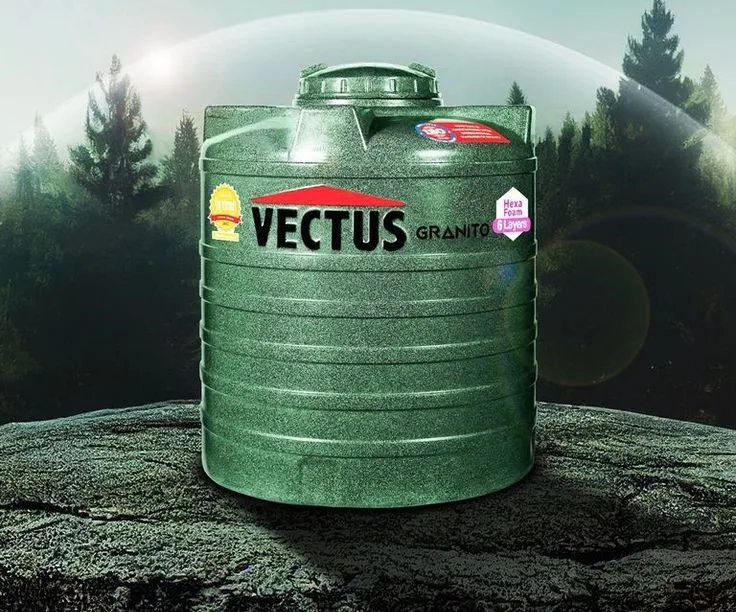
Water storage is an important requirement for homes, offices, commercial spaces, and other properties. While choosing a tank, people often focus on capacity and price, but construction also plays an important role. The number of layers used in a tank can influence its strength, protection, and suitability for different conditions.
A 6 layer water tank is designed with multiple layers, with each layer serving a specific purpose. This type of construction can provide a combination of strength, protection, and durability, making it suitable for different water storage requirements.
What Makes a Six-Layer Tank Different?
A multi-layer tank is not simply a single tank with additional material added randomly. The layers are generally designed to perform different functions.
Depending on the manufacturer's construction technology, individual layers may contribute to structural strength, UV protection, insulation, or maintaining the quality of the stored water.
The purpose of using multiple layers is to create a more comprehensive structure that can handle different external and internal conditions. This makes the construction an important feature to understand when comparing water storage products.
Understanding the Role of Different Layers
The exact purpose of each layer can vary between manufacturers and product designs. However, a six-layer structure may include layers designed to provide strength, protect the tank from sunlight, support insulation, and create a suitable inner surface for water storage.
The outer layers can help protect the tank against environmental exposure, while the inner layers may be designed with water storage in mind.
Because construction technologies can differ, it is useful to check the manufacturer's product information instead of assuming that every six-layer tank has exactly the same layer composition.
Better Protection Against Sunlight
Many tanks are installed outdoors, especially on rooftops. Continuous exposure to sunlight can affect materials over time, which makes UV protection an important feature.
A properly designed multi-layer tank can include layers that help provide protection against UV exposure. This can support the tank's durability when it remains outdoors for extended periods.
For households using tanks for water storage on rooftops, UV protection can therefore be a useful feature to consider while comparing products.
Added Structural Strength
Water is heavy, and a tank needs to hold its stored volume safely. The construction should therefore provide adequate strength to support regular use.
Multiple layers can contribute to the overall structure of the tank. Depending on the design, they may help improve resistance to everyday stress and support the tank's shape over time.
However, strength is influenced by more than just the number of layers. Material quality, manufacturing technology, wall thickness, and overall design also matter.
Helps With Temperature Management
Some multi-layer tanks are designed to provide insulation that can help reduce the impact of external temperature changes on the stored water.
This can be particularly useful for outdoor installations where the tank is exposed to direct sunlight and changing weather conditions.
The level of temperature protection depends on the specific construction and materials used. Therefore, it is important to look at the product specifications when this feature is a priority.
Suitable for Different Applications
The versatility of a six-layer design makes it suitable for several water storage applications. Homes are one of the most common places where these tanks may be used, but they can also be considered for other properties that require dependable storage.
The required capacity and tank design will depend on the application. A small household may need a different size from a commercial building or a property with higher daily water consumption.
This makes it important to select the product according to the actual requirement rather than choosing a model simply because it has six layers.
Choosing the Right Capacity
The number of layers does not determine how much water a tank can hold. Capacity is a separate factor and should be selected according to your storage needs.
Consider the number of people using the property, daily water consumption, availability of water supply, and the space available for installation.
Whether you are looking for tanks for water storage at home or for another application, choosing an appropriate capacity is just as important as selecting the right construction.
Consider the Installation Location
Where the tank will be installed can influence which features are most useful. Rooftop tanks may require stronger UV protection because of continuous exposure to sunlight.
In contrast, tanks placed in protected areas may have different environmental requirements.
Before purchasing, consider the available space, access for installation, surrounding conditions, and ease of future cleaning. This helps ensure that the selected tank is practical for the location.
Maintenance Still Matters
Even a well-constructed tank needs regular care. Cleaning the tank periodically helps maintain a suitable storage environment and allows you to check its internal condition.
The lid should remain properly closed, and the tank should be inspected for any visible signs of damage or leakage.
Easy access for cleaning can make maintenance simpler. When selecting a 6 layer water tank, look at the design of the lid and access points along with the construction itself.
Final Thoughts
A 6 layer water tank can offer a combination of structural strength, UV protection, and other useful features through its multi-layer construction. However, the benefits depend on how those layers are designed and the quality of the materials used.
When selecting tanks for water storage, consider capacity, location, material, construction, maintenance, and product specifications rather than focusing only on the number of layers.
Understanding these factors can help you choose a tank that fits your property's requirements and provides a practical solution for long-term water storage.