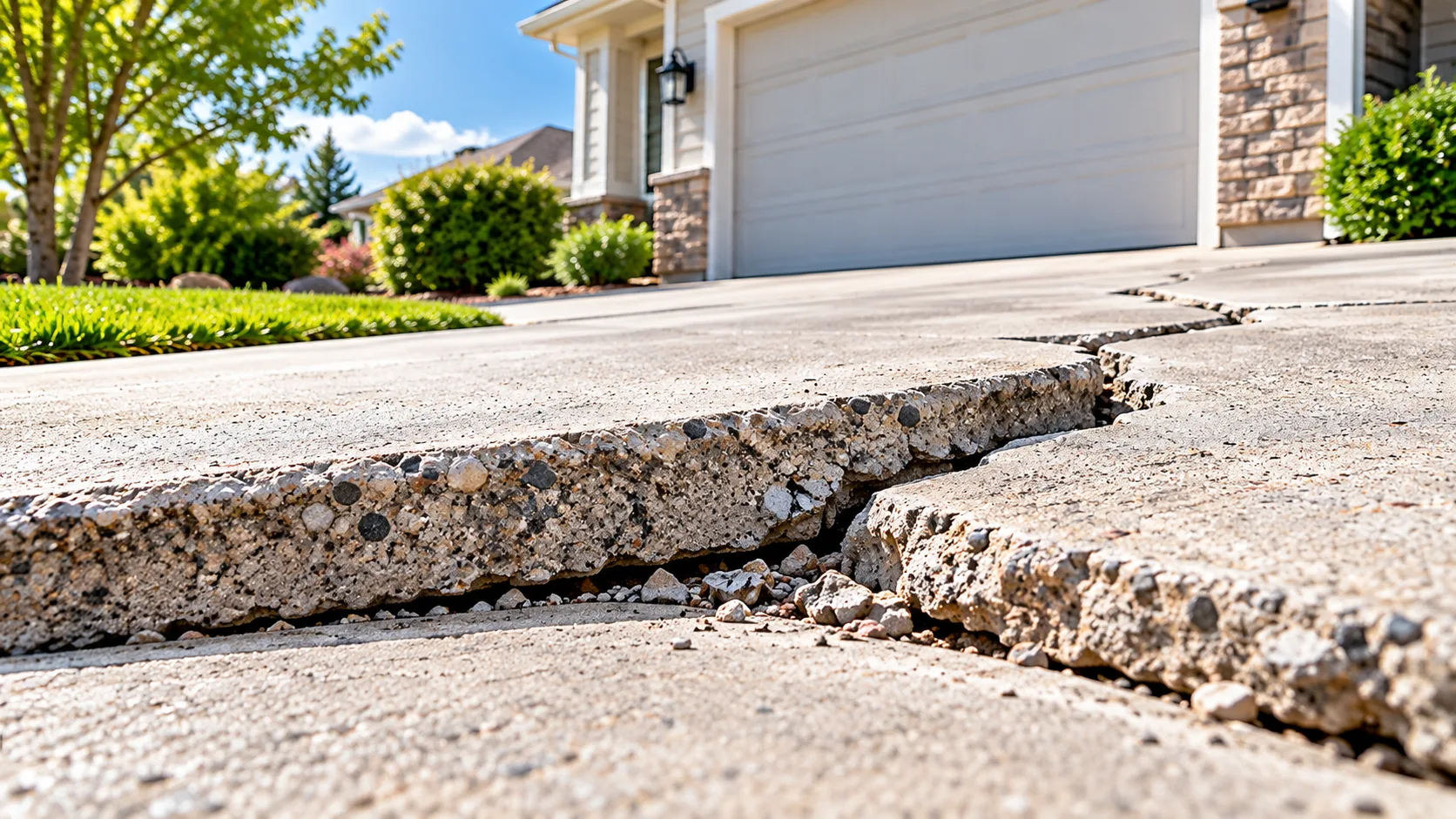
A concrete driveway is built to handle years of vehicle weight, weather changes, and daily use. Over time, however, small issues can develop beneath and on the surface that signal a need for repair. Recognizing these signs early can help property owners address problems before they grow more serious. This article outlines five common indicators that a driveway may need concrete driveway repair, including when cracked driveway repair becomes necessary.
Why Driveways Develop Problems
Concrete driveways sit on top of soil that can shift due to moisture changes, freeze and thaw cycles, and erosion. When the soil beneath the slab settles unevenly, the concrete above it can crack, sink, or separate from nearby structures. Understanding these underlying causes helps explain why certain warning signs appear and what they typically mean.
Sign 1: Visible Cracks in the Surface
Cracks are one of the most common signs that a driveway may need attention. Small hairline cracks can form due to normal concrete curing and are not always a serious concern. However, wider cracks, especially those that continue to grow or connect with one another, often point to movement in the soil beneath the slab.
When Cracks Signal a Bigger Issue
Cracks wider than a quarter inch, or cracks where one side sits higher than the other, usually indicate that cracked driveway repair is needed. These wider cracks allow water to seep beneath the slab, which can worsen soil erosion and lead to further settling if left unaddressed.
Sign 2: Uneven or Sunken Sections
A driveway with sections that sit at different heights is a clear sign that the soil underneath has settled unevenly. This unevenness can create trip hazards for pedestrians and may cause vehicles to bounce or scrape when driving over the affected area.
Sunken sections often develop gradually, so property owners may not notice the change until it becomes pronounced. Checking the driveway periodically for height differences between slab sections can help catch this issue early, before it requires more extensive concrete driveway repair.
Sign 3: Water Pooling on the Surface
A properly built driveway is sloped to direct rainwater toward the street or a designated drainage area. When sections of the driveway settle, low spots can form where water collects instead of draining away. Standing water left on concrete for extended periods can accelerate cracking and contribute to further soil erosion beneath the slab.
Pooling water is also a practical concern in colder climates, where standing water can freeze and create slippery conditions on the driveway surface.
Sign 4: Gaps Near the Garage or Foundation
Gaps or separations where the driveway meets a garage floor, foundation, or sidewalk often indicate that one section has settled while the adjoining structure has not. These gaps allow water and debris to collect at the joint, which can worsen the underlying soil condition over time.
This type of settling is common near garages, since the soil around a foundation is sometimes compacted differently than the soil beneath the rest of the driveway. Addressing these gaps early through concrete driveway repair can prevent the problem from spreading to a larger section of the surface.
Sign 5: Crumbling or Flaking Concrete
Surface deterioration, sometimes called spalling, appears as small chips, flakes, or a rough, crumbling texture on the concrete. This is often caused by freeze and thaw cycles, exposure to deicing salts, or moisture that has penetrated the surface over time.
While minor spalling may only affect the top layer of concrete, widespread flaking can weaken the structural integrity of the slab. In these cases, a professional assessment can determine whether surface repair is sufficient or whether more extensive cracked driveway repair is needed.
What to Do After Spotting These Signs
Once a property owner notices one or more of these signs, a professional evaluation is the recommended next step. A qualified technician can inspect the driveway, identify the underlying cause of the damage, and recommend an appropriate repair method.
Providers such as Lift It Pro typically begins with a site visit to assess the extent of settling or cracking before recommending a specific approach. Depending on the condition of the slab, options may include:
- Sealing minor cracks to prevent water intrusion
- Raising sunken sections through slab lifting methods
- Patching or resurfacing areas with surface-level damage
- Replacing sections of concrete that are too damaged to repair
Preventing Future Driveway Damage
While not every issue can be avoided, a few practices can help reduce the likelihood of future problems. Keeping gutters and downspouts directed away from the driveway can limit excess water near the slab edges. Sealing the concrete periodically can also help protect the surface from moisture and deicing salt damage during winter months.
Regularly checking the driveway for early signs of cracking or settling allows property owners to address small issues through concrete driveway repair before they develop into larger, more disruptive problems.
Conclusion
Cracks, uneven sections, pooling water, gaps near structures, and surface flaking are five common signs that a driveway may need repair. Recognizing these signs early allows property owners to seek concrete driveway repair before minor issues turn into more significant damage. A professional evaluation remains the most reliable way to determine the right repair method, whether that involves sealing, cracked driveway repair, or a more comprehensive approach.