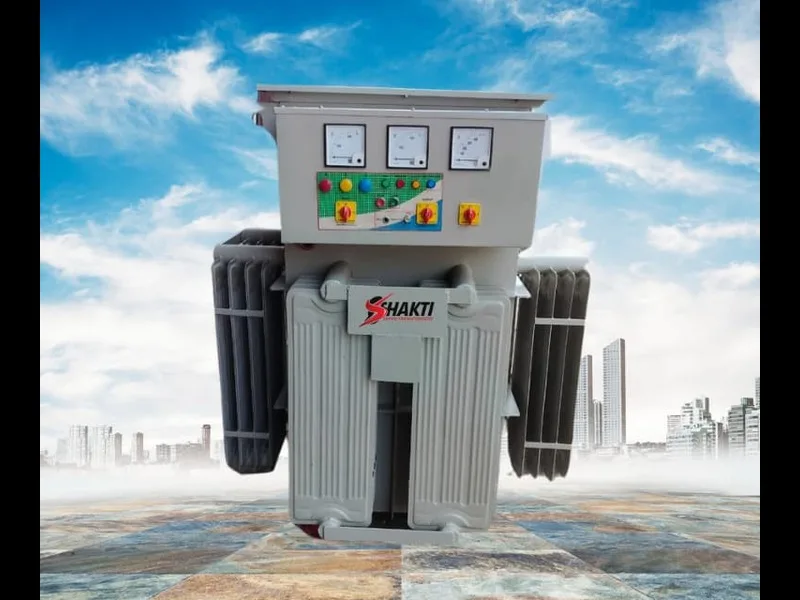
In a healthcare setting, power quality is a matter of reliability and patient trust. A diagnostic machine that resets mid-test, a sterilizer that fails to reach temperature, or a refrigerator holding reagents that trips on a voltage spike can all disrupt the day's work. For single-phase clinics and small labs, a 5 Kva Servo Stabilizer is a practical way to give sensitive equipment a steady supply. This guide explains how voltage problems affect healthcare equipment, how to size a stabilizer for a clinic, and what to check before buying.
Why Healthcare Equipment Needs Stable Voltage
Clinical and laboratory equipment combines motors, heating elements, compressors and precision electronics. Each reacts differently to poor voltage.
- Imaging and diagnostic devices: electronic boards and power supplies can reset, show errors or fail early under spikes and sags.
- Analyzers and lab instruments: unstable voltage can disturb readings and force repeat runs.
- Autoclaves and sterilizers: heating elements and controllers need consistent voltage to reach and hold set conditions.
- Refrigerators and freezers: compressors suffer under low voltage and during rapid restarts after outages.
- Dental chairs and compressors: motors and electronics both depend on steady supply.
- Computers, printers and networking: data loss and corrupted files often follow sudden dips.
Replacing a damaged board or compressor is expensive, and downtime means postponed appointments and delayed reports.
Why a Servo Stabilizer Is a Good Match
Clinic loads are a mix of sensitive electronics and motor-driven equipment. Servo technology handles this mix well:
- Smooth, stepless correction: no sudden voltage jumps that could disturb electronics.
- Tight regulation: output typically around ±1% to ±3%.
- Overload tolerance: compressors and motors can start without tripping the stabilizer.
- Ability to cope with prolonged low voltage: useful in areas where supply sags for hours.
Relay-based units correct in steps and can introduce small voltage jumps with each switch. For equipment where stability matters, smooth correction is a clear advantage.
The Case for Single Phase at 5 kVA
Many clinics, polyclinics, dental practices, pathology collection centers and small diagnostic labs operate on single-phase supply. A 5 Kva Single Phase Stabilizer can protect a dedicated distribution board feeding clinical equipment, or a defined group of circuits.
Typical loads suited to this size:
- Consultation room equipment, computers and printers
- Dental chair, suction unit and small compressor
- Basic diagnostic and monitoring devices
- Laboratory refrigerators and incubators
- Small sterilizers and heating equipment
- Air conditioning for a small clinic space
- Lighting and general sockets
Larger hospitals and imaging suites with heavy equipment typically need higher capacities or three-phase units. For smaller setups, 5 kVA is a common and economical choice.
Sizing a Stabilizer for a Clinic
Step 1: List the equipment that runs togetherInclude only devices that operate at the same time during a normal busy hour.
Step 2: Read each nameplateNote the power in watts or the current in amps. Equipment manuals also list input requirements.
Step 3: Convert to kVAStabilizers are rated in kVA. Many buyers search for a Servo Stabilizer 5 Kilowatt model, but the correct approach is:
kVA = kW ÷ power factor
At a power factor of 0.8, a 4 kW load needs 5 kVA. Equipment with motors or older power supplies often has a power factor below 1.
Step 4: Allow for starting surgesCompressors and motors draw extra current at startup. Confirm the stabilizer can handle it.
Step 5: Keep a marginPlan to load the stabilizer to no more than about 75–80% of capacity. This keeps it cool and extends its life.
Worked Example: A Small Diagnostic Lab- Computers, printers and network gear: 0.5 kW
- Lab refrigerator: 0.3 kW
- Incubator: 0.4 kW
- Small analyzer: 0.6 kW
- Sterilizer: 1.2 kW
- Split air conditioner (1.5 ton): 1.8 kW
The combined running load comes to about 4.8 kW if everything operates at once, which at 0.8 power factor is 6 kVA. In practice, the sterilizer and air conditioner may not both run continuously, but a careful clinic would either size up or split the loads, giving the air conditioner its own stabilizer and keeping the 5 kVA unit for the clinical equipment. This shows why load listing matters before you buy.
Separate Circuits for Sensitive Equipment
A good practice in healthcare setups is to separate loads:
- Clinical and diagnostic equipment on one stabilized circuit
- Air conditioning on its own stabilizer
- General lighting and sockets on another, or on mains if acceptable
This stops large motor starts from disturbing sensitive instruments, and it makes troubleshooting simpler.
Power Cuts Are a Different Problem
A stabilizer corrects voltage when power is present. It does not supply power during an outage. For equipment that must not lose power, such as data systems or certain devices, pair the stabilizer with a UPS or backup power system. Sensitive equipment may also benefit from surge protection devices as a further layer. Always follow the equipment manufacturer's guidance on power requirements.
Features to Look For
When shortlisting stabilizers for a clinic or lab:
- Wide input range: cover the lowest and highest voltage you measure at the site.
- Accurate output: tight regulation protects electronics.
- Pure copper windings: better efficiency and cooler operation.
- Reliable brush and servo assembly: the main wear parts should be robust.
- Full protections: overload, short circuit, high and low cut-off, and a time delay for compressor loads.
- Bypass option: lets you keep equipment running on mains during stabilizer service.
- Digital display: shows input and output voltage clearly.
- Air-cooled, quiet operation: suited to indoor, patient-facing environments.
Understanding the Cost
Budgeting begins with comparing a Servo Stabilizer 5 Kva Price between suppliers. Differences usually come from:
- Input voltage range and correction capability
- Copper quantity and grade
- Quality of the control card and display
- Protections and bypass features
- Build quality, finish and cooling design
- Warranty period and service support
For a healthcare setting, the relevant comparison is the cost of failure. A stabilizer that protects an analyzer or compressor for years pays for itself many times over. Request written specifications and warranty terms, and share your input voltage range and equipment list so the quotation matches your needs.
Installation Guidelines
- Select a suitable location: a dry, ventilated, dust-free space away from patient areas where possible.
- Provide airflow: leave clearance on all sides.
- Keep away from moisture and heat: avoid sinks, sterilization areas with steam, and direct sunlight.
- Wire properly: correctly rated cables, an input breaker and solid earthing.
- Test before loading: confirm stable output, then connect equipment gradually.
- Hire a qualified electrician for installation.
- Label the circuit, so staff know which sockets are stabilized.
Simple Maintenance Plan
- Weekly: glance at the display and indicators.
- Monthly: wipe the exterior and clear the vents.
- Every 3–6 months: clean internal dust.
- Yearly: inspect the carbon brush, tighten connections and lubricate moving parts.
- When something changes: unusual noise, heat or a drifting output reading means it is time for a service check.
Frequently Asked Questions
Can one stabilizer run all clinic equipment?
Only if total load stays within capacity with a margin. For mixed setups, separating air conditioning from clinical equipment is often wiser.
Is it noisy for a patient area?
Servo units make only a light motor sound while correcting. Place the unit outside the consultation room if quiet is a priority.
Do I still need a UPS?
For equipment that cannot tolerate any interruption, yes. A stabilizer and a UPS solve different problems.
How do I check whether my supply needs a stabilizer?
Measure voltage at different times of day for a week, including peak evening hours.
What happens if voltage goes outside the range?
The cut-off protection disconnects the load to prevent damage, and reconnects after the delay once voltage returns to a safe level.
Common Mistakes
- Putting every load, including air conditioners, on one overloaded stabilizer
- Ignoring starting current for compressors
- Skipping the voltage measurement before buying
- Installing in a damp, dusty or hot spot
- Choosing by price alone and ending up with weak components
- Forgetting maintenance until a failure occurs
Conclusion
Healthcare equipment depends on clean, steady power. Measure your supply, list your loads with care, separate sensitive circuits from heavy motors and choose a stabilizer with accurate regulation, solid copper construction and proper protections. For single-phase clinics and small labs, a 5 kVA servo stabilizer provides dependable protection and long service life at a sensible investment.
To review specifications and request a quotation, visit the 5kva Stabilizer Single Phase page at Shakti Servo.