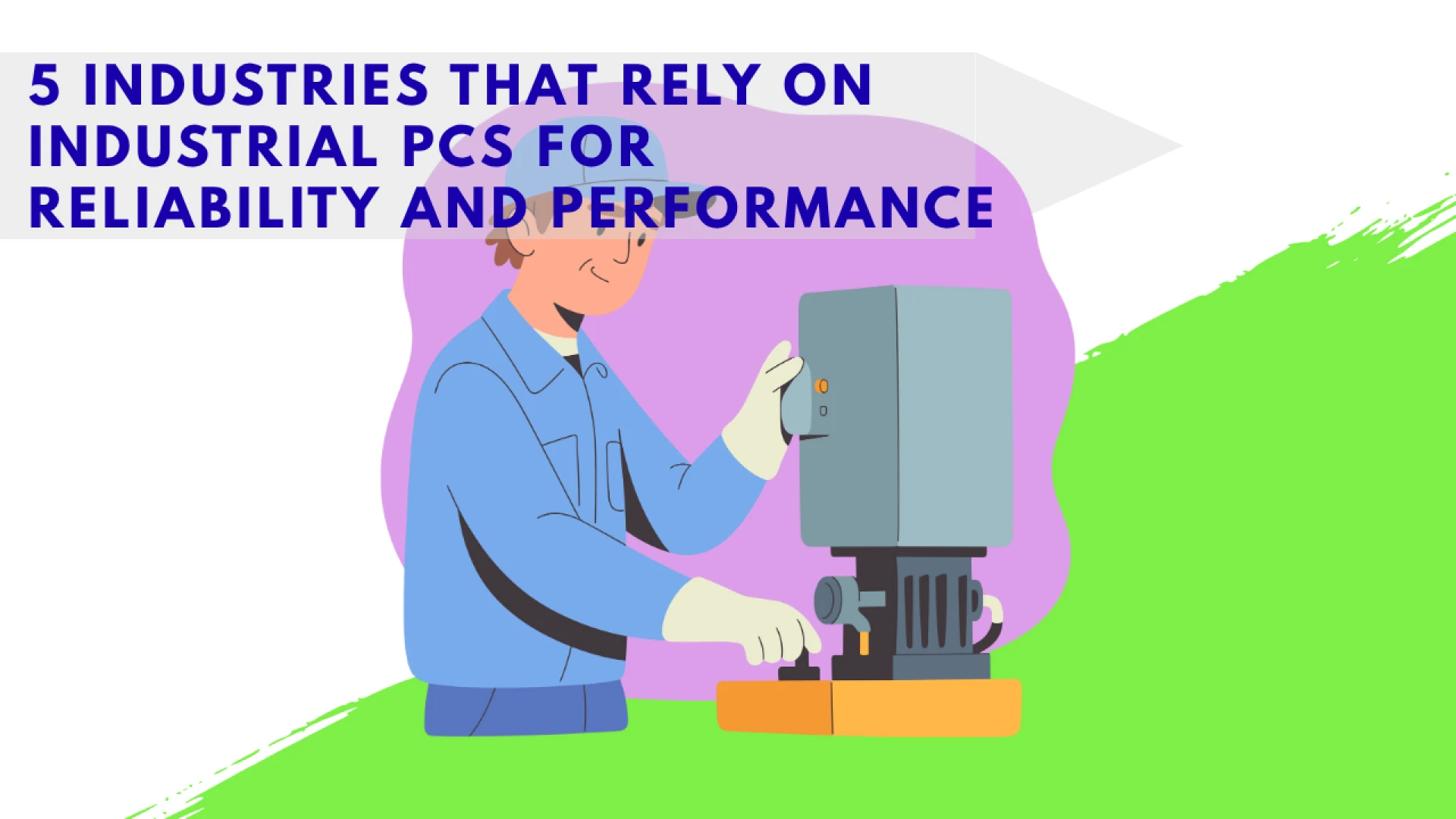
In the digital era of Industry 4.0, the foundation of modern, efficient operations is reliable computing power. While standard desktop computers are suitable for office tasks, they simply cannot withstand the rigorous, often harsh, environments of a factory floor, power plant, or logistics hub. This is where the industrial pc (IPC) steps in. Unlike its commercial counterpart, an IPC is a purpose-built, rugged computer engineered for 24/7, mission-critical operations, enduring extremes of temperature, dust, vibration, and moisture.
For an industrial powerhouse like Thailand, with its ambitious "Thailand 4.0" initiative focusing on high-tech and innovation, the adoption of IPCs is vital. These devices serve as the "brains" of automated systems, providing the necessary processing capability, I/O connectivity, and guaranteed uptime to execute real-time control, data acquisition, and machine vision applications. Their reliability directly translates to reduced downtime, improved productivity, and higher quality control across the nation’s key economic sectors.
5 Key Thai Industries Using Industrial PCs
Thailand's core manufacturing and infrastructure sectors are rapidly adopting industrial PCs to drive automation and digital transformation. The following five industries rely heavily on the unique features of IPCs to maintain a competitive edge.
1. Automotive Manufacturing
Thailand is often referred to as the "Detroit of Asia," being the largest automotive hub in Southeast Asia and a major producer and exporter of vehicles and auto parts. The precision and scale required in this industry demand highly reliable computing at every stage of the production line.
Quality Control and Machine Vision
In the paint shop or assembly line, even minor defects are costly. IPCs are essential for hosting machine vision systems that perform high-speed, automated quality inspections. Their powerful processors handle complex image processing algorithms in real-time, instantly identifying and flagging minute flaws in welding, paint finishes, or component placement. Their fanless design prevents dust and debris—common in automotive plants—from entering the unit and causing failure, ensuring continuous, error-free operation.
Robotics and Automation Control
Automated Guided Vehicles (AGVs) and complex robotics, fundamental to modern assembly lines, are often controlled by embedded or box-style IPCs. These units communicate with numerous sensors and actuators, managing complex motion control sequences with millisecond precision. The IPC’s ability to operate in high-vibration environments is non-negotiable for controllers mounted directly onto machines or robotic arms.
2. Electronics and Electrical Appliances (EE)
As a global leader in electronics manufacturing—particularly in hard disk drives (HDD) and integrated circuits (IC)—Thailand’s EE sector requires pristine, highly automated production environments.
Cleanroom Operations and Process Monitoring
The fabrication of semiconductors and ICs takes place in ultra-clean environments where airborne particles can destroy products. IPCs are crucial here, often deployed as Panel PCs (display and computer integrated) that are flush-mounted. Their sealed, fanless enclosures and high IP ratings (Ingress Protection) prevent the release of particles and protect the internal components from the chemical vapors used in processing, guaranteeing process stability and product integrity.
Data Acquisition and Edge Computing
To enable the smart factory vision, IPCs collect massive amounts of data from thousands of production sensors (IoT devices). They act as edge computing gateways, processing this data locally for immediate analysis and control adjustments. This real-time processing capability is vital for optimizing production yields and detecting micro-faults before they escalate.
3. Food and Beverage Processing (F&B)
The Thai F&B industry—from seafood processing to beverage bottling—is subject to stringent hygiene and temperature control regulations. The operating environments are routinely exposed to high humidity, water jets (for cleaning), and drastic temperature changes (refrigeration areas).
Hygienic Human-Machine Interface (HMI)
In preparation and packaging areas, industrial Panel PCs are used as HMIs for process control. These typically feature stainless steel chassis and high IP ratings (e.g., IP65/IP66) to withstand frequent washdowns with detergents and high-pressure water. This durability ensures operators can safely and reliably monitor and adjust mixing temperatures, conveyor speeds, and packaging weights without risk of equipment failure or contamination.
Cold Storage and Logistics Management
For managing vast cold storage facilities, IPCs are used for inventory tracking, temperature monitoring, and warehouse management systems. Their wide operating temperature range allows them to function reliably inside freezer rooms where standard PCs would fail due to condensation or cold-induced component stress, ensuring the food safety and integrity of perishable goods.
4. Logistics and Transportation Infrastructure
Thailand's central position in ASEAN and its extensive logistics network, including major deep-sea ports and industrial parks, is a key economic driver. Industrial PCs are critical for managing the movement of goods and ensuring smooth operational flow.
Port and Terminal Automation
At Thailand’s major international ports, IPCs are installed on container cranes and yard vehicles. They provide the control and communication backbone for real-time container tracking, inventory management, and crane operation. Their resistance to constant vibration, shock, and the corrosive, high-salinity environment near the sea ensures continuous operation, which is essential for minimizing costly delays in global supply chains.
Fleet Management and Digital Signage
Rugged IPCs are used for on-board diagnostics and fleet management in heavy-duty logistics vehicles. They also power large-scale digital signage and control systems in major transportation hubs, providing reliable information delivery and traffic control under all weather conditions.
5. Energy and Utility Sector
The reliability of a nation’s power grid and utilities is paramount. From power generation plants to distribution substations, the operational environment is often characterized by high electromagnetic interference (EMI), extreme heat, and the absolute need for uninterrupted service.
SCADA and Remote Terminal Units (RTUs)
Industrial PCs form the core of Supervisory Control and Data Acquisition (SCADA) systems in power plants (including thermal and renewable energy facilities). They process data from countless sensors, control critical machinery like turbines and pumps, and enable real-time monitoring of energy flow. The robust design and EMI shielding of IPCs are crucial for stable operation amidst high electrical noise.
Substation Automation
In electrical substations, where environmental control is minimal and conditions are severe, fanless IPCs are used as Data Concentrators and controllers. Their enhanced surge protection and high reliability ensure that critical grid operations remain functional, even during adverse weather or power fluctuations, supporting the overall stability of Thailand’s energy infrastructure.
Conclusion
The convergence of operational technology (OT) and information technology (IT) is defining the future of Thailand's industrial landscape. The shift to a digital economy, marked by smart factories, advanced logistics, and robust utility management, has elevated the industrial pc from a niche component to an indispensable strategic asset. Its superior reliability, rugged design, and computational power ensure that the country’s critical industries can execute complex automation and data-driven tasks 24/7, securing continuous productivity, quality, and a competitive edge in the global market. As Thailand 4.0 progresses, the reliance on these durable computing workhorses will only deepen.
FAQs
What is the main difference between an Industrial PC and a Commercial PC?
The main difference is durability and design purpose. A Commercial PC is designed for a clean office environment and intermittent use. An Industrial PC is engineered with a rugged chassis, fanless cooling, wide temperature tolerance, and resistance to shock, vibration, dust, and moisture, ensuring reliable 24/7 operation in harsh industrial settings like factory floors or substations.
Why do Industrial PCs often have a fanless design?
The fanless design is a key feature that significantly boosts reliability. By replacing traditional fans with heatsinks and heat pipes, the IPC eliminates a major point of failure—moving parts—while also preventing dust, dirt, and moisture from being drawn into the enclosure. This makes the unit completely sealed and suitable for use in dusty manufacturing or wet food processing environments.
How does an Industrial PC support Thailand’s Industry 4.0 goals?
IPCs are the key enablers of smart factories under Industry 4.0. They facilitate the connectivity and processing power required for the Industrial Internet of Things (IIoT), real-time data analytics (edge computing), and advanced automation (robotics and machine vision). By providing reliable computing close to the machinery, IPCs allow Thai companies to optimize processes, improve quality, and reduce downtime.
What types of Industrial PCs are commonly used in Thai factories?
The two most common types are Box PCs (compact, standalone computers used for control and data aggregation) and Panel PCs (all-in-one units with an integrated display, often touchscreen, used as Human-Machine Interfaces or HMIs). Embedded PCs are also widely used, often built directly into machinery for specific control tasks.
How do Industrial PCs contribute to quality control in the automotive sector?
In the automotive sector, IPCs are used to run high-speed machine vision applications. They process data from industrial cameras to perform automated quality checks—like verifying weld integrity or inspecting paint finish—in real-time. This reduces human error, ensures consistency, and allows manufacturers to maintain the high quality standards required for global export.