
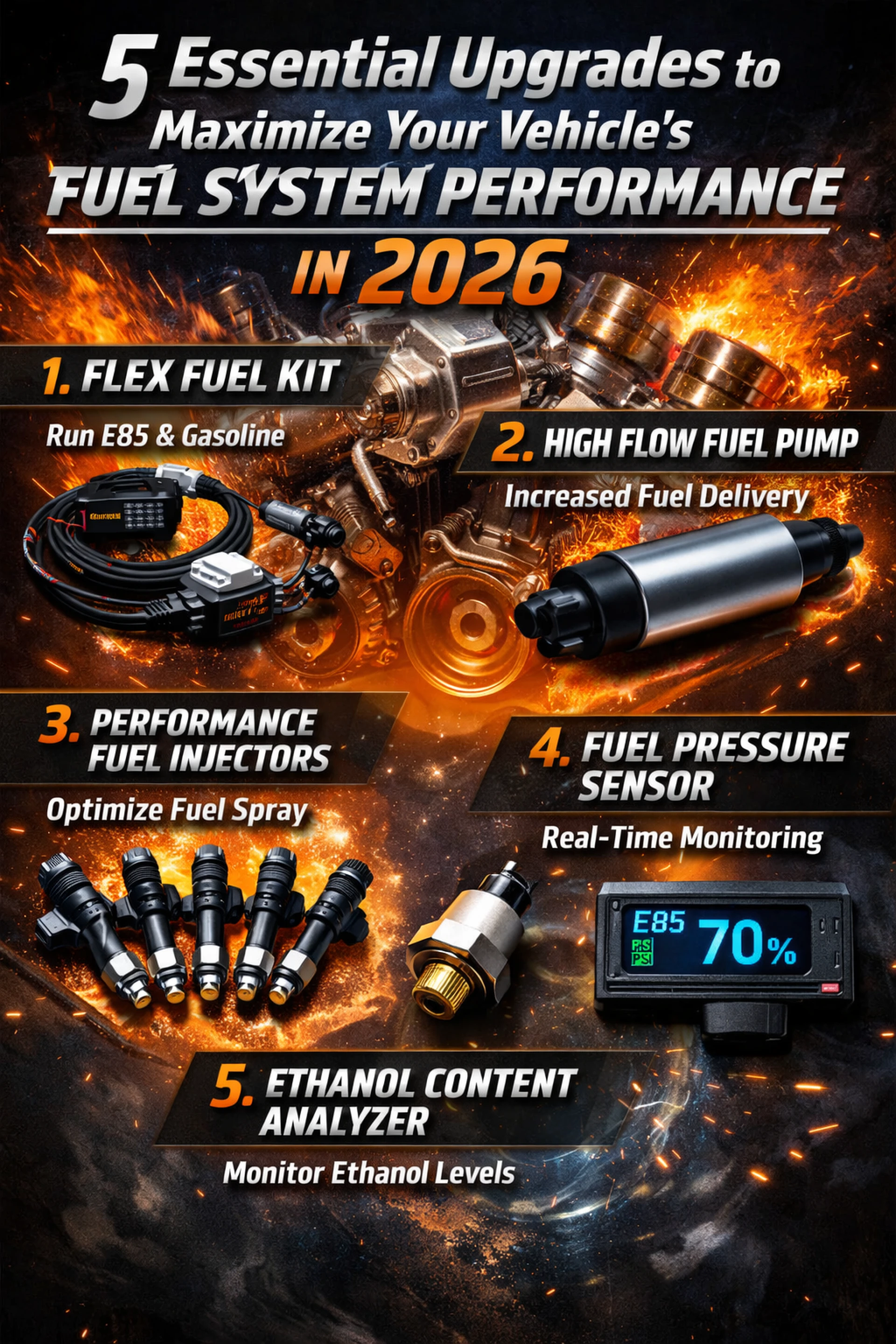
For car enthusiasts and performance-focused drivers, the engine is only as good as the fuel system that supports it. Even the most finely tuned engine can underperform if it isn’t getting the right amount of fuel at the right time. As vehicles become more advanced and performance builds more extreme, upgrading your fuel system has never been more critical. In 2026, there are several key upgrades that can dramatically improve engine performance, reliability, and efficiency. Here are five essential fuel system upgrades every automotive enthusiast should consider.
1. High-Flow Fuel Pumps
A high-flow fuel pump is the cornerstone of any performance fuel system. Stock fuel pumps are generally designed to meet the manufacturer’s specifications, which are adequate for daily driving but often fall short in performance applications. When you increase horsepower, add turbochargers, or switch to alternative fuels like ethanol blends, your engine requires more fuel than a stock pump can supply.
Upgrading to a high-flow fuel pump ensures that your engine receives a consistent supply of fuel under all operating conditions. This not only supports increased horsepower but also prevents lean conditions that could lead to engine knock or damage. Modern high-flow pumps are engineered for durability, efficient fuel delivery, and compatibility with a variety of fuel types, making them essential for high-performance builds.
Benefits:
- Reliable fuel delivery at high RPMs
- Supports high-horsepower and turbocharged engines
- Compatible with ethanol and high-octane fuels
2. Flex Fuel Conversion
Flex fuel systems are becoming increasingly popular as more drivers look to take advantage of alternative fuels like E85 ethanol blends. These systems allow vehicles to run on a variety of fuel types without manual adjustments, providing both convenience and performance benefits.
A flex fuel conversion typically includes sensors that monitor ethanol content and adjust the engine’s fuel mapping accordingly. By running ethanol blends, which have a higher octane rating than regular gasoline, engines can often achieve higher power outputs safely. Flex fuel systems are particularly beneficial for forced-induction engines that require precise fuel management to avoid knock and maximize performance.
Advantages of flex fuel upgrades:
- Unlock higher horsepower potential with ethanol blends
- Automatically adjusts fuel delivery for optimal engine performance
- Reduces risk of engine knock or detonation
3. Ethanol Content Sensors
For those running ethanol or blended fuels, understanding the exact ethanol content is crucial. Engines tuned for gasoline may respond differently to ethanol, so monitoring the fuel mixture ensures optimal performance and engine safety.
Ethanol content sensors provide real-time feedback to the engine control unit (ECU), allowing dynamic adjustments to air/fuel ratios. This keeps the engine operating efficiently under varying driving conditions, from daily commuting to high-performance racing scenarios.
Key benefits of ethanol content sensors:
- Accurate real-time monitoring of ethanol content
- Optimizes fuel delivery for efficiency and performance
- Protects engine from running too lean or too rich
Even for moderately tuned vehicles, having precise ethanol data can prevent costly engine issues while improving overall driveability.
4. Upgraded Fuel Rails and Injectors
Performance Fuel injectors and rails are the next step in ensuring your engine gets the proper fuel supply. Stock injectors and rails may limit fuel flow in high-performance builds, leading to inconsistent combustion, reduced power, or even engine damage at high RPMs.
Upgraded fuel rails improve fuel flow efficiency and distribution, while high-performance injectors deliver fuel more accurately and consistently. When combined with a high-flow pump and flex fuel conversion, these upgrades create a robust system capable of supporting extreme horsepower and aggressive tuning.
Benefits of upgrading rails and injectors:
- Enhanced fuel atomization for better combustion
- Supports increased fuel demands at high RPMs
- Reduces the risk of fuel starvation during intense driving
These components ensure that your engine receives the exact amount of fuel needed at every moment, which translates directly into improved performance, reliability, and throttle response.
5. Fuel Management Systems
Even the best hardware upgrades need proper management to deliver optimal results. Modern fuel management systems allow drivers and tuners to monitor and adjust fuel delivery, pressure, and mapping to suit their engine setup.
A quality fuel management system integrates seamlessly with upgraded pumps, injectors, and ethanol sensors. It provides real-time monitoring and tuning options that keep your engine running safely while maximizing performance. These systems often feature user-friendly interfaces, making it easier for enthusiasts to fine-tune their vehicles without specialized tools or software.
Why fuel management systems matter:
- Fine-tunes engine performance for maximum efficiency
- Monitors fuel pressure, flow, and mixture in real time
- Ensures all fuel system upgrades work together seamlessly
By combining upgraded hardware with intelligent management, drivers can extract the full potential from their vehicles while minimizing risk.
Conclusion
Upgrading your fuel system is one of the most effective ways to enhance vehicle performance. In 2026, the technology and products available make it easier than ever to achieve consistent, reliable, and powerful results. From high-flow pumps to ethanol sensors and advanced fuel management systems, these five upgrades form the foundation of any serious performance build.
Investing in your fuel system isn’t just about increasing horsepower; it’s about protecting your engine, improving efficiency, and ensuring that your vehicle performs at its best under all conditions. By prioritizing these essential upgrades, automotive enthusiasts can enjoy a more powerful, responsive, and reliable driving experience.
Whether you’re tuning a daily driver or a race-ready machine, a well-designed fuel system is the key to unlocking your engine’s true potential.