
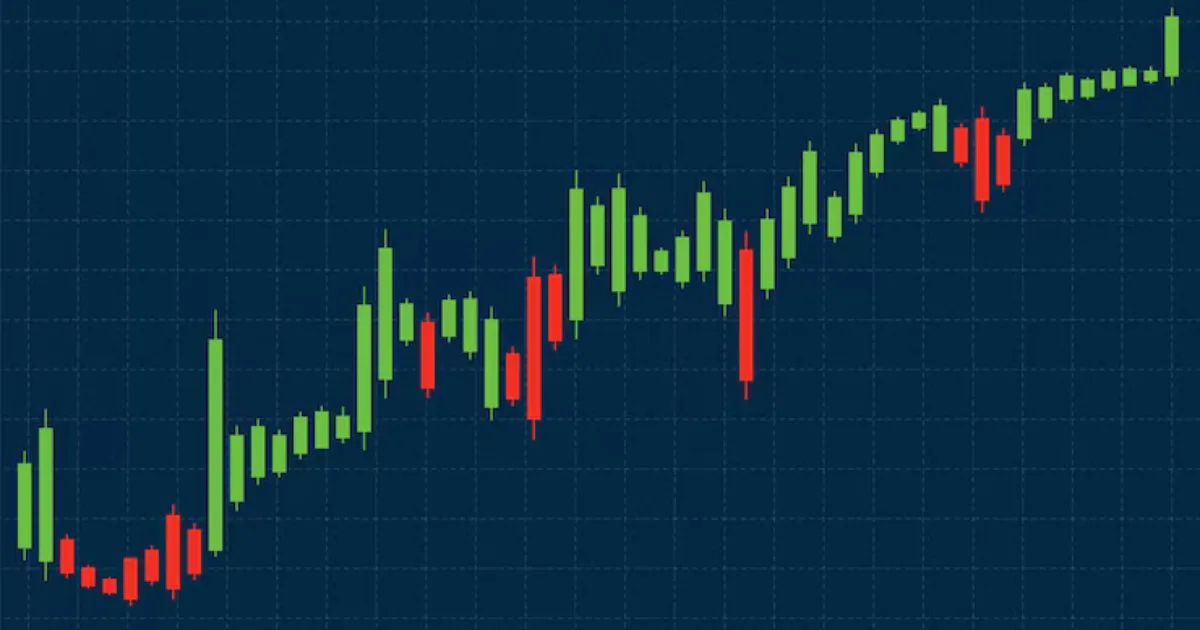
For many beginners, stock charts can look confusing at first. Prices move up and down constantly, and it can be difficult to understand whether a stock is showing strength, weakness, or simply moving sideways.
Chart patterns are formations created by price movements on a chart. Technical analysts use these patterns to understand market sentiment and identify potential trading opportunities. While no pattern guarantees future price movement, they can help traders make more structured decisions when combined with volume analysis, risk management, and broader market context.
Learning chart patterns is often one of the first steps in technical analysis because they provide a visual way to understand how buyers and sellers interact in the market.
Let's look at some of the most commonly used chart patterns that every beginner should know.
1. Head and Shoulders Pattern
The Head and Shoulders pattern is one of the most widely recognized reversal patterns in technical analysis. It typically appears after an uptrend and may indicate that bullish momentum is weakening. The pattern is considered complete when the price breaks below the neckline. The pattern reflects a gradual shift in control from buyers to sellers and is often watched as a potential trend reversal signal.
2. Double Top & Double Bottom Pattern
The Double Top is another bearish reversal pattern that forms after an uptrend. When the price breaks below support, the pattern is considered confirmed. The inability of buyers to push prices above the previous high may indicate weakening demand.
The Double Bottom is the opposite of the Double Top. It generally appears after a downtrend and is viewed as a potential bullish reversal pattern. A breakout above resistance often confirms the pattern. The pattern may indicate that selling pressure is decreasing and buyers are beginning to regain control.
3. Ascending & Descending Triangle Pattern
The Ascending Triangle is generally considered a bullish continuation pattern. As the price gradually moves higher, pressure builds near resistance. A breakout above resistance may indicate continuation of the existing uptrend. Volume often plays an important role in confirming the breakout.
The Descending Triangle is often viewed as a bearish continuation pattern. The repeated inability to create higher highs suggests increasing selling pressure. A breakdown below support may signal continuation of the downward trend.
4. Cup and Handle Pattern
The Cup and Handle pattern is commonly tracked by traders looking for bullish continuation opportunities. The pattern often develops over a longer period compared to many short-term formations. A breakout above the handle's resistance level may indicate renewed bullish momentum. This pattern is frequently discussed in growth-stock analysis because it reflects a period of consolidation before a potential continuation move.
5. Flag Pattern
The Flag pattern is a continuation pattern that usually forms after a strong directional move. The consolidation often slopes slightly against the prevailing trend. A breakout in the direction of the original trend may indicate continuation of momentum. Both bullish and bearish flag patterns can occur in the market.
Why Volume Matters in Chart Patterns
One of the biggest mistakes beginners make is focusing only on the shape of a pattern. Volume can provide additional confirmation. For example:
- Rising volume during a breakout may strengthen the signal.
- Weak volume may increase the risk of a false breakout.
This is why many technical analysts combine chart patterns with volume analysis rather than relying solely on price formations.
Common Mistakes Beginners Should Avoid
- Trading Every Pattern: Not every pattern leads to a successful trade.
- Ignoring Market Trends: Patterns often work better when aligned with the broader market trend.
- Skipping Risk Management: Even strong-looking setups can fail.
- Entering Before Confirmation: Many traders enter positions before a breakout or breakdown is confirmed.
Patience is often an important part of technical analysis.
Conclusion
Chart patterns help traders visualize market behaviour and understand the ongoing battle between buyers and sellers. Patterns such as Head and Shoulders, Double Tops, Double Bottoms, Triangles, Cup and Handle, and Flags are among the most widely used formations in technical analysis.
However, chart patterns should not be viewed as prediction tools. They are frameworks that help traders analyze probabilities rather than certainties. For beginners, the focus should be on learning how these patterns form, understanding the psychology behind them, and combining them with volume analysis, trend assessment, and proper risk management before making trading decisions.