Delivering an immersive 3D cinematic experience requires more than high-quality content and glasses. At XTEN-AV, we stress that proper projector placement is just as critical as screen size, brightness, and resolution. Achieving a flawless 3D image in cinemas depends on understanding specifications such as Throw Ratio, projector angles, and screen alignment. Misplacement can result in image distortion, reduced depth perception, or viewer discomfort.
In this blog, we will explore 3D projection placement techniques for cinemas, explain how throw ratio affects installation, and provide practical guidance for creating the Perfect Projector Layout.
Introduction
3D projection relies on creating the perception of depth through stereoscopic imaging. Each eye receives a slightly different image, which the brain combines to form a three-dimensional view. This means that the projector must be positioned accurately, aligned with the screen, and calibrated correctly to ensure that the left and right images converge perfectly.
Even small misalignments can cause ghosting, crosstalk, or blurry visuals, reducing the overall impact of 3D content. Therefore, understanding placement techniques and projector specifications is essential for cinema operators and AV designers.
Understanding Throw Ratio in 3D Projection
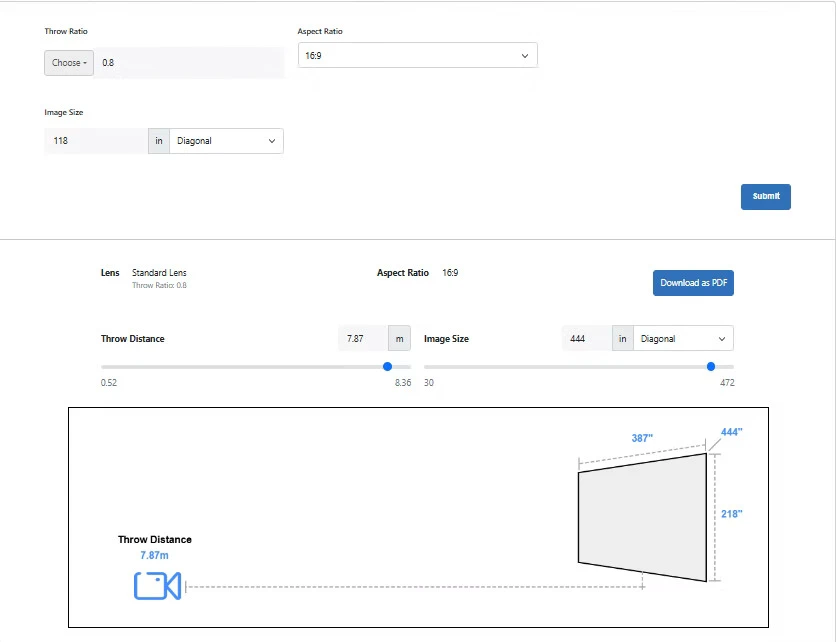
Throw Ratio determines the distance between the projector and the screen in relation to the image width. In cinemas, throw ratio plays a crucial role because:
- Screen Coverage: A miscalculated throw ratio can lead to images that are too small or exceed the screen edges.
- Depth Accuracy: For 3D content, precise alignment ensures proper stereoscopic convergence, which is influenced by throw distance.
- Projection Equipment Choice: Different projectors offer varying throw ratios, which can affect placement flexibility, especially in auditoriums with sloped seating or high ceilings.
By calculating throw ratio early in the design process, you can determine the ideal projector distance and screen size for 3D projection without sacrificing image quality.
Ceiling vs Rear Placement
3D projectors in cinemas are typically mounted either on the ceiling or behind the audience in a projection booth. Each placement option has advantages and challenges:
Ceiling Mounts:
- Often used when space is limited or when rear projection is not possible.
- Requires precise vertical tilt to avoid keystone distortion.
- Adequate ventilation must be maintained to prevent overheating, especially with high-powered 3D lamps.
Rear Projection:
- Common in commercial multiplexes with dedicated projection rooms.
- Provides unobstructed line-of-sight and reduces the risk of audience shadows.
- Throw ratio must be calculated accurately to ensure the image fills the screen without distortion.
XTEN-AV recommends evaluating both mounting options in conjunction with throw ratio, ceiling height, and room layout before final installation.
Alignment Techniques
Accurate alignment is crucial in 3D projection. Techniques include:
- Centering the Projector Horizontally: The projector lens should be aligned with the screen center to prevent horizontal keystone distortion.
- Vertical Tilt Adjustment: The vertical angle must match the throw distance to ensure the image hits the screen uniformly, particularly for tiered seating.
- Lens Shift Utilization: Where available, lens shift allows fine vertical and horizontal adjustments without moving the projector physically.
- Convergence Calibration: Dual-lens or dual-projector systems require calibration to align the left and right images accurately, preventing ghosting or depth errors.
- Screen Edge Alignment: Ensure that the image fills the screen precisely without overspill or black bars, which can be distracting in 3D.
By combining these alignment techniques with throw ratio calculations, cinemas can achieve consistent image quality across all seating rows.
Considerations for 3D Projection
Several factors impact the effectiveness of 3D projection placement:
- Room Size and Shape: Large auditoriums may require long throw distances, while small cinemas may benefit from short throw projectors to maximize screen coverage.
- Screen Type: Silver screens are often used for 3D projection due to their ability to maintain polarization. Placement must account for screen gain and viewing angles.
- Audience Viewing Angles: Ensure that all seats fall within the optimal 3D viewing cone. Extreme angles can reduce the 3D effect.
- Ambient Light: Control lighting in the auditorium to maintain contrast and prevent image washout.
Proper planning that integrates these considerations with throw ratio and projector alignment ensures the 3D effect is immersive and comfortable for all viewers.
Common Placement Mistakes
- Ignoring Throw Ratio: Leads to images that are either too small or misaligned, compromising the 3D effect.
- Over-reliance on Digital Keystone Correction: Can introduce distortion or reduce resolution. Physical tilt and lens shift are preferred.
- Incorrect Convergence in Dual-Projector Systems: Causes ghosting or double images, which can strain viewers’ eyes.
- Neglecting Ventilation: High-powered 3D projectors generate significant heat, and insufficient airflow can reduce lamp life and brightness.
XTEN-AV stresses that avoiding these mistakes is essential for a professional and reliable 3D projection setup.
Example Setup
- Screen Width: 40 feet
- Throw Ratio: 1.8:1
- Projector Distance: 72 feet
- Ceiling Height: 25 feet
- Vertical Tilt: 5 degrees
- Lens Shift: ±5% vertical for fine adjustment
This setup ensures the projector fills the screen fully, maintains accurate 3D depth perception, and accommodates tiered seating for optimal viewer experience.
Conclusion
3D projection in cinemas demands precise placement, alignment, and calibration. XTEN-AV emphasizes that Throw Ratio is a critical factor in determining projector distance and screen coverage, while ceiling height, tilt, and lens shift provide fine-tuning for alignment.
By combining throw ratio calculations with careful mounting, convergence calibration, and proper ventilation, cinemas can create a fully immersive 3D experience. Proper planning and installation avoid common placement mistakes, maintain image quality, and deliver the Perfect Projector Layout for every audience member.
Investing time in understanding these principles ensures that 3D projection meets both technical standards and audience expectations, creating memorable cinematic experiences.
Read more: https://article.rabia.co.in/article/why-ventilation-is-critical-in-theater-projector-rooms