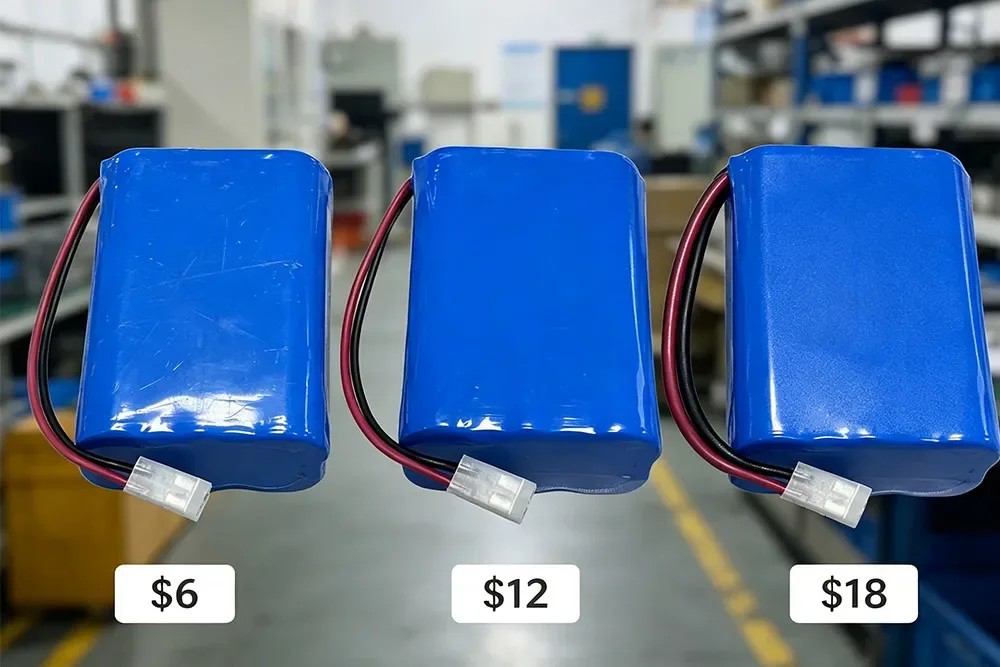
If you’ve requested quotes for a 12V 18650 battery pack, you’ve probably seen something confusing:
Same spec.
Same “4400mAh”.
But prices range from $6 to $18 .
So what’s going on?
This isn’t random pricing.
It usually comes down to what’s inside the battery — and what the supplier isn’t telling you.
This guide breaks down what actually affects the price, so you know what you’re paying for.
1. First, Know What You’re Buying
A typical product like this:12v-4400-mah-lithium-ion-3s2p-18650-battery-pack/

3S2P 12V lithium battery pack, usually:
6 × 18650 cells
Nominal voltage: 11.1V
Full charge: 12.6V
Capacity: 4400mAh
On paper, many suppliers look identical.
In reality, the internal cost structure can be very different.
2. Cell Cost = 60%–70% of Total Price
The biggest cost driver is the 18650 cells.
Here’s a rough breakdown:
Cell Type Typical Cost Impact What It Means
Brand cells (Samsung, LG) High Stable, long cycle life
Grade A Chinese cells Medium Good balance
Recycled / Grade B Low High risk
This is why two “4400mAh” packs can feel completely different in use.
Some low-cost suppliers:
use recycled cells
mix different batches
overstate capacity
lithium battery pack cost breakdown cells bms assembly percentage
3. BMS Quality Changes Everything
The Battery Management System (BMS) is usually invisible in quotes — but it directly affects price.
Good BMS adds:
stable output
accurate protection
longer lifespan
Cheap BMS:
cuts off under load
overheats
fails early
Cost difference:
basic BMS: ~$0.5–1
reliable BMS: ~$1.5–3
That small difference often explains big performance gaps.
4. Assembly & Build Quality
Not all battery packs are assembled the same way.
Cost differences come from:
Spot welding quality
Nickel strip thickness
Insulation materials
Manual vs automated assembly
Lower-end packs often:
use thinner nickel
have weak weld points
fail after vibration or long use
5. Customization Adds Cost
If you’re not buying a standard pack, pricing changes quickly.
Common custom options:
Connector type (XT60, DC, JST)
Cable length
Battery shape / layout
Housing (PVC vs plastic case)
Typical impact:
simple customization: $0.5–1
complex design: $2–5
6. Order Quantity
Pricing drops significantly with volume.
Example (factory level estimate):
Quantity Price Range
50–100 pcs Higher
200–500 pcs Medium
1000 pcs Best price
Many buyers overpay simply because they don’t ask for tier pricing.
18650 battery cell comparison brand vs generic vs recycled cells
7. Certifications & Shipping Costs
If your battery needs:
UN38.3
MSDS
IEC62133
You’re also paying for:
testing
documentation
compliance
Shipping (especially air freight for batteries) can also add hidden cost.
8. Real 2026 Price Range
For a 12V 4400mAh 3S2P battery pack, typical wholesale pricing:
$6–8 → low-end (high risk)
$9–14 → mainstream (most buyers choose)
$15–18 → premium (brand cells / strict QC)
If a quote is far below market, there’s always a reason.
9. How to Avoid Overpaying
Before choosing a supplier, ask:
What cell brand is used?
Is capacity real or rated?
What BMS protection is included?
Can you provide test data?
A serious supplier will answer clearly.
A weak one will avoid specifics.
Final Thought
Battery pricing isn’t just about cost — it’s about risk.
Saving $2 per unit doesn’t matter if:
your product fails
your customers complain
you have to replace shipments
For most B2B buyers, the goal isn’t the cheapest battery.
It’s the most reliable one within budget.
Need Real Quote for Your Project?
If you’re comparing suppliers or unsure about pricing, send us:
required capacity
working current
application (LED, CCTV, etc.)
expected order quantity