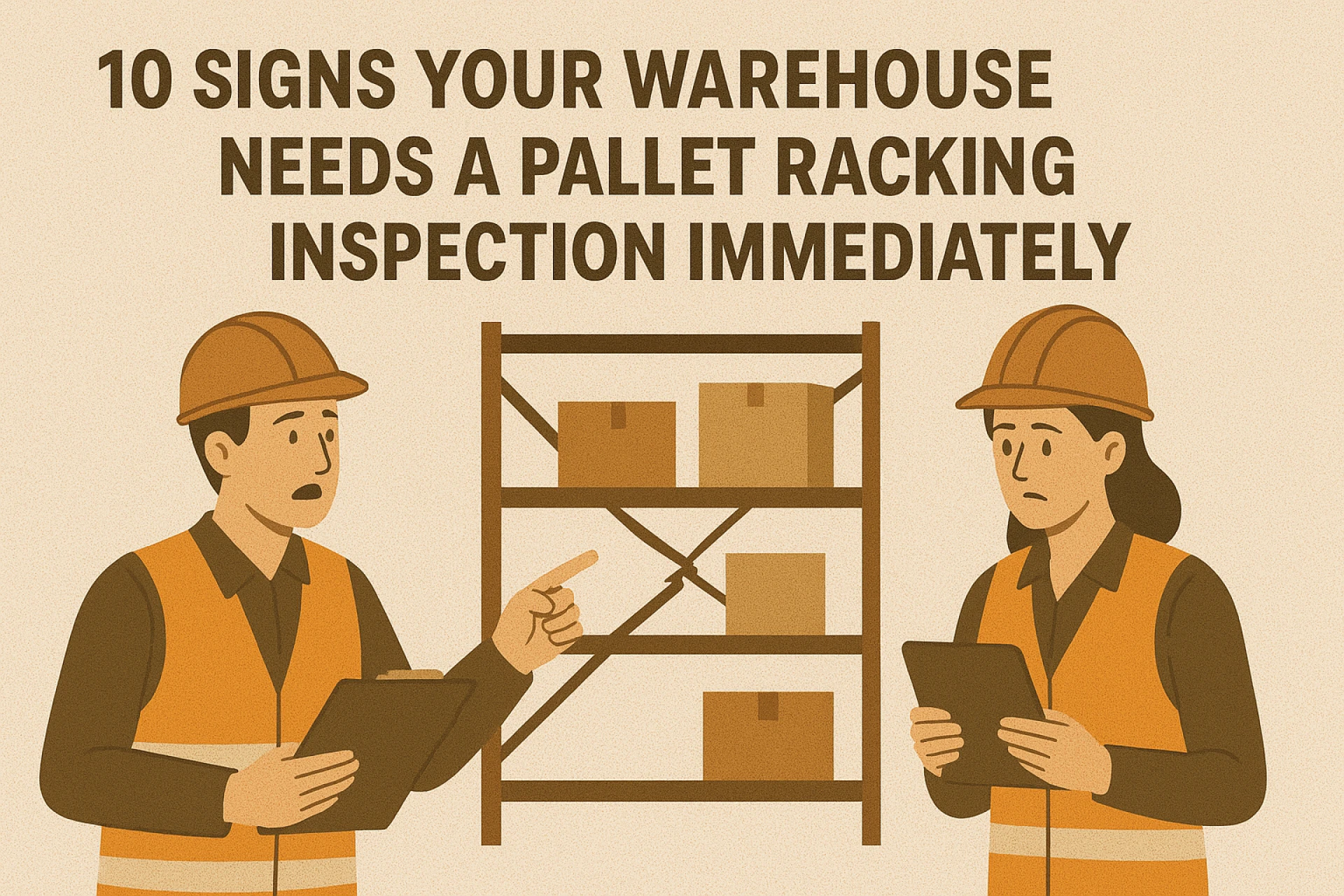
In every warehouse, safety isn’t just a box to check; it’s the backbone of your entire operation. When your pallet racks start showing signs of damage or instability, you’re not just risking your inventory; you’re risking your people, productivity, and profits. A pallet racking inspection isn’t something to delay; it’s a proactive step to prevent costly accidents, downtime, and OSHA violations.
1. Visible Damage to Uprights or Beams
If you see bent, twisted, or dented uprights, don’t ignore them. Even minor-looking damage can reduce the load-bearing capacity of your racking system, increasing the risk of collapse.
Common causes include forklift impacts, overloading, or years of wear and tear.
Quick Check:
- Inspect baseplates and connectors for cracks or bends.
- Check if uprights lean or shift under load.
- Replace any compromised components promptly.
Ignoring these issues could lead to a chain reaction of failures—especially in high-traffic storage areas.
2. Uneven or Leaning Racks
A pallet rack that isn’t perfectly vertical is a red flag. Leaning racks usually indicate uneven loading, damaged anchors, or shifting foundations.
If you notice any misalignment, schedule a pallet safety inspection immediately.
Why It Matters:
A leaning rack places unequal stress on beams, which can lead to sudden structural failure and serious safety hazards.
Pro Tip:
Use a laser level or plumb line during your regular safety checks to identify early signs of misalignment.
3. Missing or Loose Bolts and Anchors
Bolts and anchors are the small parts that hold big responsibilities. Missing, loose, or corroded hardware compromises rack stability.
Over time, vibrations from forklifts or impacts can loosen connections, making the entire structure unsafe.
Watch For:
- Loose floor anchors
- Missing beam locking pins
- Corroded or stripped bolts
A professional inspection will catch these subtle but critical issues before they become dangerous.
4. Rust, Corrosion, or Metal Fatigue
Moisture, temperature changes, and humidity can cause steel racks to corrode. Rust weakens the metal and can spread quickly if not treated.
In coastal or temperature-controlled environments, corrosion can appear even faster.
Tip for Facility Managers:
Regularly inspect racks near loading docks or refrigeration units where condensation is common.
When corrosion reaches the structural level, a replacement—not repair—is the only safe option.
5. Overloaded or Unevenly Distributed Weight
Every rack has a maximum load capacity. Exceeding it, even slightly, puts pressure on uprights and beams, leading to structural stress or collapse.
Uneven weight distribution—like stacking heavier pallets on one side—can cause racks to lean or twist.
Best Practice:
- Clearly label weight limits on all racks.
- Train warehouse staff on load distribution.
- Never mix pallets of varying weights on the same beam level.
An expert pallet racking inspection will confirm if your racks are handling loads within safe limits.
6. Forklift Impact or Collision Damage
Even the most skilled forklift drivers can have close calls. If a rack has been struck—even lightly—schedule an inspection right away.
Forklift impacts are the number one cause of rack failure, especially when the damage goes unnoticed.
After Any Impact:
- Mark the area as unsafe.
- Document the damage.
- Call for a certified rack inspector.
Addressing damage early prevents larger-scale accidents and reduces liability risks.
7. Missing Safety Clips or Beam Locks
Beam locks and safety clips prevent beams from dislodging during loading or vibration.
If these small yet vital parts go missing, the entire system’s safety is compromised.
Check Regularly:
- Are all beam locks securely in place?
- Are there signs of tampering or wear?
Replacing a missing clip takes seconds—repairing a collapsed rack could take weeks.
8. Outdated Racking Systems
Warehouse operations evolve, but many facilities still rely on outdated rack designs not built for modern load demands.
Older systems may not meet current ANSI MH16.1 or OSHA 1910.176(b) standards, which emphasize load ratings and design integrity.
Upgrade Considerations:
- Replace non-standard racks lacking engineering documentation.
- Update systems to accommodate modern pallet sizes and weights.
- Schedule periodic inspections to maintain compliance.
A professional evaluation ensures your systems meet today’s strict safety codes.
9. Frequent Reconfigurations or Expansions
Every time your warehouse layout changes—adding shelves, shifting aisles, or expanding capacity—your racks should be re-evaluated.
Improper reinstallation or modification can leave racks unbalanced or misaligned.
Ask Yourself:
- Were racks reassembled using manufacturer guidelines?
- Were load capacities recalculated after the changes?
- Has an inspector approved the new configuration?
Routine inspections after reconfiguration help prevent unsafe installations and ensure long-term stability.
10. Employee Concerns or Safety Reports
Your warehouse team is on the front line—they often notice issues before management does.
If employees report unusual noises, shifting racks, or difficulty loading pallets, take it seriously.
Encouraging a safety-first culture not only prevents accidents but also keeps your operation compliant and efficient.
Create an Open Safety Loop:
- Provide training to identify warning signs.
- Reward employees for reporting potential hazards.
- Schedule inspections promptly after receiving feedback.
What Happens During a Professional Pallet Racking Inspection
A professional rack inspection isn’t just a quick visual scan—it’s a detailed assessment of your system’s structural health.
Here’s what certified inspectors typically evaluate:
- Structural Integrity: Checking uprights, beams, and braces for damage or deformation.
- Anchorage & Leveling: Ensuring racks are properly anchored and plumb.
- Load Signage: Verifying clear load capacity labels are in place.
- Component Compatibility: Confirming all parts meet manufacturer specifications.
- Compliance Audit: Reviewing OSHA and ANSI standard alignment.
After the inspection, you’ll receive a detailed report with findings, risk levels, and repair recommendations, helping you take corrective action before small issues become costly emergencies.
The Hidden Costs of Skipping Inspections
Neglecting regular inspections may save time in the short term, but the long-term risks far outweigh the convenience.
Potential Consequences Include:
- A costly rack collapses, leading to product loss
- OSHA fines and legal liabilities
- Downtime that halts warehouse productivity
- Injury risks to employees and equipment damage
A consistent inspection schedule ensures your warehouse operates safely and efficiently every single day.
How Often Should You Schedule a Pallet Racking Inspection?
Inspection frequency depends on warehouse activity, traffic levels, and rack usage.
However, general industry best practices recommend:
- Monthly visual checks by warehouse staff
- Annual or semi-annual professional inspections by certified experts
- Immediate inspections after any impact, modification, or damage
This proactive schedule ensures issues are caught early, keeping your facility compliant and your team protected.
Proactive Safety is Productive Safety
A warehouse that prioritizes safety is one that runs smoothly, efficiently, and confidently. By identifying these 10 warning signs early and investing in a pallet racking inspection, you’re not just protecting your infrastructure; you’re securing your business’s future.
The cost of prevention is always less than the cost of recovery.
If you’re unsure about your racking system’s current condition, don’t wait for a problem to appear. Schedule your professional inspection today and keep your operations running at full strength with the peace of mind that everything stands secure and compliant.
FAQs About Pallet Safety Inspection
1. How often should a warehouse schedule a pallet racking inspection?
It’s recommended to conduct professional pallet racking inspections at least once a year. However, high-traffic or busy warehouses may require semi-annual or quarterly inspections. You should also schedule an immediate inspection after any forklift impact or major layout change.
2. What happens during a professional pallet safety inspection?
A certified inspector examines rack uprights, beams, and braces for damage, misalignment, or corrosion. They also verify anchor stability, load signage, and compliance with OSHA and ANSI safety standards, providing a detailed report with repair or replacement recommendations.
3. What are the most common signs of rack damage to watch for?
Look out for bent or leaning uprights, missing beam locks, rust, cracked welds, or loose bolts. These warning signs suggest your system’s structural integrity may be compromised and require immediate professional evaluation.
4. Are pallet safety inspections required by law?
While OSHA doesn’t mandate specific inspection intervals, it does require that all warehouse storage systems remain in safe, serviceable condition. Routine pallet safety inspections help ensure compliance and protect your facility from costly violations or accidents.
5. Can warehouse staff perform rack inspections themselves?
Warehouse teams can perform basic visual checks, but only trained and certified inspectors should conduct detailed assessments. Professional inspections use specialized tools and compliance expertise to detect hidden damage that might not be visible during daily checks.