
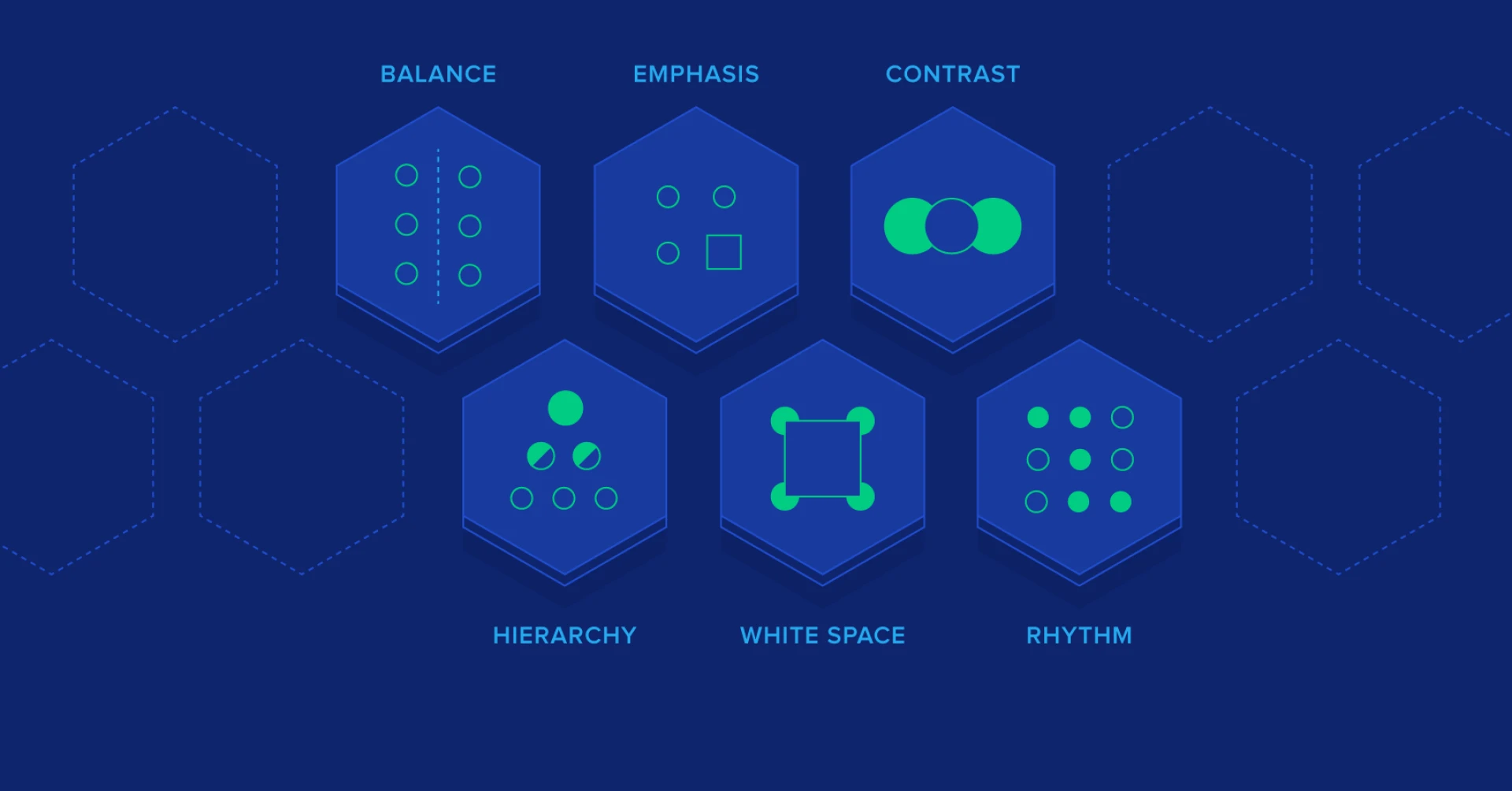
Good design is crucial for creating impactful visuals, whether for websites, apps, or marketing materials. The principles of design are the foundation of any successful design process, helping designers create engaging, functional, and aesthetically pleasing work. In this blog, we’ll explore the 10 essential principles of design and how to apply them effectively to improve your design projects.
1. Balance
Balance refers to the distribution of visual weight in a design. It creates stability and harmony by ensuring that no part of the design feels too heavy or too light.
- How to Use Balance: You can achieve balance through two main types:
- Symmetrical Balance: Elements are evenly distributed on both sides of the design, creating a formal and structured look.
- Asymmetrical Balance: The design elements are not identical on either side but are balanced by visual weight, offering a more dynamic, informal look.
2. Contrast
Contrast is about creating differences between elements in your design to make certain aspects stand out. It helps guide the viewer’s attention and creates visual interest.
- How to Use Contrast: Use contrasting colors, shapes, sizes, or textures to highlight important elements. For example, pairing light text with a dark background enhances readability and focus.
Interlink suggestion: Link "contrast" to a blog on color theory in design or using contrast to create emphasis.
3. Emphasis
Emphasis focuses the viewer's attention on the most important element of a design. By giving an element more visual weight, you can create a clear focal point.
- How to Use Emphasis: You can use emphasis by altering the size, color, or positioning of key elements. For example, increasing the size of a call-to-action button or using a bold color will naturally draw the eye to it.
Interlink suggestion: Link "emphasis" to an article on creating focal points in web design or highlighting key elements in UI design.
4. Movement
Movement refers to the way the viewer’s eye travels across the design. It guides the user through the visual elements, often leading them to the most important parts of the composition.
- How to Use Movement: You can create movement by arranging elements along a path, such as through lines, shapes, or repetition. For instance, arrows or diagonal lines can lead the viewer’s eye in a particular direction.
Interlink suggestion: Link "movement" to a post on directing user flow in web design or using movement to guide user interaction.
5. Pattern
Patterns refer to repeating elements or structures that create visual consistency and cohesion throughout the design. They can be used to create rhythm and enhance the overall aesthetic.
- How to Use Patterns: Use patterns in background designs, borders, or within elements such as icons or buttons. Keep in mind that overuse of patterns can lead to visual clutter, so balance is key.
Interlink suggestion: Link "pattern" to an article on creating effective patterns in design or designing with repetition for consistency.
6. Repetition
Repetition involves using the same elements or styles consistently throughout the design. It creates a sense of unity and reinforces a brand’s identity.
- How to Use Repetition: Repeating colors, shapes, fonts, or icons helps maintain consistency across the design. For example, using the same button style throughout a website reinforces user experience and brand cohesion.
Interlink suggestion: Link "repetition" to a blog on using repetition to create cohesive branding or how to use consistency in design.
7. Proximity
Proximity is the principle of grouping related elements together to create a sense of organization and clarity. Proper use of proximity improves the visual flow and makes the design easier to understand.
- How to Use Proximity: Place related items close together and separate unrelated items. For example, grouping navigation links together and keeping them spaced from the content area makes the layout clearer and more organized.
Interlink suggestion: Link "proximity" to a post on effective layout design or organizing content in web design.
8. White Space (Negative Space)
White space, also known as negative space, refers to the empty areas in a design. It’s not just blank space; it serves a functional purpose in helping elements stand out, improving readability, and providing visual breathing room.
- How to Use White Space: Use white space to separate sections, group elements, or emphasize key content. Avoid overcrowding a design with too many elements, as white space can improve both aesthetics and user experience.
Interlink suggestion: Link "white space" to a blog post on the importance of white space in web design or how to use negative space effectively.
9. Alignment
Alignment is about arranging elements in a way that makes the design appear orderly and connected. Proper alignment ensures that your design elements are visually linked, creating a clean, organized structure.
- How to Use Alignment: Use alignment to position elements in relation to each other. For example, aligning text or images along a central axis or to the left or right edge creates a clean and professional appearance.
Interlink suggestion: Link "alignment" to an article on perfecting alignment in layout design or how alignment improves readability.
10. Unity/Harmony
Unity or harmony refers to the cohesiveness of the design. It means that all elements work together, contributing to the overall aesthetic without any element feeling out of place.
- How to Use Unity: Achieve unity by ensuring that all elements share a consistent color palette, style, and theme. Consider the relationship between typography, imagery, and color schemes to create a balanced, harmonious look.
Interlink suggestion: Link "unity" to a post on how to achieve harmony in design or the importance of unified design elements.
Conclusion: Mastering Design Principles for Better Results
Understanding and applying the principles of design is essential for creating functional, aesthetically pleasing, and impactful visuals. By using principles like balance, contrast, emphasis, and proximity, you can design pieces that not only look great but also improve user experience and communication.
Whether you're designing a website, mobile app, or marketing materials, keeping these principles in mind will help you craft designs that are visually engaging and easy to navigate. Master these principles, and you’ll be able to create designs that stand out and deliver results.